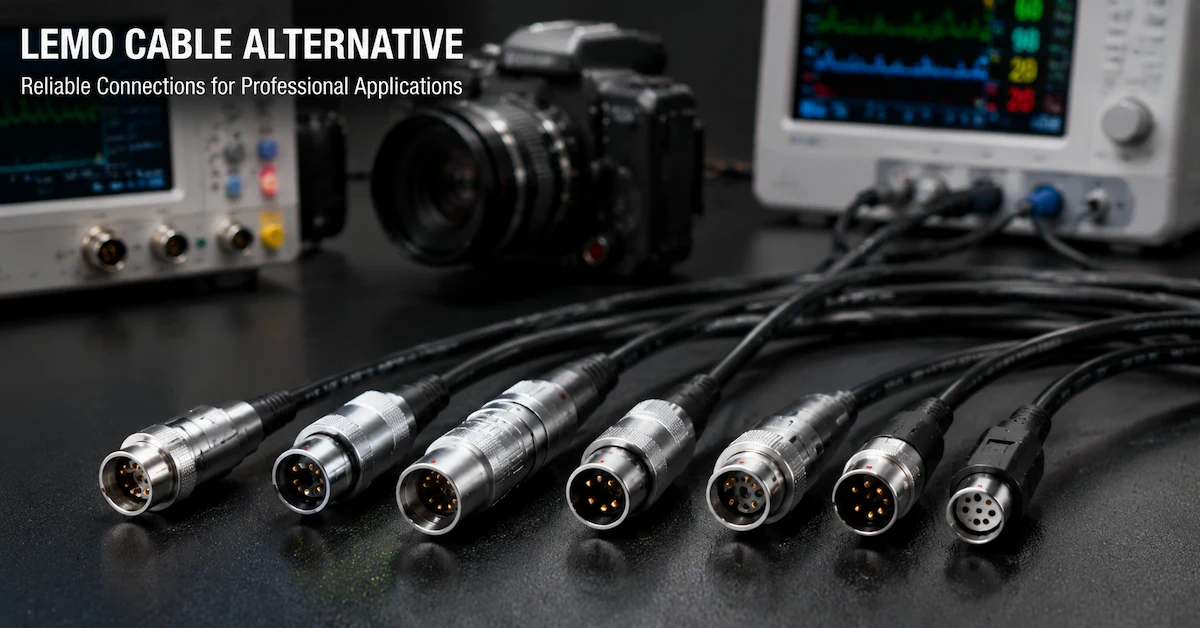
Choosing a stable supply cable manufacturer is important for OEM manufacturers, industrial equipment companies, distributors, and system integrators that depend on repeat cable production.
A cable sample may perform well during initial evaluation, but long-term supply involves more than approving one product. Buyers also need consistent materials, controlled drawings, repeatable assembly processes, reliable testing, predictable lead times, and clear communication when specifications change.
An unstable supplier can create delayed production, inconsistent cable batches, connector substitutions, documentation errors, or unexpected material shortages. A reliable manufacturer helps buyers reduce these risks and maintain a more predictable supply chain.
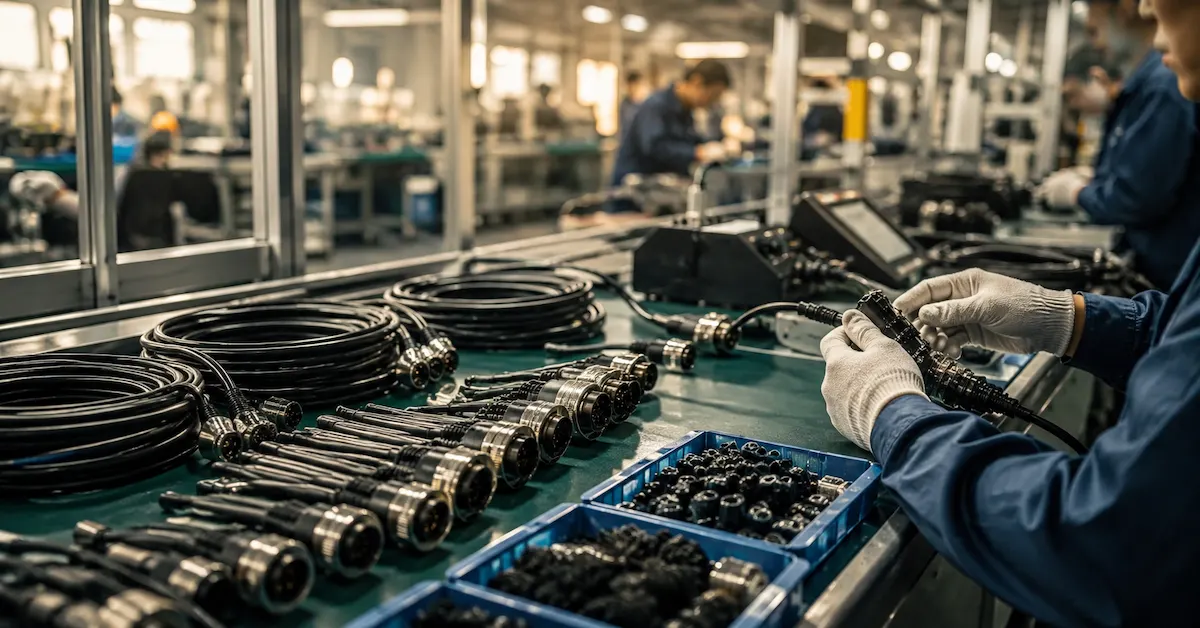
What Does Stable Supply Mean in Cable Manufacturing?
Stable supply means that a manufacturer can reproduce an approved cable assembly consistently across multiple orders while maintaining the agreed specification, quality level, testing method, and delivery schedule.
A stable supply system normally includes:
- Approved drawings and pinout records
- Controlled bills of materials
- Reliable connector and cable sourcing
- Repeatable manufacturing processes
- Defined inspection standards
- Production capacity planning
- Order and delivery management
- Specification change control
- Communication about material risks
Stable supply is not the same as simply keeping finished cables in stock. For customized products, it means maintaining the systems required to reproduce the same cable when the buyer places future orders.
Who Needs a Stable Supply Cable Manufacturer?
| Buyer Type | Supply Requirement | Main Concern |
|---|---|---|
| OEM equipment manufacturers | Repeat cable production | Batch consistency |
| Industrial machinery companies | Continuous equipment supply | Production interruption |
| Automation companies | Sensor and control cables | Material availability |
| Professional video brands | Camera and AV cable assemblies | Connector consistency |
| Medical and test equipment companies | Controlled custom wiring | Specification accuracy |
| Distributors | Predictable product availability | Inventory planning |
| System integrators | Project and replacement cables | Delivery coordination |
| Electronics manufacturers | Internal cable harnesses | Revision control |
Companies with ongoing production usually need a manufacturing partner rather than a one-time cable seller.
Why Stable Cable Supply Matters
1. Cable Shortages Can Stop Equipment Production
A cable assembly may be a relatively small component, but a missing cable can prevent final equipment assembly and shipment.
Supply interruptions may be caused by:
- Unavailable connectors
- Unplanned material substitutions
- Poor demand forecasting
- Production capacity conflicts
- Incomplete technical documentation
- Delayed purchasing
- Uncontrolled specification changes
A stable supply cable manufacturer should identify these risks early and communicate them before they affect production.
2. Batch Consistency Protects Product Quality
For repeat orders, each batch should match the approved cable in electrical performance, dimensions, connectors, labeling, and appearance.
Consistency depends on controlling:
- Cable and wire specifications
- Connector models
- Pin-to-pin wiring
- Cable and branch lengths
- Shielding structure
- Strain relief
- Assembly method
- Testing criteria
- Label and packaging information
Even small uncontrolled changes can create installation or compatibility problems in the buyer’s equipment.
3. Predictable Lead Times Improve Production Planning
OEM buyers often organize cable orders around equipment assembly schedules. Uncertain lead times can affect labor planning, inventory, and customer delivery.
A reliable manufacturer should help buyers understand:
- Sample lead time
- Material preparation time
- Production lead time
- Testing and inspection time
- Packaging time
- Repeat-order lead time
- Capacity during peak periods
When buyers provide rolling forecasts, the supplier can plan materials and production more effectively.
4. Stable Documentation Reduces Manufacturing Errors
Cable projects often include drawings, wiring diagrams, connector specifications, labels, and packaging instructions.
A manufacturer should control:
- Drawing numbers
- Revision numbers
- Approved pinouts
- Bills of materials
- Sample approval records
- Testing instructions
- Packaging specifications
Without revision control, an outdated drawing may enter production and create a complete batch of incorrect cables.
Core Capabilities of a Stable Supply Cable Manufacturer
Material and Connector Planning
Connectors can have different lead times, minimum order quantities, or availability risks. A manufacturer should review material availability before confirming ongoing supply.
Important questions include:
- Are the approved connectors regularly available?
- Are original and compatible connector options clearly separated?
- Will the manufacturer notify buyers before substitutions?
- Can critical materials be reserved for repeat orders?
- Are alternative materials evaluated before emergencies occur?
No component should be changed without buyer approval when it affects fit, performance, appearance, or compliance.
Manufacturing Capacity
The supplier should be able to support current order volume and expected future demand.
Buyers should evaluate:
- Production lines
- Skilled assembly workers
- Crimping and soldering capability
- Overmolding capability
- Testing equipment
- Peak production capacity
- Repeat-order planning
The largest factory is not automatically the best partner. The more important question is whether the supplier can allocate appropriate capacity to the buyer’s product.
Quality Control and Testing
A stable production system requires defined quality checkpoints.
Common inspections include:
- Incoming material inspection
- Connector verification
- Cable length inspection
- Pinout testing
- Continuity testing
- Short-circuit testing
- Polarity testing
- Visual inspection
- Functional testing
- Final packaging inspection
Testing requirements should be documented so future batches follow the same standard.
Engineering and Change Management
Products may change during their lifecycle. Equipment designers may update the connector, cable length, routing, shielding, or labeling.
A capable supplier should support:
- Drawing updates
- Revision comparison
- New sample approval
- Material change evaluation
- Production transition planning
- Old and new version identification
Change management prevents mixed versions from entering the same shipment.
Common Cable Products for Repeat Supply
| Cable Solution | Typical Application | Stable Supply Focus |
| Industrial cable assembly | Automation and machinery | Connector and material continuity |
| Camera cable assembly | Professional imaging systems | Pinout and signal consistency |
| Power cable assembly | Electronic equipment | Wire gauge and polarity |
| Shielded signal cable | Sensors and test systems | Shielding and grounding |
| Cable harness | OEM equipment | Branch layout and labeling |
| High-flex cable | Robotics and moving systems | Cable structure consistency |
| Multi-connector cable | Integrated equipment | Wiring accuracy |
| Custom connector cable | Specialized devices | Connector availability |
Buyers can review relevant cable and connector categories on the Alvin’s Cables Products page.
Stable Supply Manufacturer vs Spot Purchasing
| Supply Model | Advantages | Limitations | Best For |
| Spot purchasing | Quick sourcing for common items | Inconsistent source and specification | Temporary needs |
| Standard distributor | Available inventory | Limited customization | Standard cables |
| Custom cable supplier | Supports project specifications | Supply system varies by supplier | Low-volume projects |
| Stable supply cable manufacturer | Controlled repeat production and technical records | Requires forecasting and cooperation | OEM and continuous production |
Spot purchasing may be suitable for general replacement cables. Custom OEM equipment benefits more from a controlled manufacturing relationship.
How to Evaluate Supply Stability Before Ordering
Before approving a manufacturer, buyers should check:
| Evaluation Point | What to Confirm |
| Technical records | Are drawings, pinouts, and revisions controlled? |
| Material sourcing | Can approved connectors and cables be supplied continuously? |
| Change policy | Will substitutions require buyer approval? |
| Production capacity | Can the factory support expected order volumes? |
| Testing | Are inspection methods documented? |
| Sample approval | Is an approved reference sample maintained? |
| Lead time | Are sample and repeat-order schedules clear? |
| Forecast support | Can the supplier plan materials from forecasts? |
| Communication | Are risks and delays reported early? |
| Packaging | Can labels and packaging remain consistent? |
A low initial price should not outweigh the cost of production delays, quality variation, or emergency sourcing.
What Information Should Buyers Provide?
To build a stable supply plan, provide:
- Product or equipment application
- Approved drawing and revision number
- Connector models
- Pinout or wiring diagram
- Cable and branch lengths
- Electrical and signal requirements
- Shielding and environmental requirements
- Testing standards
- Initial order quantity
- Estimated monthly or annual demand
- Required delivery schedule
- Labeling and packaging requirements
Forecast information does not always need to be a firm purchase order, but it helps the manufacturer plan materials and capacity.
Why Choose Alvin’s Cables for Stable Cable Supply?
Alvin’s Cables supports custom cable assemblies and connector solutions for professional video equipment, industrial automation, machine vision, medical devices, test instruments, robotics, and OEM electronics.
For repeat cable production, Alvin’s Cables can support:
- Drawing- and sample-based customization
- Controlled cable length and pinout
- M8, M12, Hirose, RJ45, BNC, D-TAP, XLR, push-pull, and open-end solutions
- Signal, power, video, data, and control cable assemblies
- Shielded and flexible cable structures
- Cable harness and multi-branch production
- Prototype and sample approval
- Low-to-mid-volume repeat production
- Multi-stage inspection and functional testing
- OEM labeling and packaging
- Technical communication for product revisions
Buyers can learn more about the company’s manufacturing background on the About Us page and review its quality and service advantages through Why Choose Alvin’s Cables.
FAQ
1. What is a stable supply cable manufacturer?
A stable supply cable manufacturer can reproduce approved cable assemblies consistently while maintaining agreed materials, specifications, testing, quality, and delivery schedules.
2. Why is repeat production different from sample production?
A sample proves that one cable can be made. Repeat production requires material control, documentation, standardized processes, capacity planning, and consistent testing.
3. Can custom cables be supplied repeatedly?
Yes. Custom cables can enter repeat production after drawings, materials, pinouts, testing requirements, labels, and packaging have been approved.
4. How can buyers reduce cable supply interruptions?
Provide forecasts, approve materials clearly, maintain current drawings, communicate specification changes early, and work with a manufacturer that plans connector availability.
5. Can a manufacturer change connectors without approval?
For controlled custom products, connectors or other critical materials should not be changed without buyer approval when the change affects performance, fit, or appearance.
6. What testing is needed for repeat cable orders?
Testing may include continuity, short circuit, pinout, polarity, connector fit, appearance, dimensions, and functional performance.
7. Can Alvin’s Cables support repeat OEM orders?
Yes. Alvin’s Cables supports prototype approval, low-to-mid-volume production, repeat orders, testing, and OEM labeling and packaging.
8. What should I send for a stable supply quotation?
Send drawings, connector models, pinout, cable length, testing requirements, initial quantity, demand forecast, delivery schedule, and application information.
Conclusion
Choosing a stable supply cable manufacturer helps OEM manufacturers and industrial buyers maintain consistent cable quality, predictable lead times, and reliable repeat production.
The right manufacturer should control materials, drawings, production processes, testing, specification changes, and delivery planning—not merely produce a successful initial sample.
For stable custom cable supply, contact Alvin’s Cables through the Contact Us page and share your drawings, approved specifications, order quantity, demand forecast, and delivery requirements.