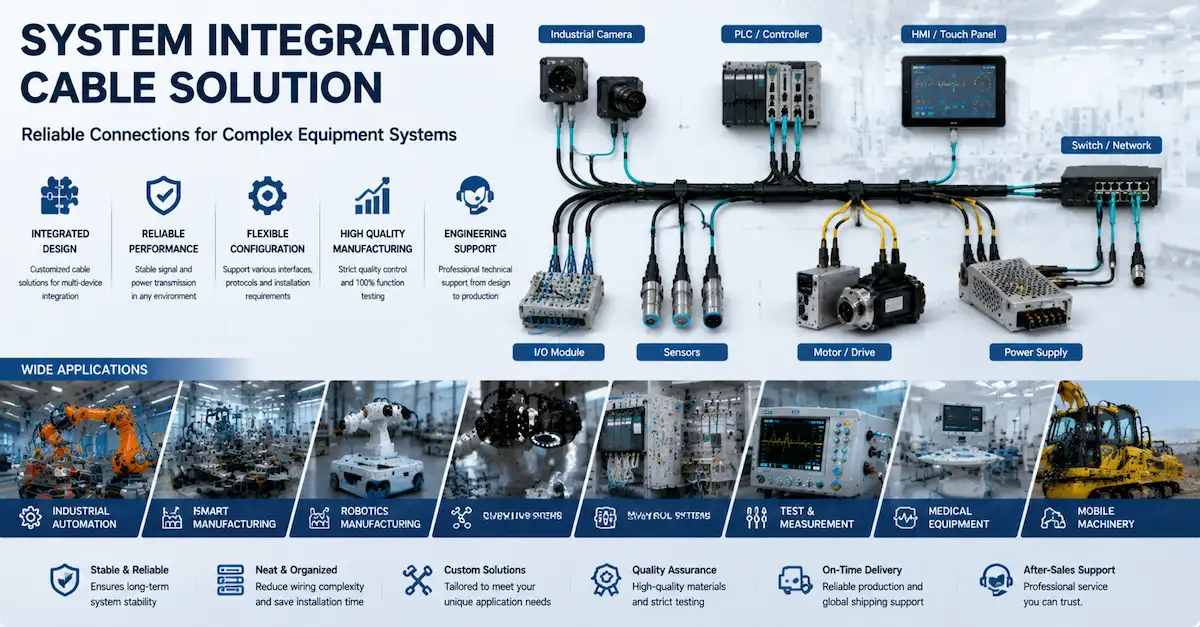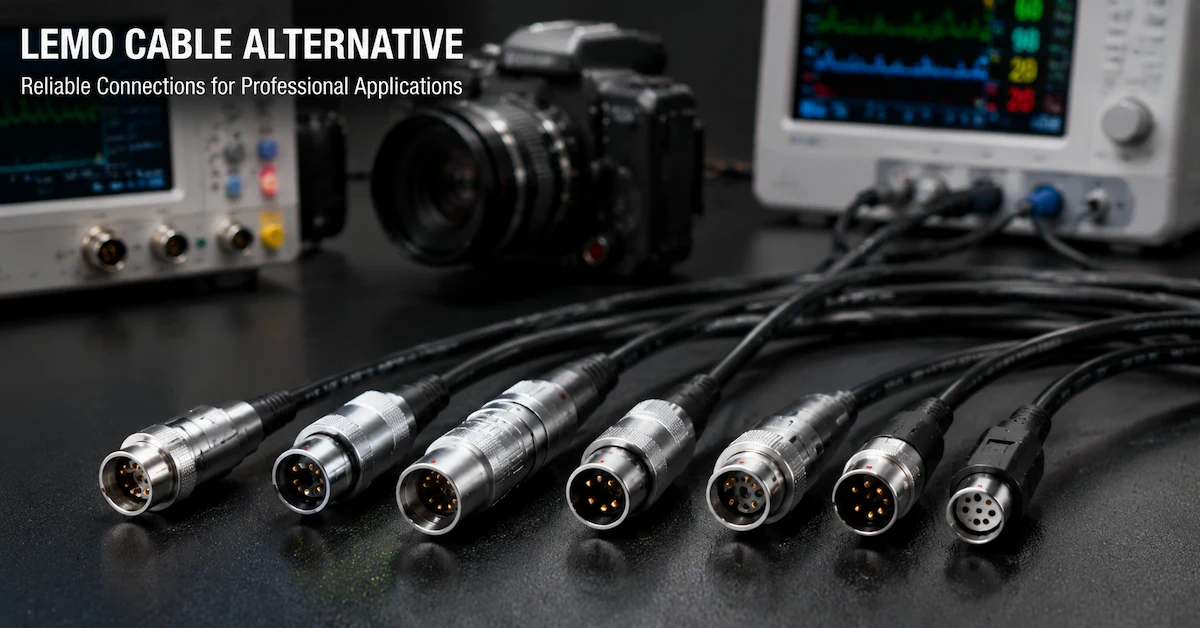
An engineering cable supplier provides more than finished cables. The supplier works with equipment manufacturers, system integrators, and product development teams to convert electrical and mechanical requirements into manufacturable cable assemblies.
For industrial automation, professional video equipment, machine vision, medical devices, test instruments, robotics, and OEM electronics, standard cables may not match the available installation space, connector combination, pinout, shielding requirement, or operating environment.
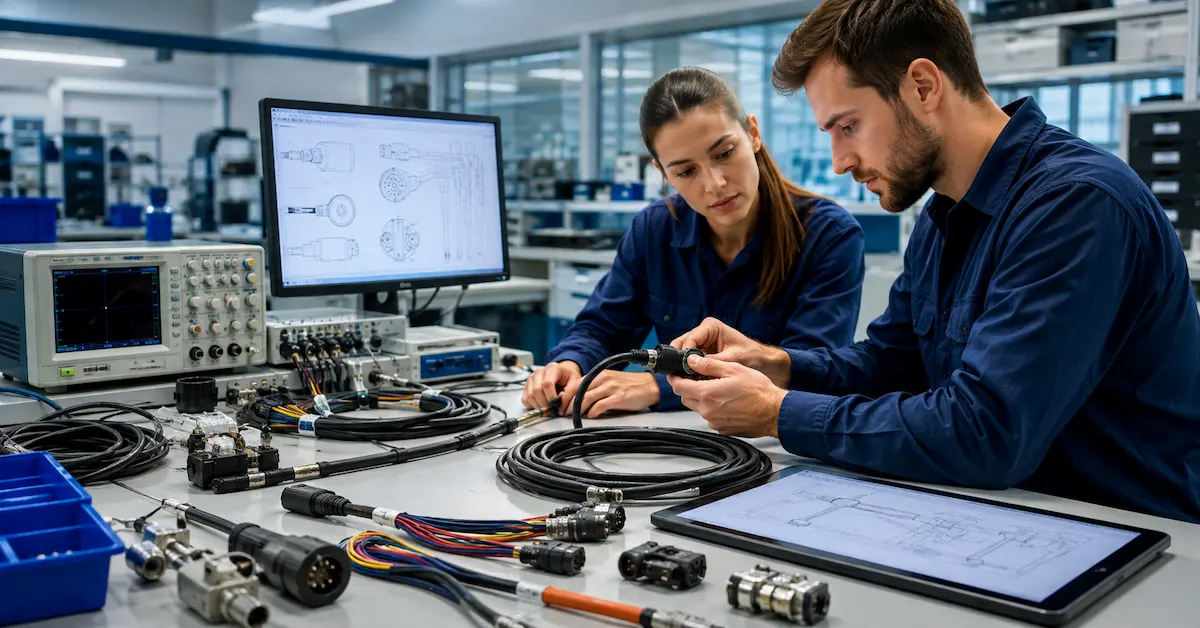
A capable engineering cable supplier can help review these requirements, develop prototypes, identify design risks, perform testing, and prepare the cable assembly for repeat production.
What Is an Engineering Cable Supplier?
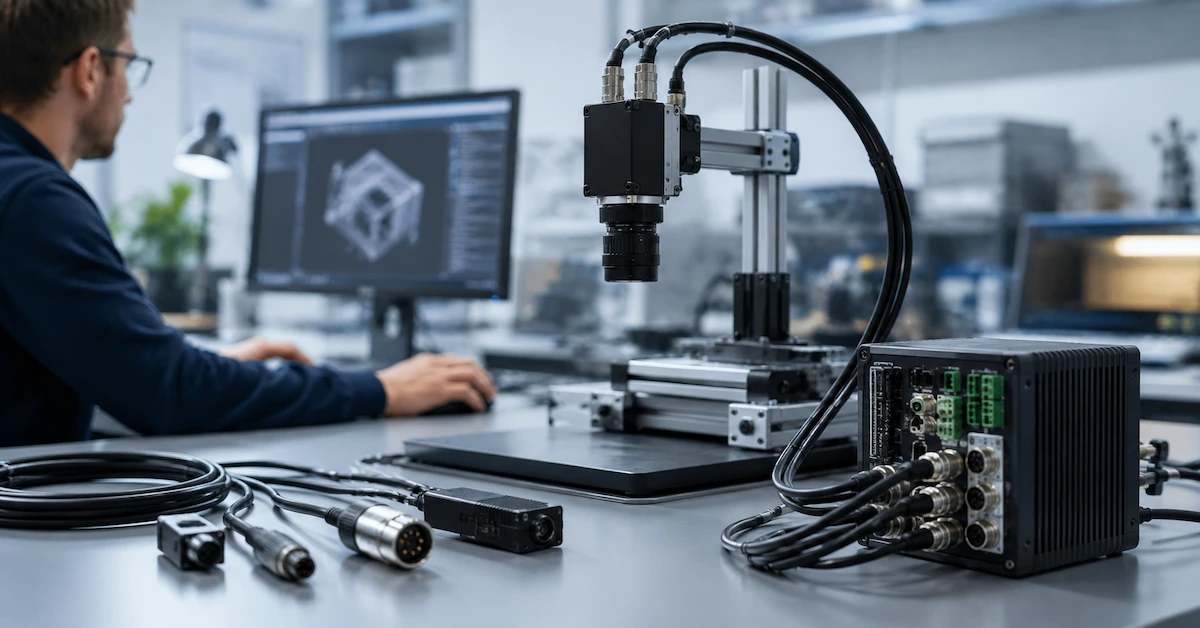
An engineering cable supplier combines cable manufacturing with technical support. Instead of supplying only standard cables, the supplier helps buyers develop application-specific cable and connector solutions.
Typical engineering support may include:
- Connector identification and selection
- Pinout and wiring review
- Cable structure recommendation
- Conductor and wire-gauge selection
- Shielding and grounding design
- Cable length and branch planning
- Connector orientation review
- Strain-relief design
- Prototype development
- Testing and production documentation
The objective is to create a cable assembly that performs correctly, fits the equipment, and can be manufactured consistently.
Who Needs Engineering Cable Support?
| Buyer Type | Engineering Requirement | Main Concern |
|---|---|---|
| OEM equipment manufacturers | Product-specific cable assemblies | Integration and repeatability |
| Industrial automation companies | Sensor, controller, and power wiring | Reliability and interference |
| Machine vision integrators | Camera, trigger, lighting, and data cables | Signal integrity |
| Professional video brands | Camera, monitor, power, and control cables | Compatibility and field durability |
| Medical equipment developers | Device-specific signal and power wiring | Accuracy and consistency |
| Test instrument manufacturers | Measurement and communication cables | Stable electrical performance |
| Robotics companies | Flexible and moving cable assemblies | Bend life and strain relief |
| System integrators | Project-specific cable solutions | Delivery and technical coordination |
Engineering support is especially valuable when a buyer has a concept, drawing, or equipment interface but does not yet have a complete production-ready cable specification.
Why Engineering Capability Matters
1. Standard Cables May Not Fit the Equipment
Equipment designs often include limited installation space, unusual connector positions, or specific cable-routing requirements.
A standard cable may be:
- Too long or too short
- Too stiff for the installation
- Wired with the wrong pinout
- Incompatible with the device connector
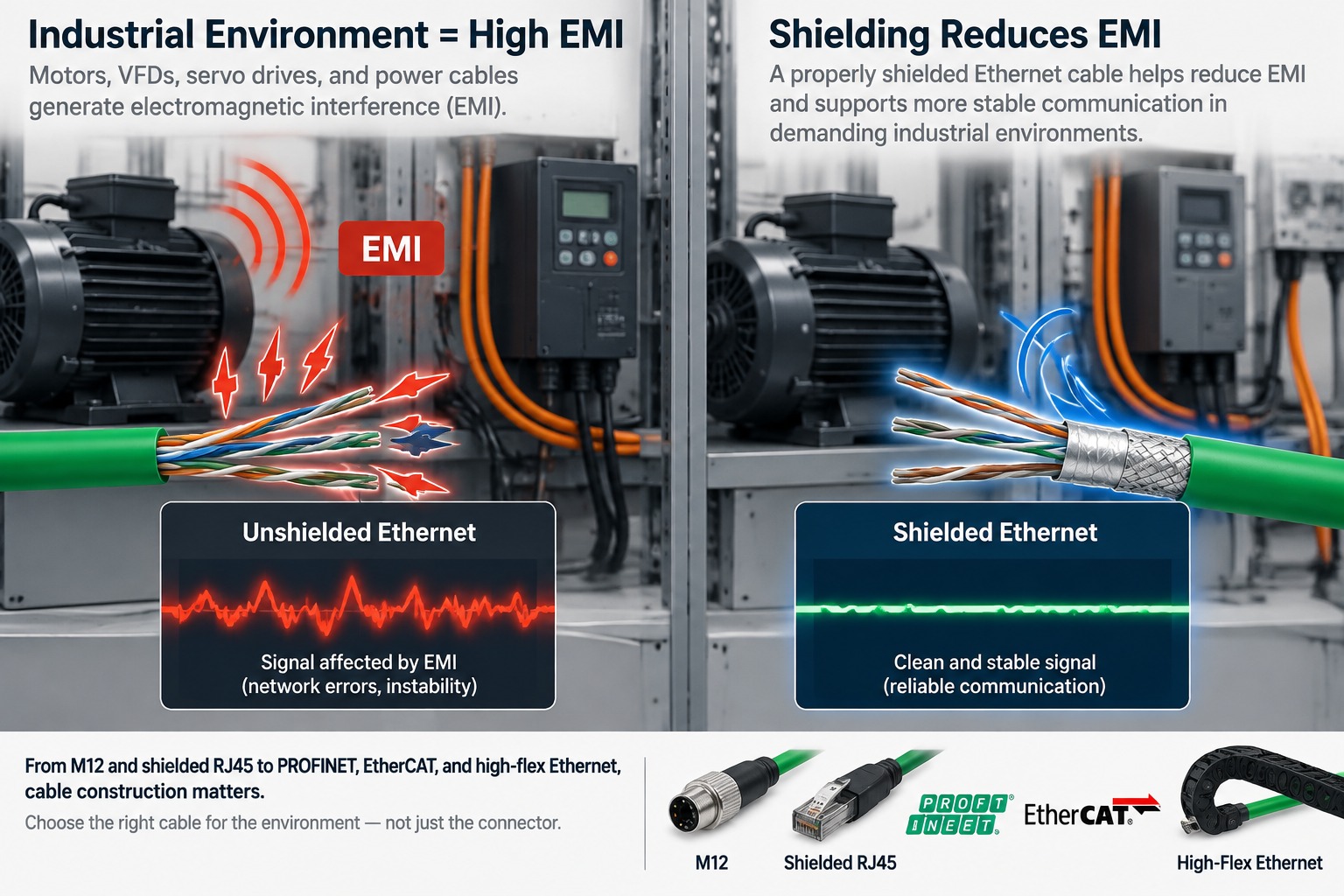
- Insufficiently shielded
- Difficult to secure
- Unable to withstand movement or vibration
An engineering cable supplier evaluates these details before production and develops a more suitable assembly.
2. Electrical Requirements Must Be Confirmed
Cable engineering involves more than connector matching. The supplier must understand what the cable transmits and how the equipment operates.
Important electrical information includes:
- Voltage
- Continuous and peak current
- Signal type
- Data rate
- Frequency
- Impedance requirement
- Grounding method
- Shielding requirement
- Pin-to-pin wiring
For power cables, conductor size and connector rating affect voltage drop and heat generation. For signal cables, shielding, conductor arrangement, impedance, and cable length affect transmission stability.
3. Mechanical Design Affects Reliability
Many cable failures occur near connectors, branch points, and frequently bent sections.
Mechanical engineering considerations include:
- Minimum bending radius
- Connector exit direction
- Straight or right-angle design
- Cable diameter
- Strain relief
- Overmolding
- Branch reinforcement
- Cable clamps
- Pulling and vibration forces
A cable that performs correctly on a workbench may still fail if it does not fit the equipment or withstand real movement.
4. Design for Manufacturing Improves Consistency
A cable prototype must eventually become a repeatable production product.
An engineering supplier should review whether the design can be produced consistently by considering:
- Connector availability
- Material stability
- Assembly method
- Crimping or soldering process
- Inspection points
- Testing method
- Labeling requirements
- Packaging method
Design-for-manufacturing review helps reduce production variation and future supply problems.
Engineering Cable Development Process
A structured development process helps reduce technical and commercial risk.
Step 1: Requirement Collection
The buyer provides available information, such as:
- Equipment application
- Connector models
- Drawings
- Pinout
- Cable length
- Electrical requirements
- Operating environment
- Quantity forecast
If the exact connector is unknown, clear photographs, measurements, and physical samples may be used for identification.
Step 2: Technical Review
The supplier reviews:
- Connector compatibility
- Wire and cable structure
- Electrical load
- Signal requirements
- Shielding
- Grounding
- Mechanical routing
- Environmental conditions
Technical questions should be resolved before sample production.
Step 3: Prototype Development
A prototype allows both sides to confirm:
- Connector fit
- Pinout accuracy
- Cable length
- Routing
- Flexibility
- Signal or power performance
- Assembly quality
Prototype approval is especially important for OEM products.
Step 4: Testing and Validation
Depending on the cable type, testing may include:
- Continuity testing
- Short-circuit testing
- Pinout verification
- Polarity testing
- Connector fit inspection
- Functional testing
- Pull or strain-relief inspection
- Signal-performance verification
The buyer should also test the sample in the actual equipment.
Step 5: Production Preparation
After sample approval, the supplier confirms:
- Final drawings
- Bill of materials
- Assembly procedures
- Testing requirements
- Labeling
- Packaging
- Production quantity
This process supports more consistent repeat production.
Common Engineering Cable Solutions
| Cable Solution | Typical Application | Engineering Focus |
| Custom connector cable | Special equipment interfaces | Connector matching and pinout |
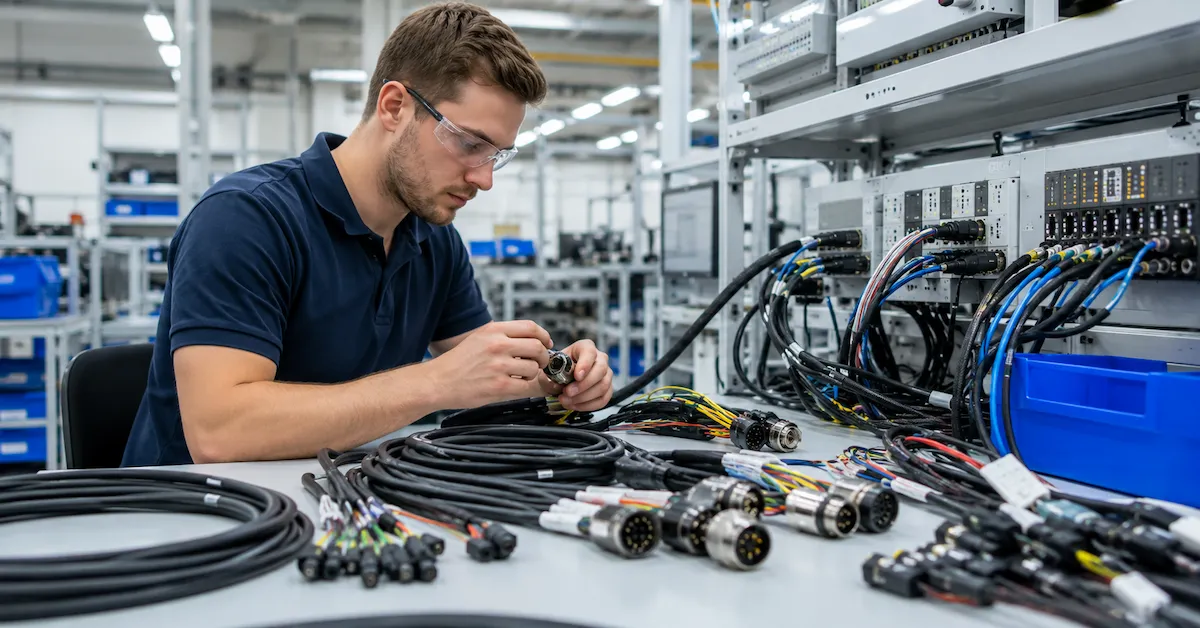
| Cable harness | Complex internal equipment wiring | Branch layout and organization |
| Shielded signal cable | Cameras, sensors, and test systems | EMI/RFI protection |
| Power cable assembly | Equipment and battery systems | Current capacity and polarity |
| High-speed data cable | Machine vision and communication | Signal integrity and impedance |
| High-flex cable | Robotics and moving equipment | Bend radius and service life |
| Multi-connector cable | Integrated equipment systems | Branch design and wiring accuracy |
| Overmolded cable | Rugged or portable equipment | Mechanical protection |
Engineering Cable Supplier vs Standard Cable Supplier
| Supplier Type | Main Advantage | Limitation | Best For |
| Standard cable seller | Fast availability | Limited customization | Simple replacement |
| Cable distributor | Broad product access | Limited engineering control | Standard components |
| Engineering cable supplier | Technical support and custom development | Requires project communication | OEM and equipment projects |
| Custom cable manufacturer | Production control and repeat supply | Needs complete specifications | Established custom products |
An engineering cable supplier is most valuable during product development and when cable requirements are not fully standardized.
How to Evaluate an Engineering Cable Supplier
Before selecting a supplier, buyers should evaluate the following capabilities:
| Evaluation Point | What to Check |
| Application knowledge | Can the supplier understand how the equipment operates? |
| Connector expertise | Can they identify and source suitable connectors? |
| Electrical review | Can they evaluate voltage, current, signal, and shielding? |
| Mechanical support | Can they review routing, bend radius, and strain relief? |
| Prototype capability | Can they produce samples before mass production? |
| Testing capability | Can they verify wiring and functional performance? |
| Manufacturing control | Can they maintain consistent repeat production? |
| Communication | Can technical questions be answered clearly and quickly? |
| Change management | Can they control drawing and specification revisions? |
| OEM support | Can they support labels, packaging, and documentation? |
The lowest quotation does not always represent the lowest project cost. Weak engineering support can lead to repeated samples, production delays, and field failures.
Common Buyer Mistakes
Mistake 1: Providing Only a Connector Photograph
A photograph helps identify the connector but does not confirm pinout, electrical load, shielding, or cable construction.
Provide a wiring diagram, equipment information, or sample whenever possible.
Mistake 2: Confirming the Connector but Not the Orientation
A connector may be electrically correct but difficult to install because its cable outlet points in the wrong direction.
Confirm straight, right-angle, and keying orientation before production.
Mistake 3: Ignoring the Application Environment
The same cable structure may not work equally well in a laboratory, factory, outdoor system, camera rig, or robotic arm.
Inform the supplier about vibration, movement, oil, moisture, temperature, and interference conditions.
Mistake 4: Skipping Prototype Validation
A drawing cannot fully confirm equipment fit and cable routing. Test the sample in the real device before approving production.
Mistake 5: Changing Specifications Without Revision Control
Uncontrolled changes can cause different cable versions to enter production. Approved drawings and revision numbers should be clearly managed.
What Information Should Buyers Provide for a Quote?
To receive a faster and more accurate engineering evaluation, prepare:
- Equipment application
- Connector models or clear photographs
- Pinout or wiring diagram
- Cable and branch lengths
- Voltage and current
- Signal or data requirements
- Shielding and grounding requirements
- Connector orientation
- Movement and bending conditions
- Operating environment
- Prototype and production quantities
- Drawing, specification, or physical sample
Providing complete information reduces development time and quotation uncertainty.
Why Choose Alvin’s Cables as Your Engineering Cable Supplier?
Alvin’s Cables supports custom cable assemblies and connector solutions for industrial automation, professional video systems, machine vision, medical equipment, test instruments, robotics, and OEM electronics.
For engineering cable projects, Alvin’s Cables can support:
- Application-based cable evaluation
- Connector and cable integration
- Custom pinout and wiring
- M8, M12, Hirose, RJ45, BNC, D-TAP, XLR, push-pull, and open-end solutions
- Signal, power, video, data, and control cables
- Shielded and flexible cable structures
- Cable harness and multi-branch development
- Strain relief and overmolding
- Prototype and sample production
- Low-to-mid-volume and repeat production
- Electrical and functional testing
- OEM labeling and packaging
Buyers can explore available cable and connector categories through Alvin’s Cables Products, learn about manufacturing and engineering capabilities on the About Us page, and review quality and service advantages through Why Choose Alvin’s Cables.
FAQ
1. What does an engineering cable supplier do?
An engineering cable supplier helps buyers develop cable assemblies based on electrical requirements, connectors, pinout, installation space, operating environment, and production needs.
2. Can cable assemblies be developed from drawings?
Yes. Suppliers can develop cable assemblies from drawings, wiring diagrams, technical specifications, photographs, or physical samples.
3. Can an engineering supplier help select connectors?
Yes. A supplier can help evaluate connector size, pin count, current rating, locking structure, orientation, and application suitability.
4. Why is prototype production important?
A prototype allows buyers to verify connector fit, cable routing, pinout, flexibility, and electrical performance before mass production.
5. Can power and signal be combined in one cable assembly?
Yes, but conductor separation, shielding, current load, grounding, and interference risks must be evaluated carefully.
6. What testing should custom cables receive?
Testing may include continuity, short circuit, pinout, polarity, connector fit, functional performance, and strain-relief inspection.
7. Can Alvin’s Cables support small development quantities?
Yes. Alvin’s Cables can support prototype and low-to-mid-volume cable assembly projects before repeat production.
8. What should I send for a quotation?
Send the connector information, pinout, cable length, electrical requirements, application environment, quantity, and any available drawings or samples.
Conclusion
Choosing the right engineering cable supplier helps equipment manufacturers transform technical requirements into reliable, production-ready cable assemblies.
A capable supplier should understand electrical performance, connector compatibility, cable routing, shielding, strain relief, prototype validation, testing, and repeat manufacturing.
If you need engineering support for a custom cable assembly, contact Alvin’s Cables through the Contact Us page and share your drawings, connector details, wiring requirements, operating environment, and order quantity.