A stable video cable plays an important role in professional video systems where uninterrupted signal transmission is required. In broadcast production, camera systems, live streaming, AV integration, industrial imaging, and OEM video equipment, cable performance directly affects image quality, system reliability, and operational efficiency.
For B2B buyers, selecting a video cable is not only about connector matching. A reliable cable assembly must provide stable signal transmission, proper shielding, durable connectors, suitable flexibility, and consistent production quality.
A low-quality video cable may cause signal interruption, image flickering, data errors, unstable display, or unexpected equipment downtime. A properly designed stable video cable assembly helps maintain reliable communication between cameras, monitors, recorders, switchers, and other video devices.
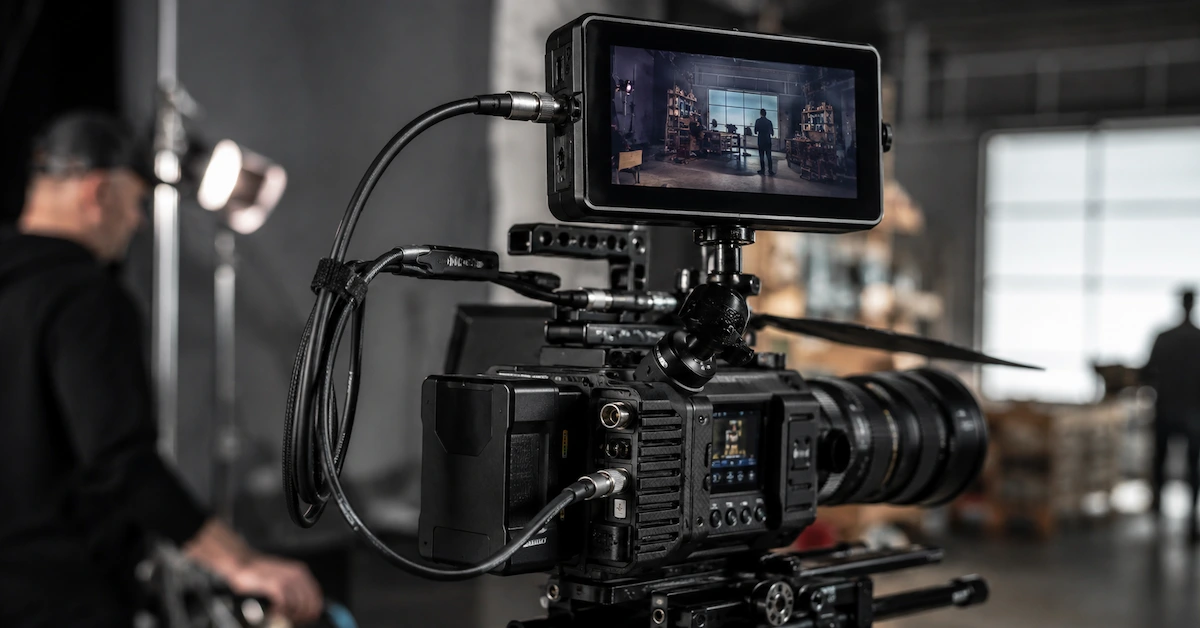
What Is a Stable Video Cable?
A stable video cable is a cable assembly designed to maintain consistent video signal transmission under professional operating conditions.
Unlike general consumer cables, professional video cables focus on:
- Signal integrity
- Low interference
- Reliable connectors
- Stable transmission distance
- Mechanical durability
- Flexible installation
- Long-term operational reliability
Stable video cables may be used for:
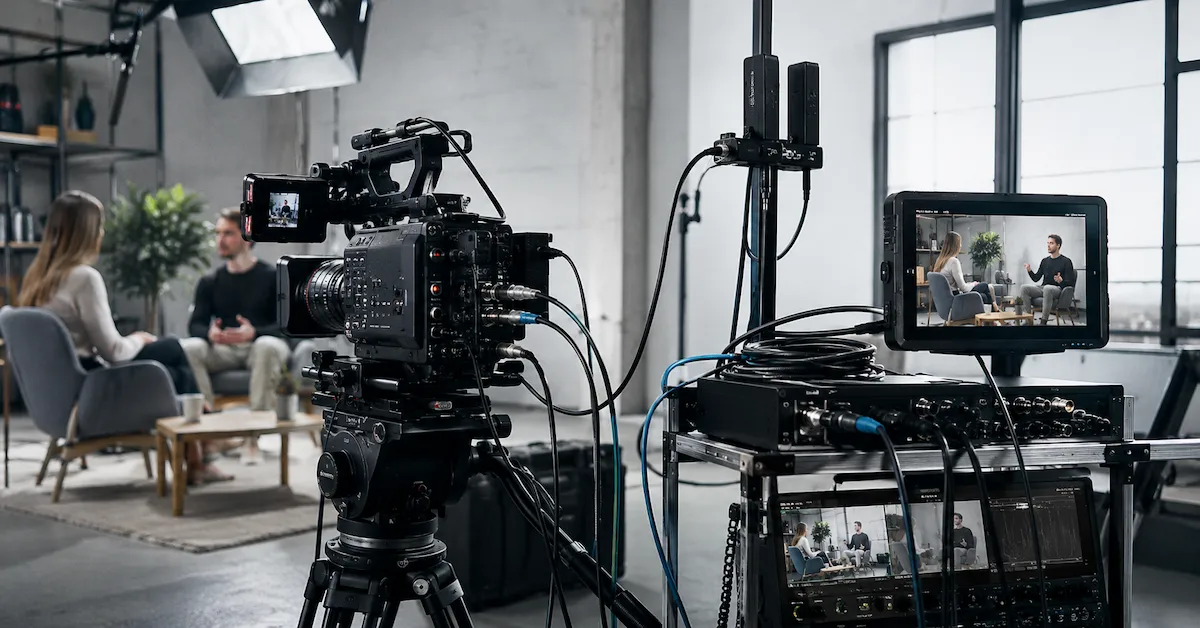
- Camera-to-monitor connections
- Broadcast production systems
- Live event video systems
- Video switchers
- Recording equipment
- Industrial cameras
- Machine vision systems
- Professional AV equipment
- OEM video products
Where Are Stable Video Cables Used?
| Application | Cable Requirement | Buyer Concern |
|---|---|---|
| Broadcast cameras | Reliable video transmission | Signal interruption and image quality |
| Live production | Fast setup and stable connection | Field reliability |
| Professional monitors | Consistent video signal | Display stability |
| Video switchers | Multi-device signal connection | Data integrity |
| Industrial imaging | Stable camera communication | Noise and interference |
| Machine vision | High-quality image transfer | Signal accuracy |
| AV integration | Long-term equipment connection | Cable management |
| OEM equipment | Custom video interface | Production consistency |
A professional video system requires cable performance that matches the equipment environment and transmission requirements.
Why Video Cable Stability Matters
1. Preventing Signal Interruption
Professional video systems often operate continuously for long periods. Signal interruption can affect recording, broadcasting, inspection, and monitoring processes.
A stable video cable helps reduce:
- Image flickering
- Signal dropouts
- Transmission errors
- Display interruption
- Equipment downtime
For broadcast and industrial applications, even a short signal interruption can create significant operational problems.
2. Maintaining Video Signal Quality
Video signals require accurate transmission. Cable structure, shielding, connector quality, and assembly accuracy all affect signal performance.
Important factors include:
- Conductor quality
- Impedance consistency
- Shielding effectiveness
- Connector contact stability
- Cable length
- Termination quality
A professional cable assembly should maintain signal quality from the source device to the receiving device.
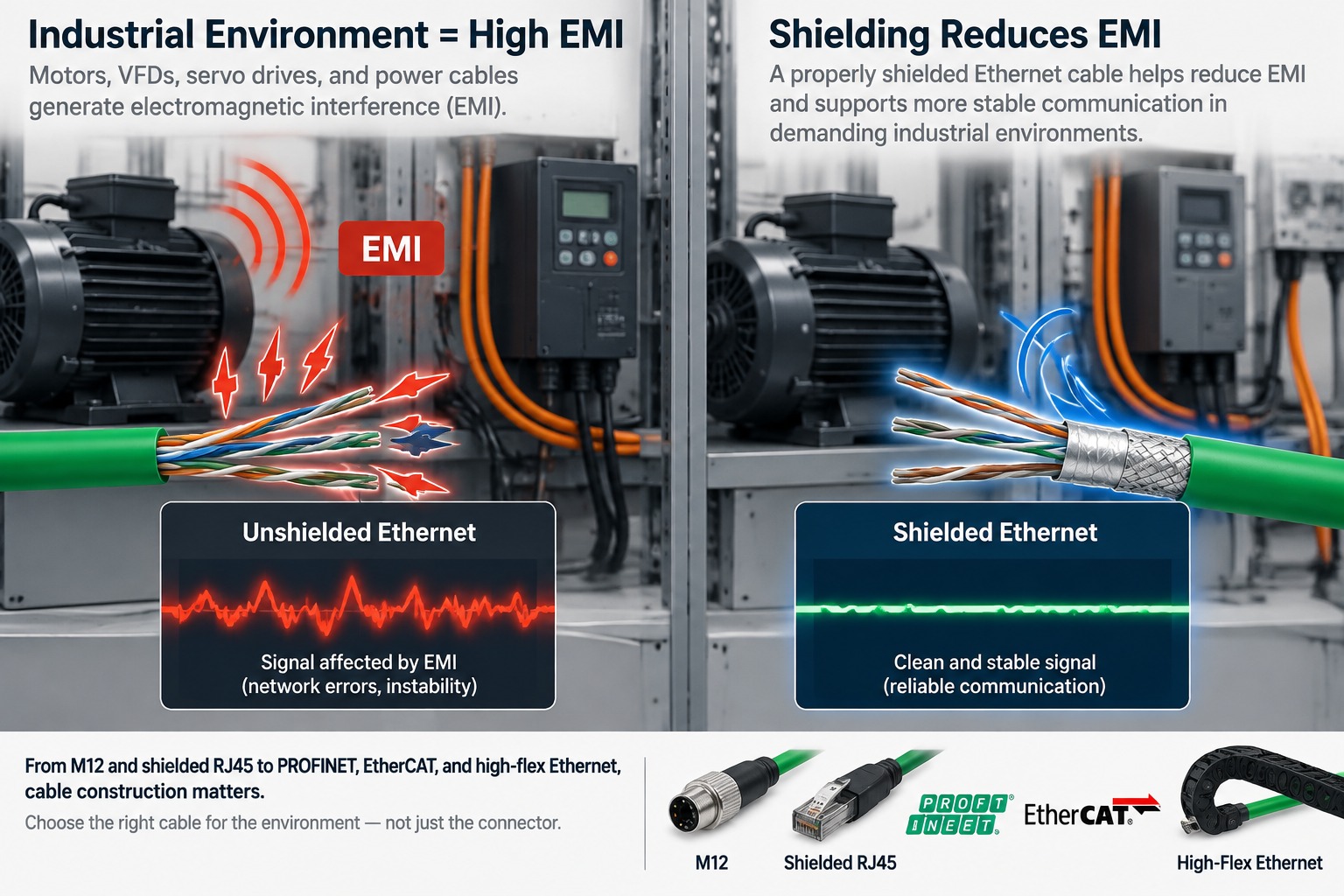
3. Reducing EMI/RFI Interference
Video systems often operate near:
- Power cables
- Motors
- Lighting equipment
- Wireless devices
- Control systems
- Industrial machines
These environments can create electromagnetic interference.
A stable video cable may include:
- Foil shielding
- Braided shielding
- Double shielding
- Proper grounding
- Shielded connector design
- Durable outer jacket
The correct shielding structure depends on the application environment.
4. Improving Long-Term Reliability
A video cable may be connected, disconnected, moved, and transported many times. Mechanical reliability is as important as electrical performance.
A reliable cable assembly should provide:
- Strong connector connection
- Strain relief protection
- Flexible cable routing
- Abrasion resistance
- Stable production quality
Common Stable Video Cable Options
| Cable Type | Purpose | Best For |
| SDI cable | Professional digital video transmission | Broadcast systems |
| HDMI cable assembly | Digital video connection | Cameras and monitors |
| BNC video cable | Secure video signal connection | Professional AV systems |
| Camera cable assembly | Camera accessories and control | Film production |
| Shielded video cable | Signal protection | Industrial environments |
| Custom video cable | Special equipment integration | OEM applications |
The correct cable type depends on the video format, connector interface, transmission distance, and equipment design.
Stable Video Cable vs Standard Video Cable
| Option | Advantages | Limitations | Best For |
| Standard video cable | Lower cost and easy sourcing | Limited durability and customization | General use |
| Shielded video cable | Better interference protection | Higher cost | Professional systems |
| Stable video cable assembly | Improved reliability and signal performance | Requires proper design | Broadcast and OEM systems |
| Custom video cable | Best equipment integration | Requires specifications or samples | Professional projects |
For B2B buyers, custom cable assemblies often provide better value because they match the actual equipment requirements.
Key Factors When Choosing a Stable Video Cable Supplier
A reliable video cable supplier should understand both signal requirements and mechanical design.
Buyers should evaluate:
| Evaluation Point | What to Check |
| Video experience | Does the supplier understand professional video applications? |
| Connector capability | Can they support BNC, HDMI, SDI, Hirose, and custom connectors? |
| Shielding design | Can they provide suitable EMI protection? |
| Custom capability | Can they support drawings and samples? |
| Cable structure | Can they recommend suitable cable materials? |
| Testing process | Do they verify signal and assembly quality? |
| Production consistency | Can they support repeat orders? |
| OEM support | Can they provide labeling and packaging? |
Choosing a supplier only based on price may increase the risk of signal problems later.
Custom Stable Video Cable Assembly Options
For professional video equipment, customization is often required.
Common options include:
| Custom Option | Purpose |
| Custom cable length | Fits equipment installation distance |
| Connector selection | Matches device interface |
| Right-angle connector | Saves space and reduces stress |
| Shielded structure | Improves signal protection |
| Flexible jacket | Supports routing and handling |
| Overmolded connector | Improves durability |
| Custom pinout | Matches equipment wiring |
| Labeling | Supports installation |
| OEM packaging | Supports product delivery |
These solutions are suitable for camera brands, broadcast equipment companies, AV integrators, rental companies, and OEM manufacturers.
What Information Should Buyers Provide for a Quote?
To receive an accurate quotation, prepare:
- Equipment application
- Video signal type
- Connector type
- Cable length
- Transmission distance
- Shielding requirement
- Cable flexibility requirement
- Working environment
- Quantity
- Drawing, photo, specification, or sample
If the cable is part of a professional camera or AV system, provide the equipment model and connection requirements.
Why Choose Alvin’s Cables?
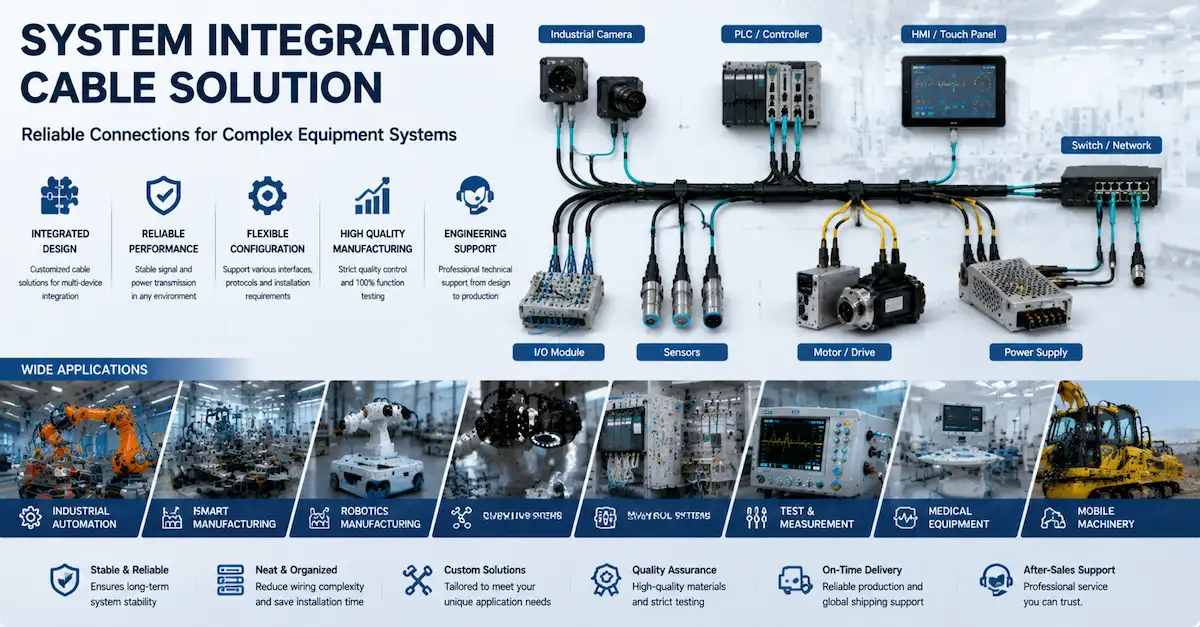
Alvin’s Cables supports custom cable assemblies and connector solutions for professional video equipment, camera systems, industrial electronics, medical devices, test instruments, robotics, and OEM applications.
For stable video cable projects, Alvin’s Cables can support:
- Custom professional video cable assemblies
- Camera and broadcast cable solutions
- SDI, HDMI, BNC, Hirose, RJ45, and custom connector options
- Shielded video cable structures
- Custom cable length and routing
- Flexible and rugged cable designs
- Overmolding and strain relief support
- Prototype and sample development
- Low-to-mid volume and batch production
- Multi-stage inspection and functional testing
- OEM labeling and packaging support
Buyers can explore related products through Alvin’s Cables Products, learn more about company capability from About Alvin’s Cables, or review service advantages through Why Choose Alvin’s Cables.
FAQ
1. What is a stable video cable?
A stable video cable is designed to maintain reliable video signal transmission with reduced interference and consistent performance.
2. Where are stable video cables used?
They are used in broadcast cameras, monitors, AV systems, industrial imaging, machine vision, and OEM video equipment.
3. Why do video cables need shielding?
Shielding helps reduce EMI/RFI interference and protects video signals from noise caused by nearby electronic equipment.
4. Can stable video cables be customized?
Yes. They can be customized by cable length, connector type, shielding, jacket material, pinout, labeling, and packaging.
5. What connectors are commonly used for video cables?
Common options include BNC, HDMI, SDI, Hirose, RJ45, and custom connector solutions.
6. Can Alvin’s Cables provide samples before bulk production?
Yes. Alvin’s Cables supports prototype and sample development before batch production.
7. What affects video cable performance?
Important factors include signal type, cable length, shielding, connector quality, impedance control, and assembly accuracy.
8. What should I send for a quotation?
Provide connector type, signal requirement, cable length, application environment, quantity, and any drawing or sample available.
Conclusion
A stable video cable helps professional video systems maintain reliable signal transmission and reduce the risk of image interruption, noise, and equipment downtime.
For broadcast cameras, live production systems, industrial imaging, AV equipment, and OEM video products, buyers should evaluate signal performance, shielding, connector quality, flexibility, testing, and supplier capability before placing orders.
If you need a custom stable video cable assembly for professional equipment, contact Alvin’s Cables through the Contact Us page and share your connector type, signal requirement, cable length, application environment, and order quantity.