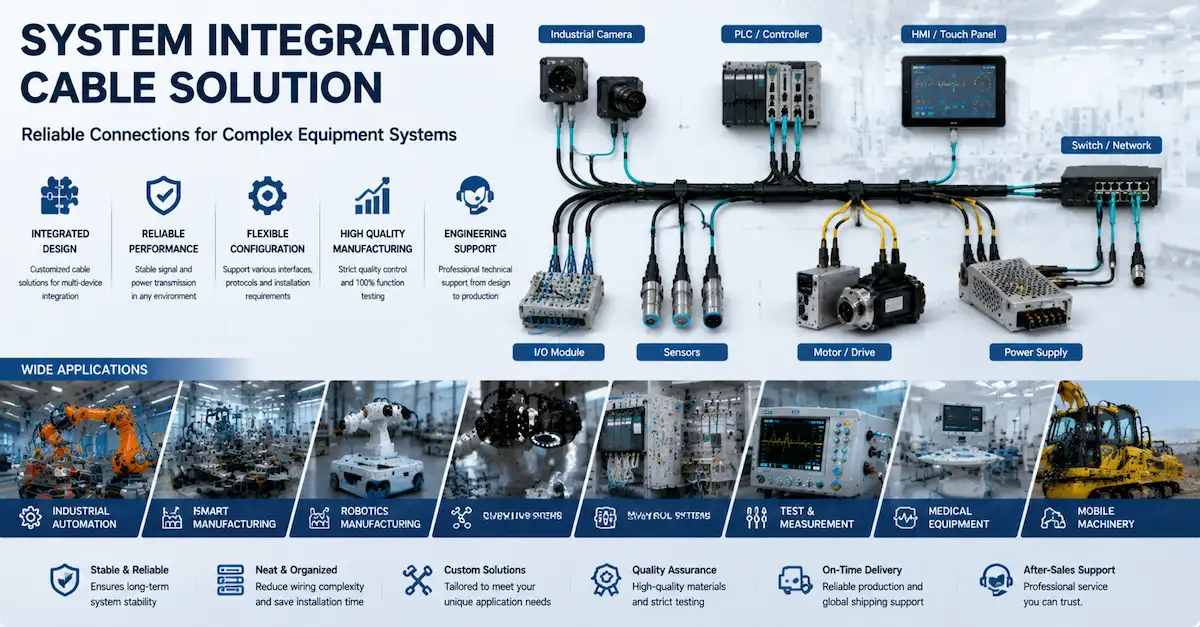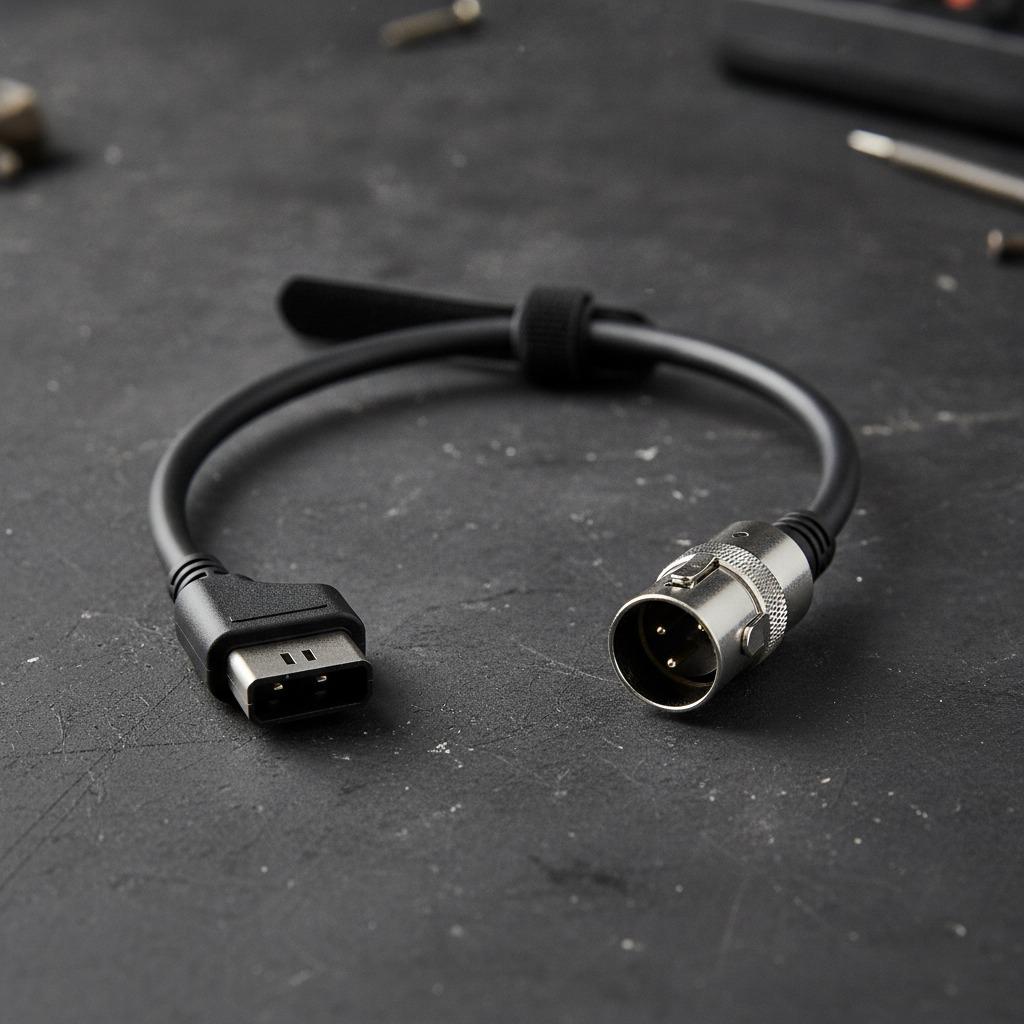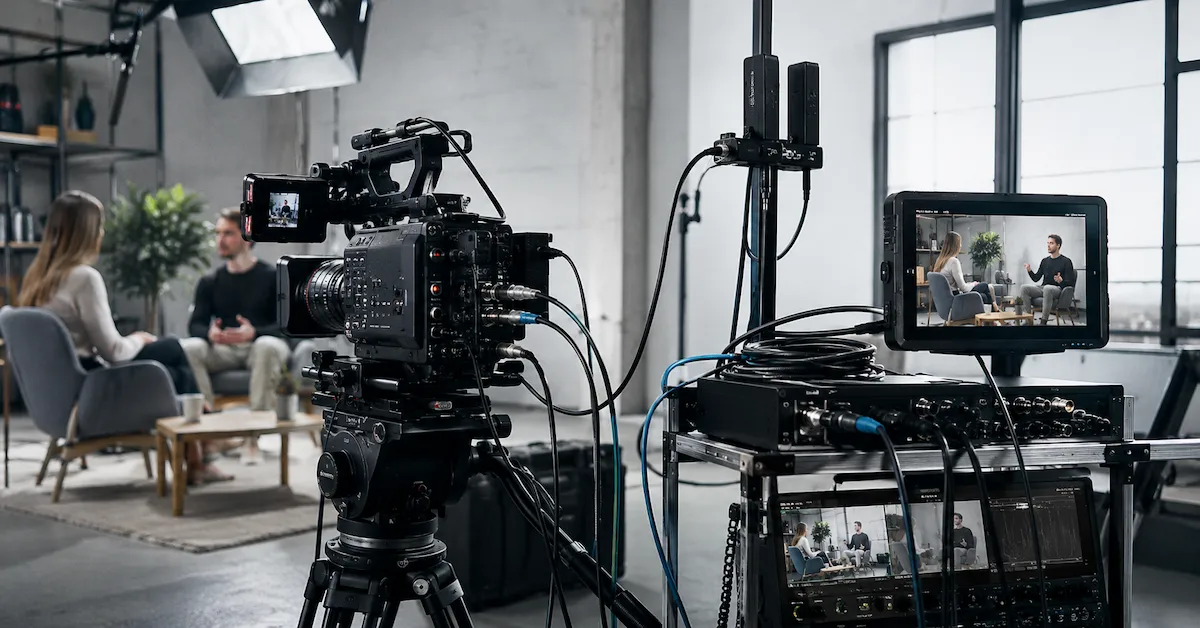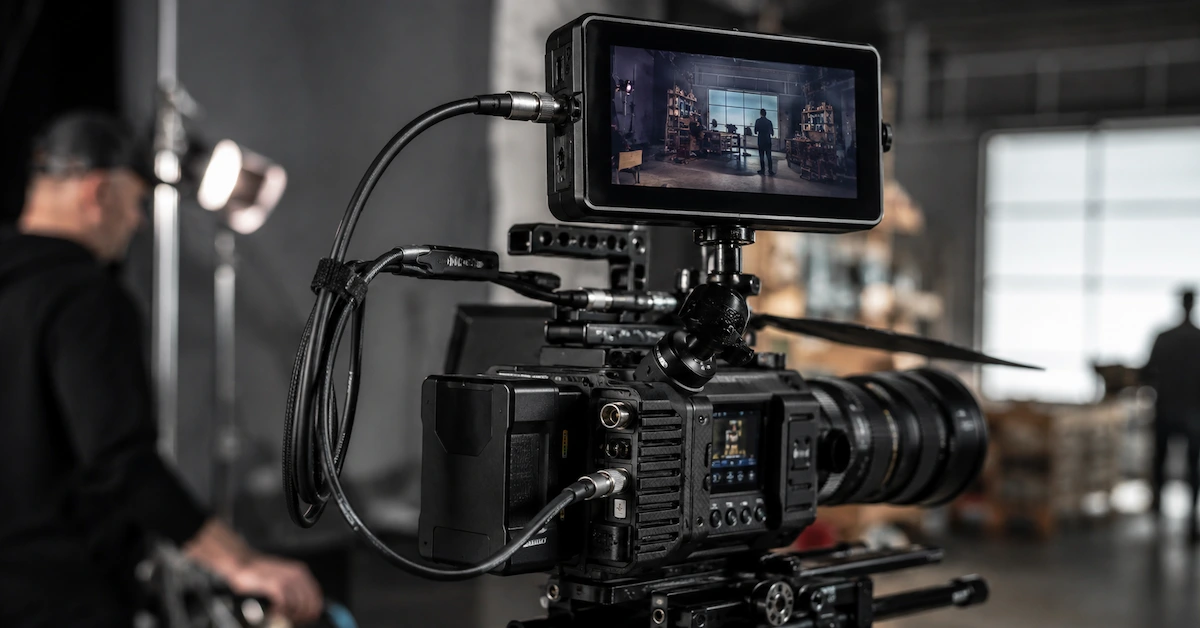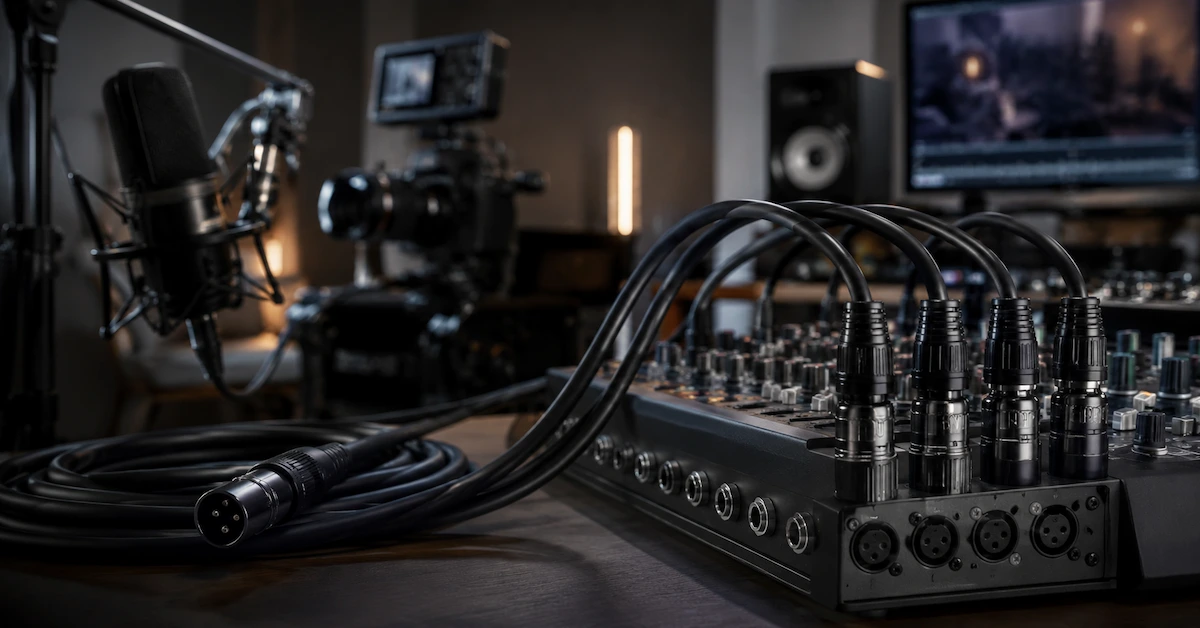
Modern camera systems require more than a simple connection cable. A professional camera cable solution integrates power, video, data, control, and accessory connections into reliable cable assemblies designed for specific equipment requirements.
In broadcast production, cinema equipment, live events, machine vision, industrial inspection, and OEM imaging systems, cable performance directly affects image quality, equipment stability, and workflow efficiency.
A poorly designed camera cable may cause signal interruption, power instability, connection problems, or difficult installation. A properly engineered camera cable solution helps cameras, monitors, recorders, controllers, and accessories operate together reliably.
For B2B buyers, selecting the right cable partner means evaluating connector compatibility, signal performance, mechanical design, customization ability, and production consistency.
What Is a Camera Cable Solution?
A camera cable solution is a customized cable assembly designed to connect cameras with related equipment while meeting electrical, mechanical, and application requirements.
A complete solution may include:
- Video transmission cables
- Camera power cables
- Control cables
- Data communication cables
- Multi-function camera cables
- Camera accessory cables
- Machine vision camera cables
- Custom OEM camera assemblies
Compared with standard cables, professional camera cable solutions focus on:
- Stable signal transmission
- Reliable power delivery
- Connector compatibility
- Flexible installation
- Field durability
- Long-term repeat production
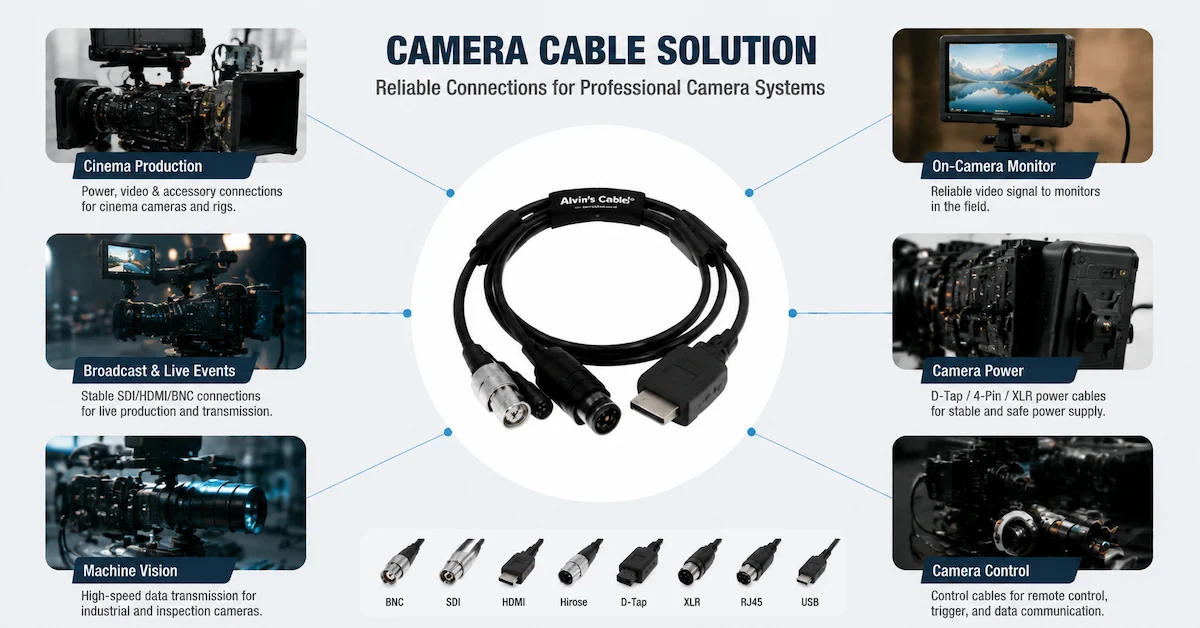
Where Are Camera Cable Solutions Used?
| Application | Cable Requirement | Buyer Concern |
|---|---|---|
| Cinema cameras | Video, power, and accessory connections | Reliability during production |
| Broadcast systems | Stable signal transmission | No signal interruption |
| Live events | Flexible field connections | Quick setup and durability |
| Machine vision | Camera and data communication | Image accuracy |
| Industrial inspection | Continuous camera operation | Long-term stability |
| Security systems | Video and power integration | Reliable connection |
| Robotics vision | Moving camera connections | Flexibility and vibration resistance |
| OEM camera equipment | Custom integration | Production consistency |
Camera cable solutions must be designed according to the equipment environment rather than only the connector type.
Why Professional Camera Cable Solutions Matter
1. Maintaining Stable Video Transmission
Professional cameras often transmit high-quality video signals that are sensitive to cable performance.
Important factors include:
- Signal type
- Cable length
- Shielding
- Impedance control
- Connector quality
- Assembly accuracy
A suitable camera cable solution helps reduce:
- Signal loss
- Image interruption
- Noise
- Transmission errors
- Connection instability
For broadcast and cinema applications, signal reliability directly affects production quality.
2. Combining Power and Signal Requirements
Many professional camera systems require multiple connections:
- Camera power
- Video output
- Monitor connection
- Control interface
- Recording equipment
- Accessories
A custom cable solution can integrate multiple functions into one organized assembly.
Benefits include:
- Cleaner equipment setup
- Reduced cable clutter
- Easier installation
- Improved portability
- Better system reliability
3. Supporting Different Camera Interfaces
Professional camera equipment uses various connector systems depending on brand, application, and configuration.
Common connection options include:
- BNC
- HDMI
- SDI
- Hirose
- D-TAP
- XLR
- USB interfaces
- RJ45
- Circular connectors
- Custom interfaces
A camera cable supplier should understand connector compatibility and wiring requirements before production.
4. Improving Field Durability
Camera cables are frequently moved, connected, disconnected, transported, and used in different environments.
A durable camera cable solution may include:
- Flexible cable jackets
- Reinforced connectors
- Strain relief
- Protective sleeving
- Right-angle connectors
- Overmolding
- Abrasion resistance
These features help extend cable service life in professional environments.
Common Camera Cable Solutions
| Cable Solution | Application | Main Advantage |
| SDI camera cable | Broadcast video | Stable digital transmission |
| HDMI camera cable | Camera and monitor connection | High-quality video |
| BNC camera cable | Professional video systems | Secure signal connection |
| D-TAP power cable | Cinema camera power | Professional power interface |
| Hirose camera cable | Camera accessories | Compact multi-pin connection |
| Camera control cable | Remote operation | Reliable communication |
| Machine vision cable | Industrial cameras | Stable data transfer |
| Custom camera harness | OEM equipment | Complete integration |
Camera Cable Solution vs Standard Cable
| Option | Advantages | Limitations | Best For |
| Standard cable | Easy availability | Limited customization | General use |
| Professional video cable | Better signal performance | Application-specific | Video systems |
| Camera cable solution | Complete system integration | Requires technical evaluation | Professional equipment |
| Custom OEM camera cable | Exact equipment matching | Requires development | Camera manufacturers |
For professional equipment, the complete connection system is often more important than the cable itself.
Key Design Factors for Camera Cable Solutions
Connector Selection
The connector determines:
- Device compatibility
- Signal performance
- Mechanical security
- Installation convenience
Before production, buyers should confirm:
- Connector model
- Pin count
- Male/female interface
- Locking method
- Cable exit direction
- Required mating connector
Cable Structure
The cable design depends on:
- Video format
- Power requirements
- Data rate
- Cable length
- Installation environment
Possible structures include:
- Shielded coaxial cable
- Twisted pair cable
- Multi-core cable
- Hybrid power and signal cable
- Flexible cable structure
Shielding Performance
Camera systems may operate near:
- Lighting equipment
- Wireless systems
- Power cables
- Motors
- Industrial machines
Shielding options include:
- Foil shielding
- Braided shielding
- Double shielding
- Shield grounding
- EMI-resistant jackets
Mechanical Design
A camera cable should consider:
- Bend radius
- Connector protection
- Cable weight
- Port stress
- Field handling
- Repeated connection cycles
Camera Cable Development Process
Requirement Review
Confirm:
- Camera model
- Connected equipment
- Connector types
- Signal requirements
- Power requirements
- Cable length
- Application environment
Engineering Design
Review:
- Wiring structure
- Connector compatibility
- Shielding
- Cable routing
- Strain relief
Prototype Production
Verify:
- Device connection
- Video performance
- Power delivery
- Cable flexibility
- Physical fit
Production
Control:
- Materials
- Assembly process
- Testing
- Packaging
- Repeat consistency
How to Choose a Camera Cable Supplier?
| Evaluation Point | What to Check |
| Camera experience | Does the supplier understand imaging applications? |
| Connector knowledge | Can they support professional camera interfaces? |
| Signal capability | Can they design stable video connections? |
| Custom ability | Can they develop unique cable solutions? |
| Testing | Can they verify cable performance? |
| Production | Can they support repeat orders? |
| Quality control | Are processes documented? |
| OEM support | Can they provide labeling and packaging? |
A professional camera cable supplier should provide engineering support rather than only selling finished cables.
What Information Should Buyers Provide?
For a camera cable solution quotation, prepare:
- Camera model
- Connected devices
- Connector requirements
- Video format
- Power requirements
- Cable length
- Pinout information
- Shielding requirements
- Working environment
- Quantity
- Drawing, specification, or sample
Complete information helps suppliers create the right cable design.
Why Choose Alvin’s Cables for Camera Cable Solutions?
Alvin’s Cables provides custom camera cable solutions for professional video, broadcast, cinema, machine vision, industrial inspection, and OEM imaging systems.
Capabilities include:
- Custom camera cable assemblies
- SDI, HDMI, BNC, Hirose, D-TAP, XLR, RJ45, and custom connectors
- Video, power, control, and data cable solutions
- Shielded cable structures
- Flexible and rugged cable designs
- Camera harness development
- Prototype production
- Electrical and functional testing
- OEM labeling and packaging
Buyers can explore related products through Alvin’s Cables Products, learn more about company capabilities through About Alvin’s Cables, and review service advantages through Why Choose Alvin’s Cables.
FAQ
1. What is a camera cable solution?
A camera cable solution is a customized cable assembly designed to connect cameras with power, video, data, control, and accessory equipment.
2. What industries use camera cable solutions?
They are used in cinema, broadcast, live production, machine vision, industrial inspection, security, and OEM camera systems.
3. Can camera cables combine power and signal?
Yes. Hybrid cable assemblies can combine multiple functions when properly designed.
4. What connectors are commonly used for camera cables?
Common connectors include SDI, BNC, HDMI, Hirose, D-TAP, XLR, RJ45, and custom connectors.
5. Why does shielding matter for camera cables?
Shielding reduces electromagnetic interference and helps maintain stable video and data transmission.
6. Can camera cable solutions be customized?
Yes. Cable length, connectors, pinout, shielding, jacket, labels, and packaging can be customized.
7. Can Alvin’s Cables provide samples?
Yes. Prototype and sample development are available before repeat production.
8. What information is needed for a camera cable quotation?
Provide camera model, connector details, cable length, signal requirements, environment, quantity, and drawings or samples.
Conclusion
A reliable camera cable solution helps professional imaging systems achieve stable video transmission, secure power delivery, and efficient equipment integration.
For cinema cameras, broadcast systems, machine vision, industrial inspection, and OEM imaging products, the right cable design improves reliability and reduces operational issues.
If you need a custom camera cable solution, contact Alvin’s Cables with your camera model, connector requirements, cable specifications, and application details.