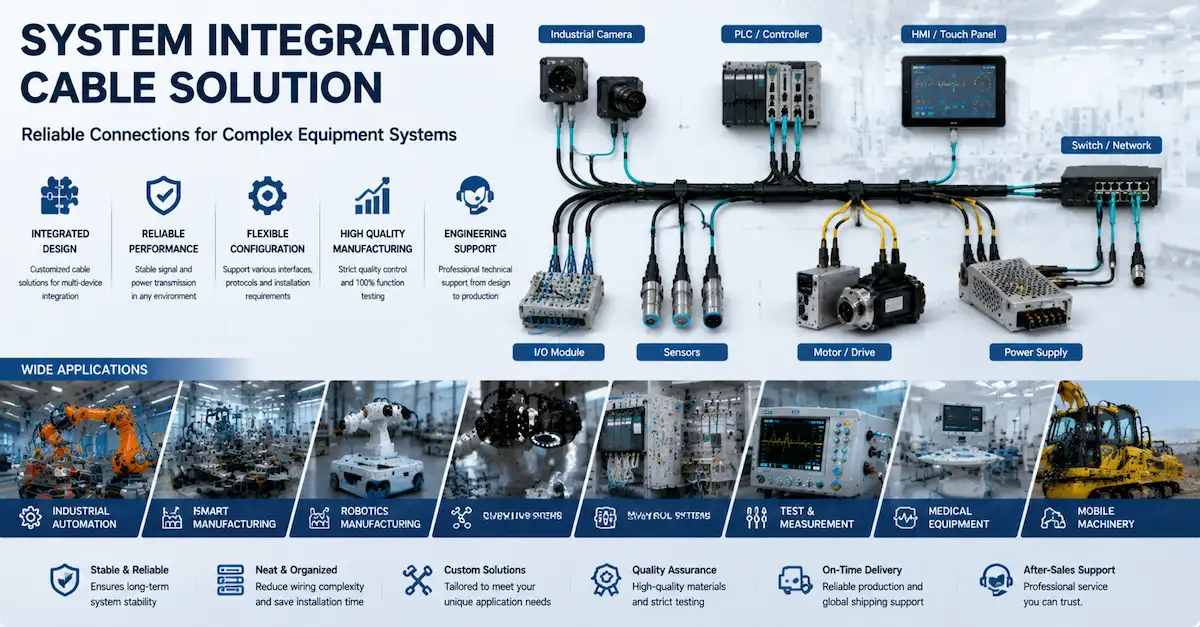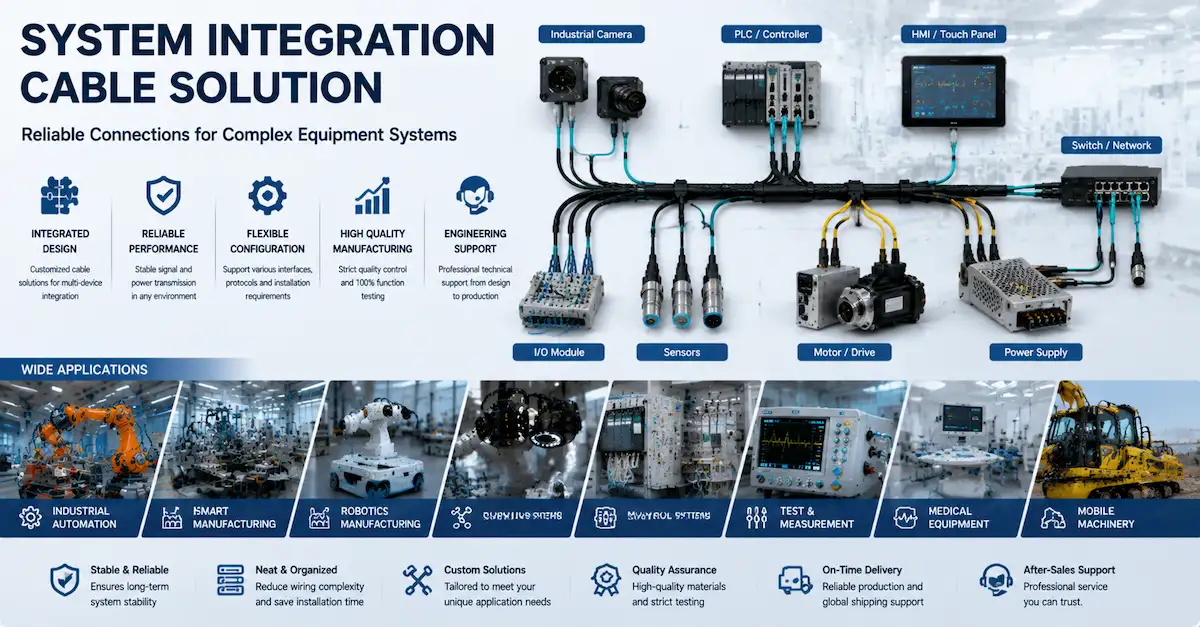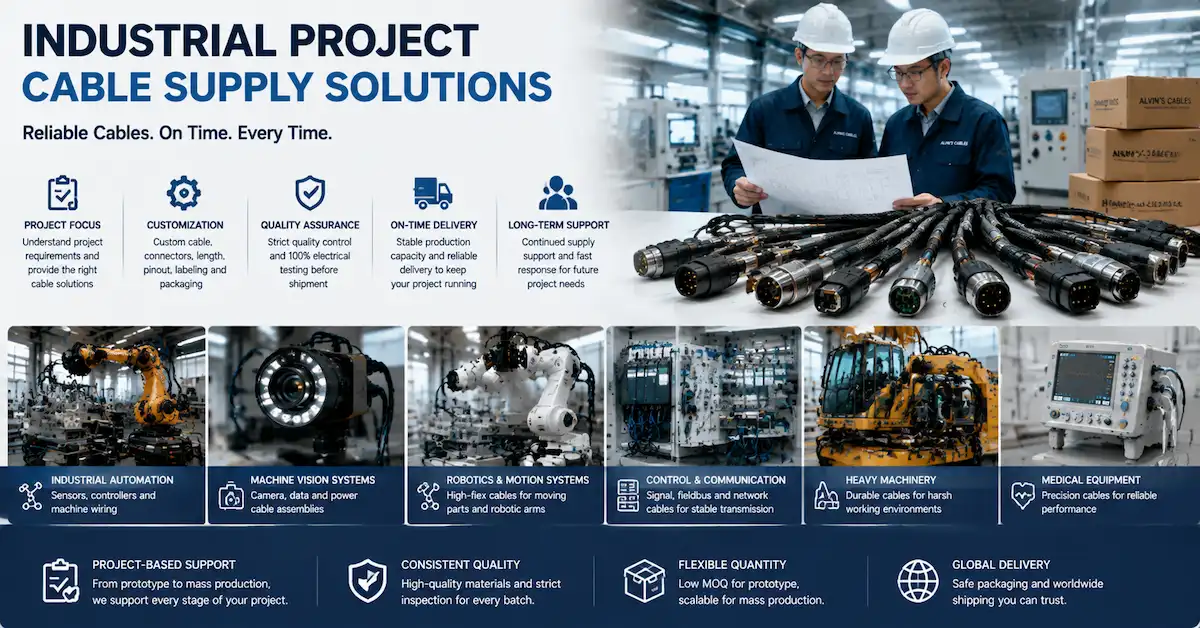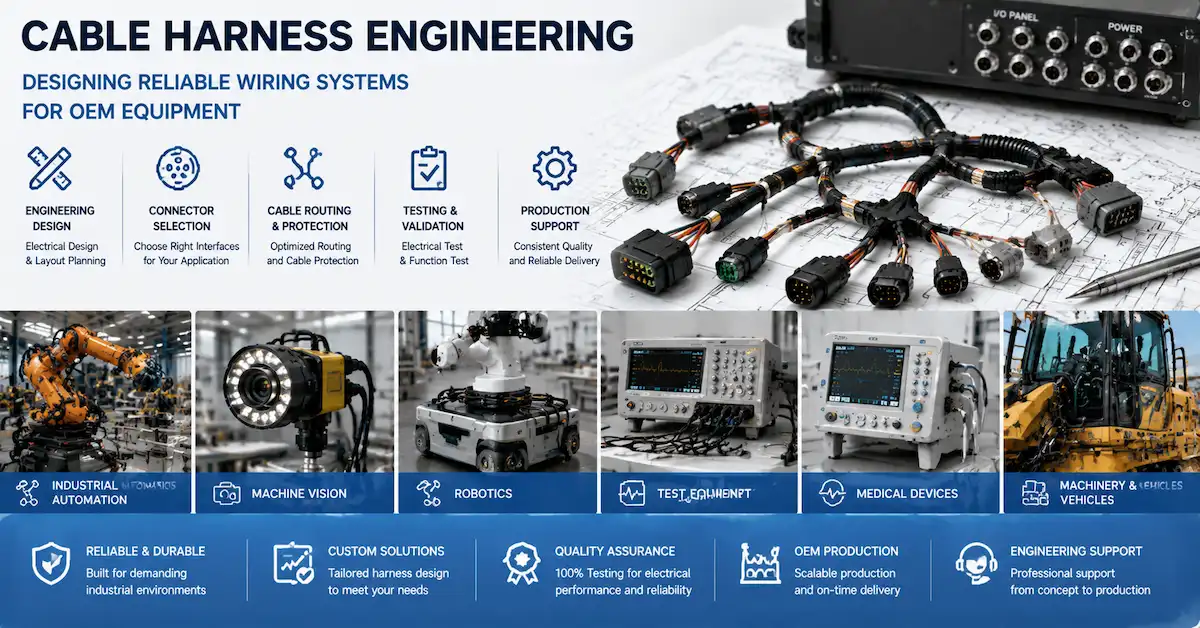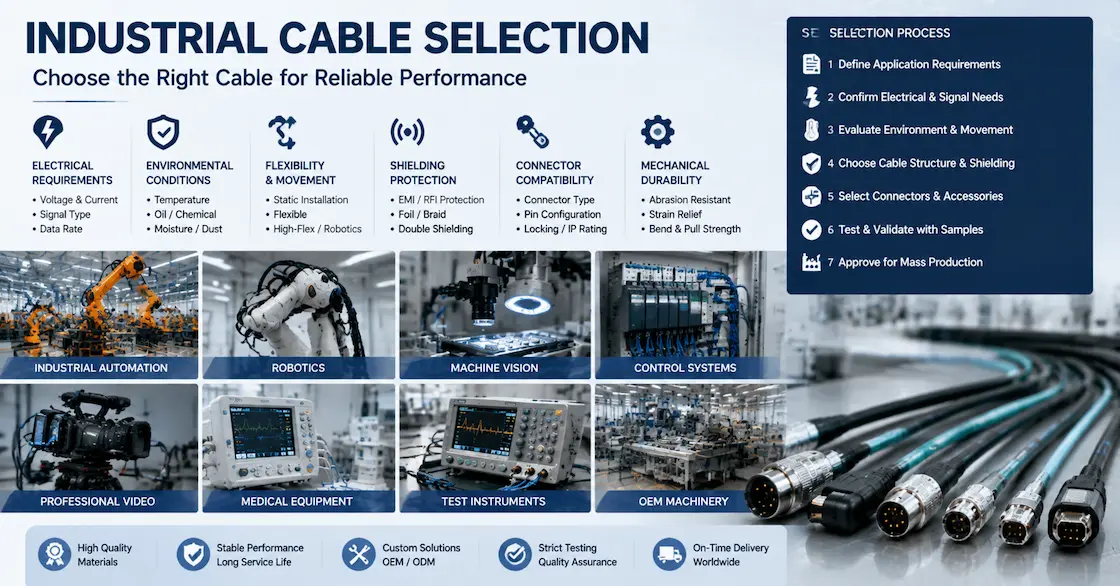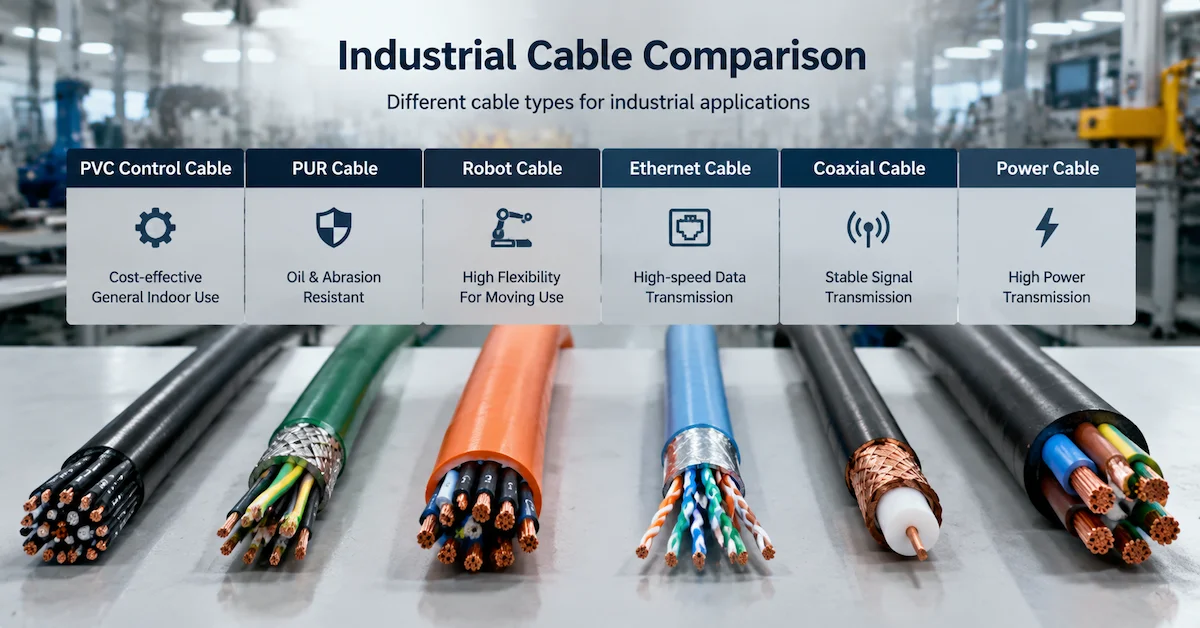
Modern equipment often contains multiple electrical connections that must be organized, protected, and manufactured consistently. A custom harness solution provides an integrated wiring system that connects power, signals, sensors, controllers, and electronic modules according to the specific requirements of the equipment.
For OEM manufacturers, automation companies, robotics developers, and industrial equipment builders, standard cables are often not enough. Complex systems require customized wire lengths, connector combinations, branch structures, protection materials, and testing procedures.
A professional custom harness solution helps reduce installation complexity, improve production efficiency, and create more reliable equipment connections.
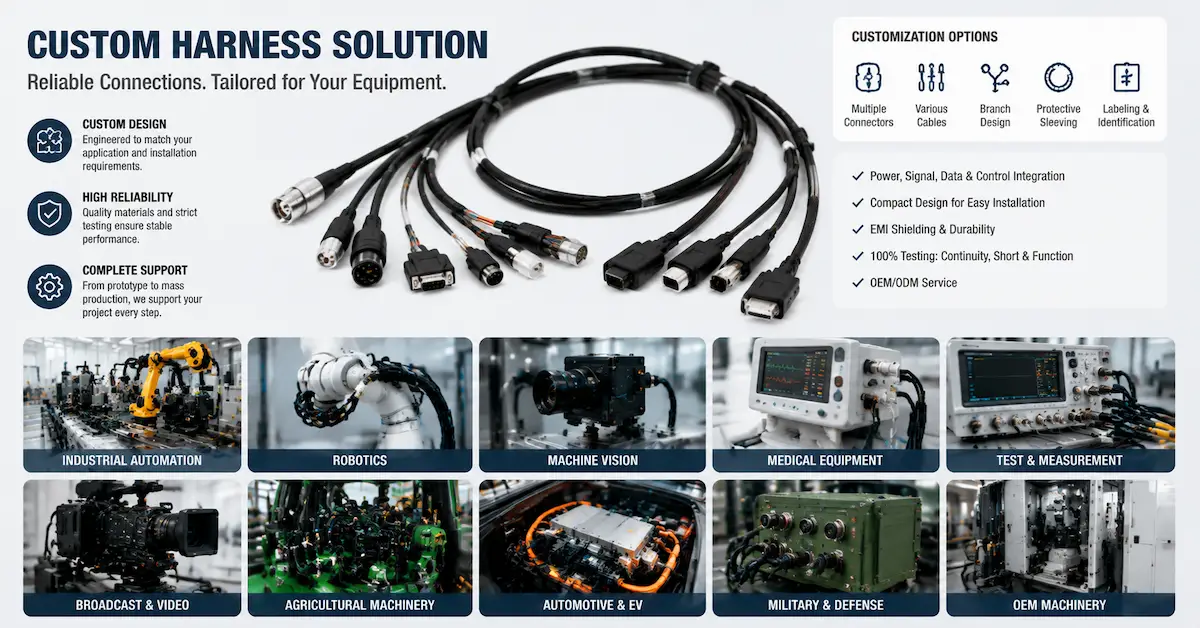
What Is a Custom Harness Solution?
A custom harness solution is a customized wiring assembly that combines multiple wires, cables, connectors, and protective components into one organized system.
Unlike individual cables, a harness solution provides:
- Organized wire routing
- Simplified installation
- Reduced assembly time
- Improved connection reliability
- Easier maintenance
- Better equipment integration
A custom harness may include:
- Power wires
- Signal wires
- Data cables
- Shielded cables
- Multiple connectors
- Protective sleeving
- Branch structures
- Labels
- Mounting accessories
The design is based on the equipment layout, electrical requirements, and production process.
Where Are Custom Harness Solutions Used?
| Application | Harness Requirement | Buyer Concern |
|---|---|---|
| Industrial automation | Machine wiring integration | Reliability |
| Robotics | Flexible moving connections | Bend resistance |
| OEM machinery | Internal equipment wiring | Consistency |
| Medical equipment | Accurate electrical connections | Quality control |
| Test equipment | Signal and power organization | Stability |
| Machine vision | Camera and sensor wiring | Signal integrity |
| Control systems | Multiple module connections | Installation efficiency |
| Electronic devices | Compact wiring design | Space optimization |
Custom harness solutions are especially useful for equipment with complex internal structures.
Why Custom Harness Solutions Matter
1. Simplifying Complex Wiring
Modern equipment may contain dozens of electrical connections.
Using separate cables can create:
- Difficult installation
- Cable clutter
- Longer assembly time
- Higher wiring error risk
- Difficult troubleshooting
A custom harness organizes all connections into a structured assembly.
Benefits include:
- Faster installation
- Cleaner equipment design
- Easier maintenance
- Reduced assembly mistakes
2. Improving Equipment Reliability
A professional harness solution helps protect electrical connections from:
- Vibration
- Mechanical stress
- Incorrect installation
- Loose connections
- Environmental exposure
Reliable harness design considers:
- Wire selection
- Connector locking
- Strain relief
- Protection materials
- Routing method
- Testing requirements
3. Supporting OEM Product Development
OEM manufacturers often require wiring solutions that match their own equipment design.
A custom harness supplier can support:
- Engineering review
- Drawing development
- Prototype samples
- Wiring confirmation
- Production optimization
- Repeat manufacturing
This helps OEM companies develop products faster and reduce production risks.
4. Improving Production Efficiency
A pre-assembled harness reduces manual wiring operations.
Advantages include:
- Reduced labor time
- Consistent assembly
- Faster installation
- Easier quality inspection
- Improved production repeatability
For mass-produced equipment, harness optimization can significantly improve manufacturing efficiency.
Common Custom Harness Solution Types
| Harness Type | Application | Main Advantage |
| Industrial cable harness | Factory equipment | Durable integration |
| Control harness | Automation systems | Organized wiring |
| Power harness | Electrical equipment | Reliable power distribution |
| Signal harness | Sensors and controls | Stable communication |
| Camera harness | Imaging systems | Combined connections |
| Robotics harness | Moving equipment | Flexible operation |
| Multi-branch harness | Complex machines | Simplified installation |
| Shielded harness | Sensitive electronics | EMI protection |
Key Design Factors for Custom Harness Solutions
Wiring Design
A reliable harness starts with accurate wiring documentation.
Important information includes:
- Wire identification
- Pin-to-pin connection
- Signal names
- Power polarity
- Grounding
- Branch locations
- Connector positions
Clear documentation prevents production mistakes.
Connector Selection
Connectors affect:
- Mechanical fit
- Electrical performance
- Installation method
- Environmental protection
Common connector options include:
- M8
- M12
- Hirose
- RJ45
- BNC
- XLR
- D-TAP
- Push-pull connectors
- Custom connectors
Protection and Routing
Industrial harnesses often require additional protection.
Options include:
- Braided sleeving
- Spiral wrapping
- Heat shrink
- Corrugated tubing
- Waterproof protection
- Strain relief
- Overmolding
The protection method depends on movement, environment, and installation requirements.
Flexibility Requirements
Applications with movement require special harness designs.
Examples:
- Robotic arms
- Moving platforms
- Camera sliders
- Automated machinery
Important factors include:
- Bend radius
- Flex cycles
- Cable weight
- Connector stress
- Routing space
Custom Harness Solution Development Process
Step 1: Requirement Analysis
The supplier reviews:
- Equipment structure
- Connection requirements
- Wiring diagrams
- Connector specifications
- Operating environment
Step 2: Engineering Design
The design process includes:
- Cable routing
- Connector selection
- Branch planning
- Protection design
- Assembly method
Step 3: Prototype Production
Samples verify:
- Installation fit
- Wiring accuracy
- Connector compatibility
- Mechanical performance
- Equipment operation
Step 4: Testing and Approval
Testing may include:
- Continuity testing
- Pinout verification
- Short-circuit testing
- Connector inspection
- Functional testing
Step 5: Mass Production
Production follows approved:
- Drawings
- BOM
- Assembly instructions
- Testing standards
- Packaging requirements
Custom Harness Solution vs Individual Cable Assembly
| Option | Advantages | Limitations | Best For |
| Individual cables | Simple replacement | More installation work | Basic equipment |
| Cable bundles | Lower initial complexity | Limited organization | Small systems |
| Custom harness solution | Better integration and reliability | Requires design | OEM equipment |
| Complete wiring system | Maximum optimization | Requires engineering support | Complex machinery |
For professional equipment, a customized harness often provides better overall performance.
How to Choose a Custom Harness Supplier?
| Evaluation Point | What to Check |
| Engineering ability | Can they understand equipment requirements? |
| Wiring experience | Can they manage complex assemblies? |
| Connector knowledge | Can they recommend suitable components? |
| Production capability | Can they support repeat orders? |
| Testing process | Can they verify harness quality? |
| Quality control | Are procedures documented? |
| Customization | Can they follow drawings and samples? |
| OEM support | Can they provide labeling and packaging? |
A capable supplier should provide complete development and manufacturing support.
What Information Should Buyers Provide?
For a custom harness quotation, prepare:
- Equipment application
- Wiring diagram
- Connector requirements
- Wire specifications
- Cable length
- Branch layout
- Protection requirements
- Environmental conditions
- Quantity
- Drawings, samples, or specifications
Complete information helps suppliers create accurate solutions.
Why Choose Alvin’s Cables for Custom Harness Solutions?
Alvin’s Cables provides custom harness solutions for industrial automation, robotics, machine vision, professional video equipment, test instruments, and OEM electronics.
Capabilities include:
- Custom cable harness development
- Multi-wire assemblies
- Power and signal integration
- Custom connectors
- M8, M12, Hirose, RJ45, BNC, D-TAP, XLR, and custom interfaces
- Shielded harness solutions
- Flexible and rugged designs
- Prototype production
- Electrical testing
- Functional inspection
- OEM labeling and packaging
Buyers can explore cable categories through Alvin’s Cables Products, learn more about manufacturing capabilities through About Alvin’s Cables, and review service advantages through Why Choose Alvin’s Cables.
FAQ
1. What is a custom harness solution?
A custom harness solution is a customized wiring assembly that organizes multiple wires, connectors, and protective components for specific equipment.
2. What industries use custom harness solutions?
They are used in automation, robotics, machinery, medical equipment, machine vision, electronics, and OEM manufacturing.
3. Can cable harnesses include different connectors?
Yes. A custom harness can combine multiple connector types based on equipment requirements.
4. Why use a custom harness instead of separate cables?
A harness improves organization, installation efficiency, reliability, and production consistency.
5. Can custom harnesses support moving equipment?
Yes. Flexible harness designs can support robotics and repeated movement applications.
6. What testing is required for cable harnesses?
Testing may include continuity, pinout, short circuit, connector inspection, and functional verification.
7. Can Alvin’s Cables provide harness prototypes?
Yes. Prototype development is available before repeat production.
8. What information is needed for a quotation?
Provide drawings, wiring requirements, connectors, application environment, quantity, and production needs.
Conclusion
A reliable custom harness solution helps OEM manufacturers and industrial equipment companies create organized, durable, and efficient wiring systems.
The right harness design improves installation efficiency, reduces wiring errors, and supports long-term equipment reliability.
For a customized harness solution, contact Alvin’s Cables with your equipment requirements, wiring details, connector information, and production needs.