Modern equipment projects often require cables that cannot be purchased directly from standard catalogs. A professional project cable customization process helps engineers and manufacturers develop cable assemblies that match specific equipment designs, electrical requirements, installation conditions, and production goals.
For OEM equipment manufacturers, industrial automation companies, robotics developers, machine vision integrators, and electronic product brands, customized cables are often critical components of the complete system.
A successful cable customization project requires more than changing cable length. It involves connector selection, wiring design, material evaluation, prototype validation, testing, and long-term production management.
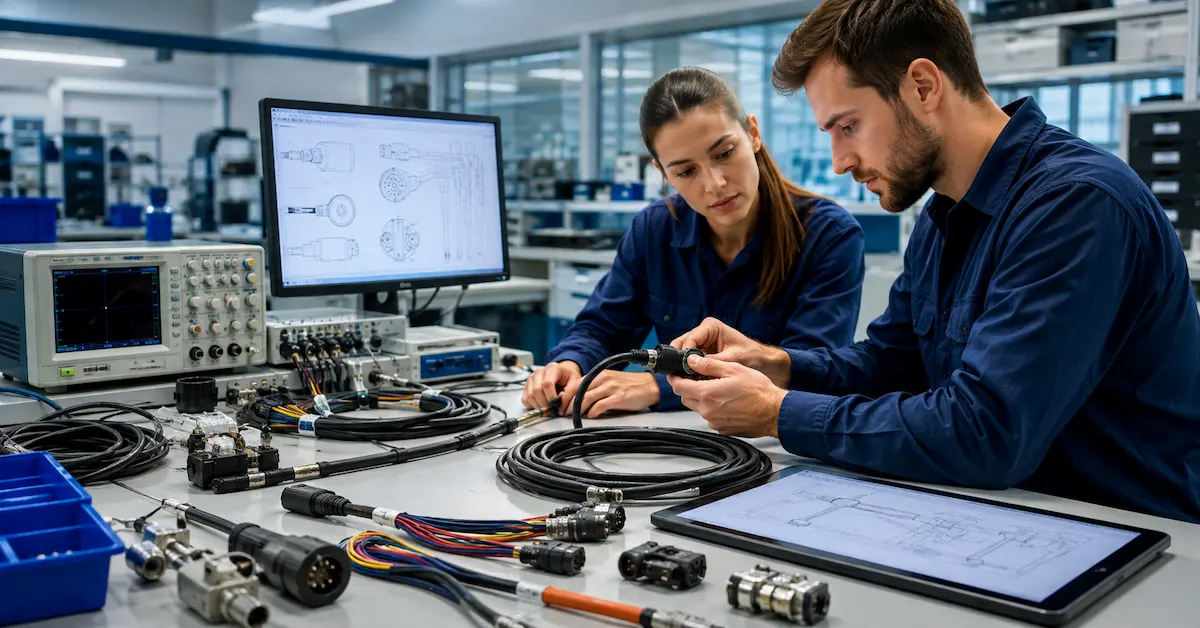
What Is Project Cable Customization?
Project cable customization is the process of designing and manufacturing cable assemblies according to a specific customer project requirement.
Unlike standard cable products, customized project cables are developed based on:
- Equipment structure
- Electrical specifications
- Connection requirements
- Installation limitations
- Environmental conditions
- Production volume
- Long-term supply plans
A customized cable project may include:
- Power cable assemblies
- Signal cables
- Data transmission cables
- Video cables
- Cable harnesses
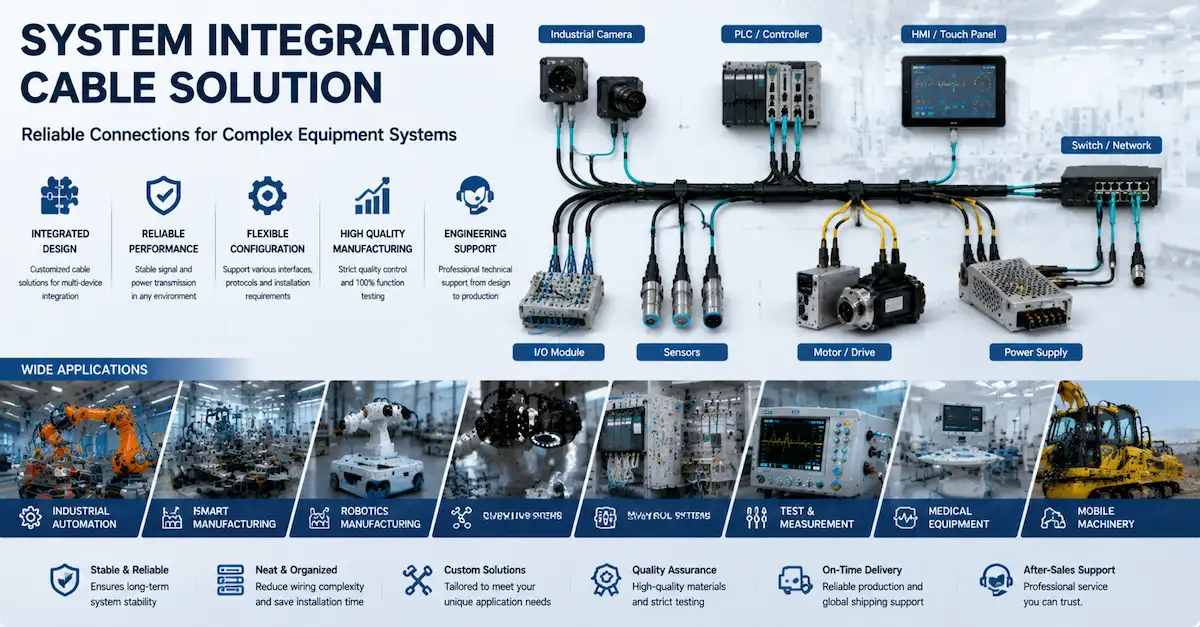
- Multi-device connection systems
- Industrial cable assemblies
- OEM branded cables
Why Do Companies Need Cable Customization Projects?
1. Standard Cables Cannot Meet Equipment Requirements
Many professional systems require unique cable structures.
Common reasons include:
- Special connector interfaces
- Non-standard cable lengths
- Custom pin configurations
- Limited installation space
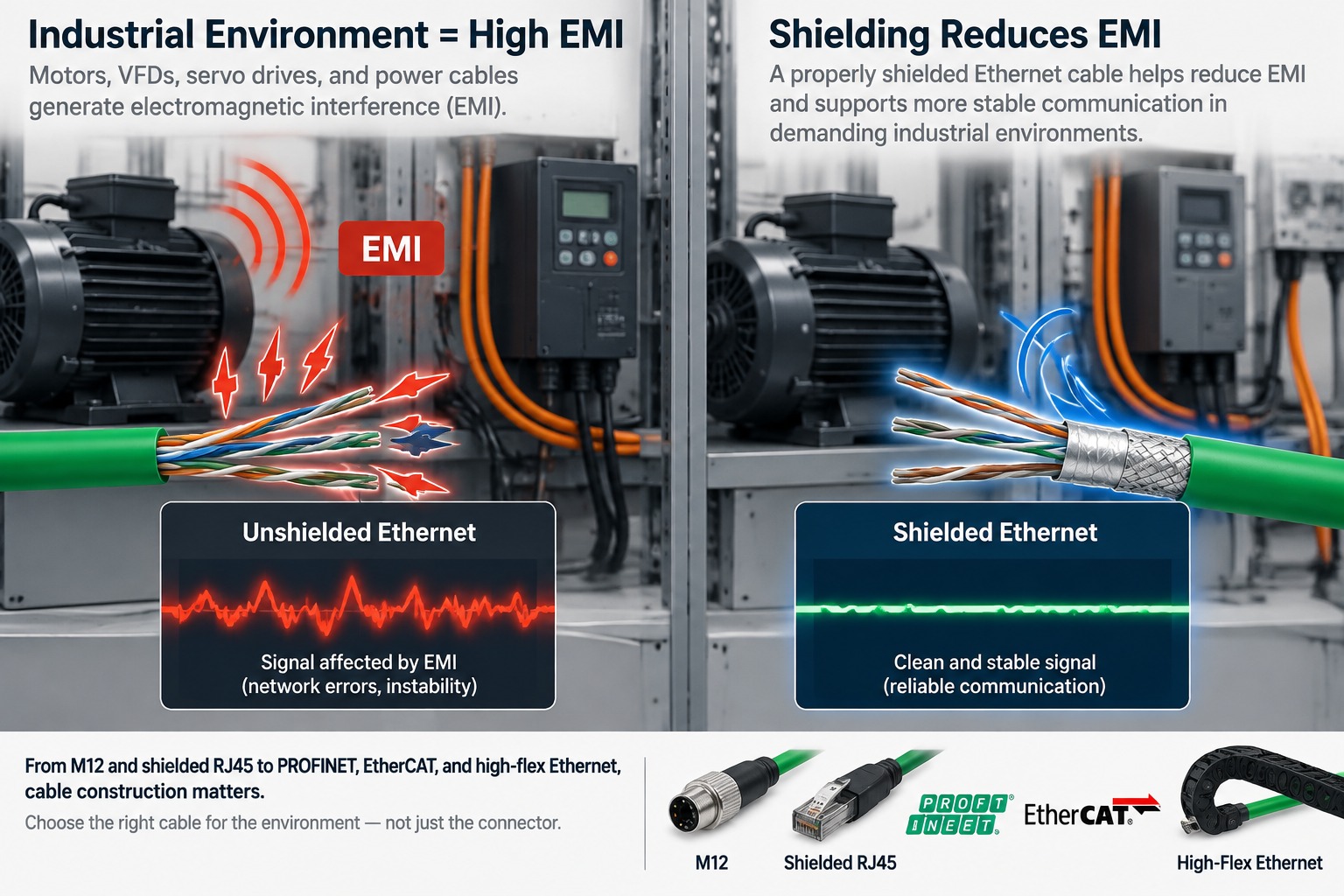
- Special shielding requirements
- Specific environmental conditions
A customized solution allows the cable to match the equipment instead of forcing equipment design around standard cables.
2. Improving Equipment Integration
Custom cables help simplify complex equipment connections.
Benefits include:
- Cleaner installation
- Reduced wiring errors
- Better space utilization
- Faster assembly
- Easier maintenance
For OEM products, a well-designed cable assembly can improve the overall user experience.
3. Supporting New Product Development
During product development, engineers often need cable solutions that evolve with the project.
Customization allows:
- Prototype testing
- Design adjustments
- Connector changes
- Wiring optimization
- Production improvement
This flexibility helps shorten development cycles.
Common Applications for Project Cable Customization
| Application | Customization Requirement |
|---|---|
| Industrial automation | Sensor, control, and power connections |
| Robotics | Flexible moving cable systems |
| Machine vision | Camera and data transmission cables |
| Professional video | Camera, monitor, and power cables |
| Medical equipment | Precision cable assemblies |
| Test instruments | Stable signal connections |
| OEM machinery | Integrated wiring solutions |
| Electronic devices | Compact custom connections |
Key Elements of a Cable Customization Project
1. Requirement Analysis
The first step is understanding the complete application.
Important information includes:
- Equipment type
- Cable purpose
- Connection points
- Electrical requirements
- Installation environment
- Expected service life
- Production quantity
A clear requirement review reduces design changes later.
2. Connector Selection
Connector selection directly affects compatibility and reliability.
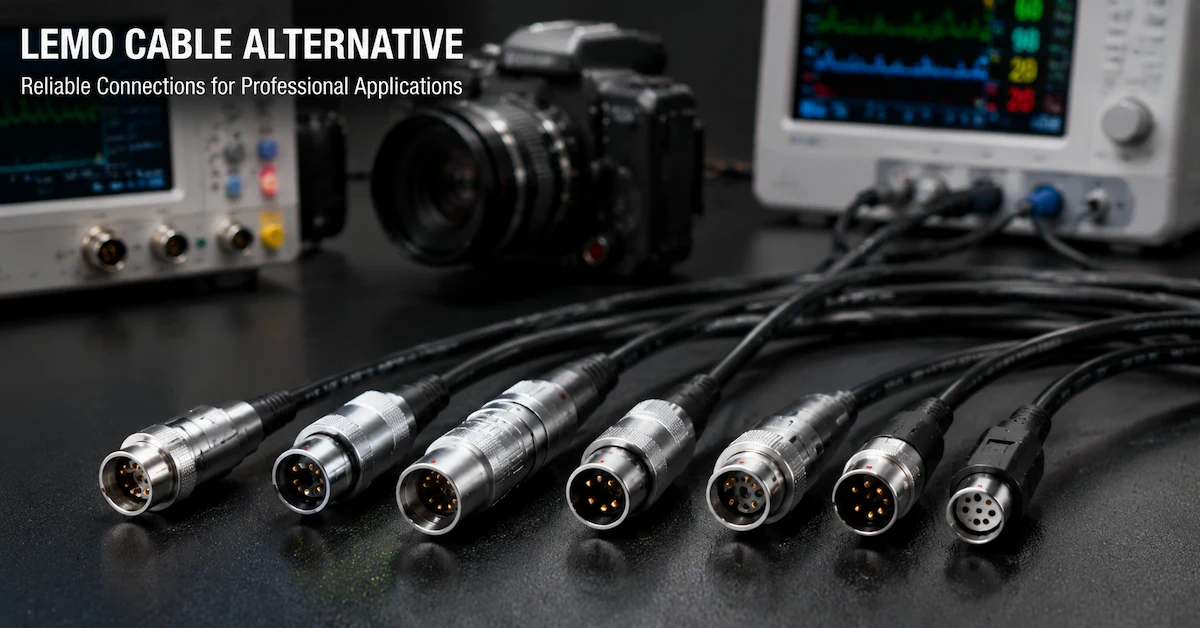
Common connector options include:
- M8
- M12
- Hirose
- BNC
- SDI
- HDMI
- RJ45
- XLR
- D-TAP
- Push-pull connectors
- Custom interfaces
Important factors include:
- Pin count
- Locking method
- Contact type
- Voltage rating
- Current rating
- Environmental protection
3. Cable Structure Design
Cable structure depends on application requirements.
Design considerations include:
- Conductor size
- Shielding
- Jacket material
- Flexibility
- Cable diameter
- Temperature resistance
- Mechanical protection
Different applications require different designs.
4. Wiring and Pinout Development
Custom cable projects require accurate wiring control.
Documentation should include:
- Pin-to-pin connection
- Signal names
- Power polarity
- Grounding
- Shield connection
- Unused pins
Correct pinout management prevents equipment failures.
5. Prototype Development
Prototype samples allow engineers to verify:
- Connector compatibility
- Cable dimensions
- Installation position
- Signal performance
- Power delivery
- Mechanical fit
Testing samples before mass production reduces project risks.
Project Cable Customization Process
| Stage | Main Activity |
| Requirement analysis | Understand equipment and application needs |
| Engineering review | Confirm cable structure and specifications |
| Quotation | Evaluate materials, production, and testing |
| Prototype production | Build initial samples |
| Customer validation | Test cable in actual equipment |
| Design optimization | Adjust based on feedback |
| Mass production | Manufacture approved cable design |
| Repeat supply | Maintain consistent production |
Quality Control in Cable Customization Projects
A professional manufacturer should control quality through every stage.
Material Control
Including:
- Cable specifications
- Connector quality
- Component consistency
- Supplier management
Assembly Control
Including:
- Wire preparation
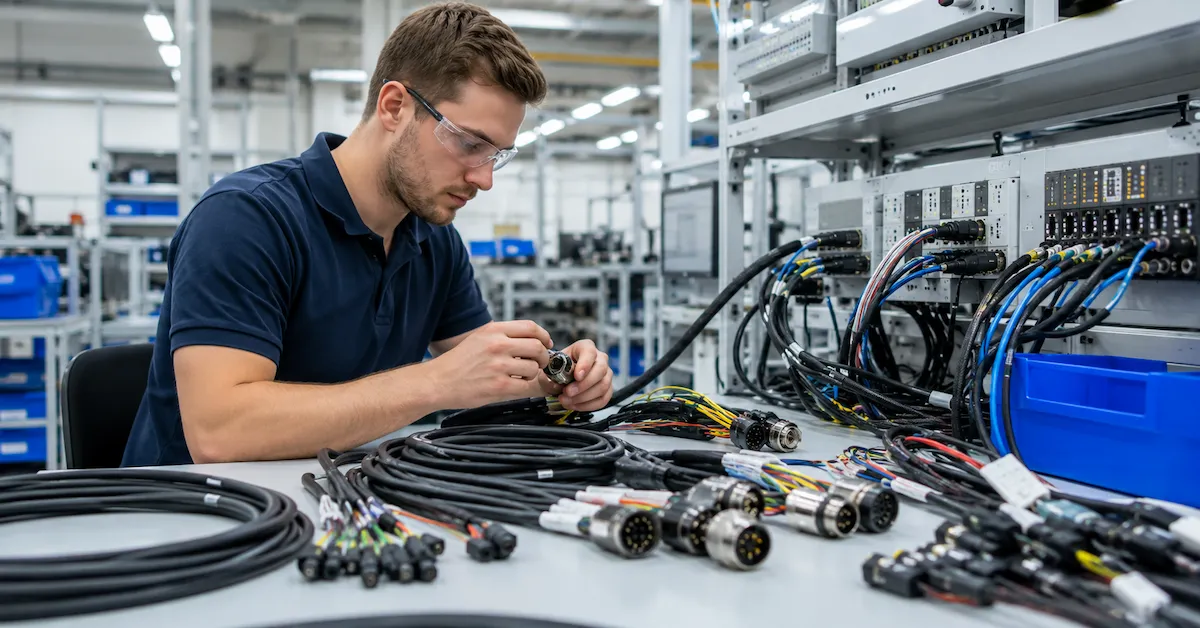
- Crimping
- Soldering
- Connector installation
- Strain relief
Testing Control
Common tests include:
- Continuity testing
- Short circuit testing
- Pinout verification
- Polarity testing
- Functional testing
Quality control ensures every production batch matches approved samples.
Project Cable Customization vs Standard Cable
| Factor | Standard Cable | Project Custom Cable |
| Cable length | Fixed options | Fully customized |
| Connector | Standard | Project-specific |
| Wiring | Fixed | Custom pinout |
| Shielding | General | Application-based |
| Prototype | Usually unavailable | Supported |
| OEM production | Limited | Supported |
| Engineering support | Basic | Full support |
How to Choose a Project Cable Customization Partner?
Evaluate:
| Evaluation Point | What to Check |
| Engineering ability | Can they understand project requirements? |
| Custom experience | Have they handled similar applications? |
| Prototype capability | Can they provide samples? |
| Testing ability | Can they verify performance? |
| Production capacity | Can they support volume orders? |
| Quality control | Are processes documented? |
| Communication | Can they manage project changes? |
A strong partner should support the entire project lifecycle.
Common Challenges in Cable Customization Projects
Incomplete Technical Information
Missing information may cause:
- Incorrect cable design
- Sample delays
- Additional modifications
Provide drawings, samples, and specifications whenever possible.
Ignoring Future Production Needs
A prototype cable may work but use components that are difficult to source later.
Consider:
- Connector availability
- Material stability
- Long-term production plans
Skipping Equipment Testing
Always validate samples in the actual application environment.
What Information Should Buyers Provide?
For a project cable customization request, prepare:
- Equipment information
- Cable function
- Connector requirements
- Wiring diagram
- Cable length
- Electrical requirements
- Environmental conditions
- Flexibility requirements
- Quantity
- Drawings or samples
Why Choose Alvin’s Cables for Project Cable Customization?
Alvin’s Cables provides customized cable solutions for industrial automation, professional video equipment, machine vision, robotics, test instruments, medical devices, and OEM electronics.
Capabilities include:
- Project-based cable development
- Custom cable assemblies
- OEM cable solutions
- Cable harness design
- Signal and power cables
- Video transmission cables
- M8, M12, Hirose, RJ45, BNC, SDI, HDMI, D-TAP, XLR, and custom connectors
- Shielded and flexible cable designs
- Prototype production
- Electrical and functional testing
- OEM labeling and packaging
Buyers can explore available products through Alvin’s Cables Products, learn about manufacturing capabilities through About Alvin’s Cables, and review service advantages through Why Choose Alvin’s Cables.
FAQ
1. What is project cable customization?
Project cable customization is the process of designing and manufacturing cable assemblies according to specific equipment and application requirements.
2. What can be customized in a cable project?
Cable length, connectors, wiring, shielding, materials, labels, and packaging can all be customized.
3. Why are prototypes important?
Prototypes verify cable design, compatibility, performance, and installation before production.
4. Can customized cables support OEM production?
Yes. Custom cable projects can be developed for prototypes, pilot production, and repeat manufacturing.
5. What industries need project cable customization?
Industries include automation, robotics, medical equipment, machine vision, professional video, and OEM electronics.
6. How long does cable customization take?
The timeline depends on design complexity, materials, prototype requirements, and production quantity.
7. Can existing cables be customized?
Yes. Existing samples or drawings can be used as references for development.
8. What information is needed for a quotation?
Provide application details, specifications, drawings, samples, quantities, and testing requirements.
Conclusion
A successful project cable customization process transforms technical requirements into reliable cable solutions designed for specific applications.
The right manufacturing partner provides engineering support, prototype development, quality control, and stable production.
For customized cable projects, contact Alvin’s Cables with your equipment requirements, drawings, samples, and project details.