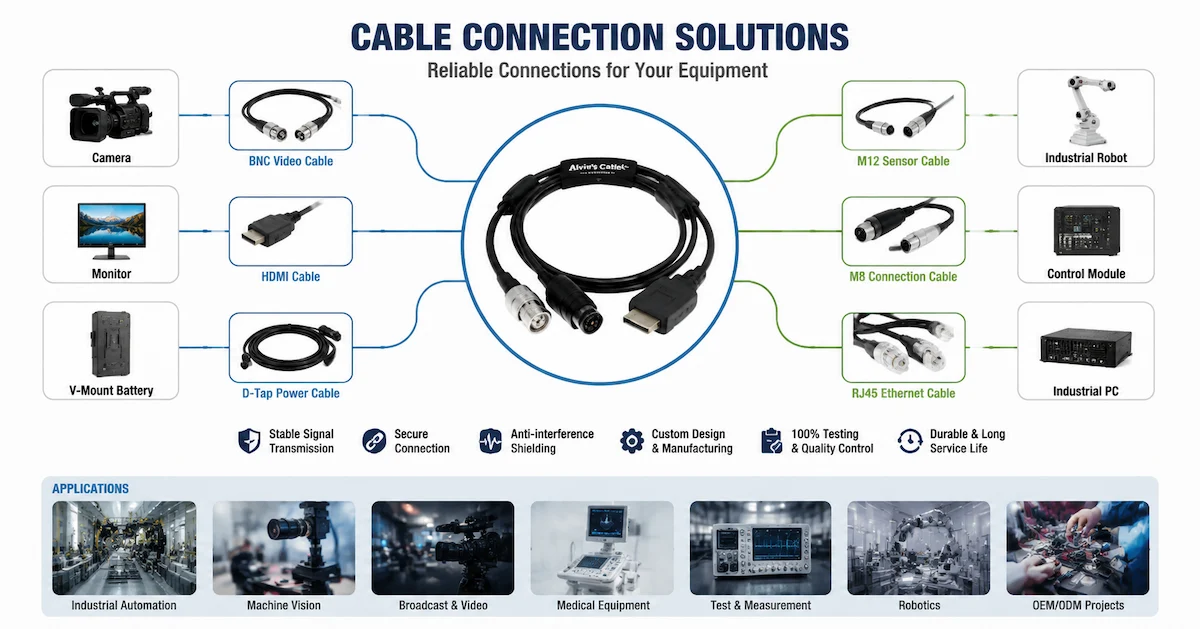
Professional equipment manufacturers often use LEMO connectors because of their secure push-pull locking mechanism, compact design, and reliable connection performance. However, many buyers also look for a LEMO cable alternative due to factors such as cost control, supply availability, customization requirements, or long-term sourcing strategy.
A suitable alternative does not simply replace the connector appearance. It must match the application requirements, including mechanical compatibility, electrical performance, signal integrity, durability, and production needs.
For OEM manufacturers, medical equipment companies, broadcast brands, industrial equipment builders, and test instrument suppliers, selecting the right LEMO compatible cable solution can improve supply flexibility while maintaining reliable equipment performance.
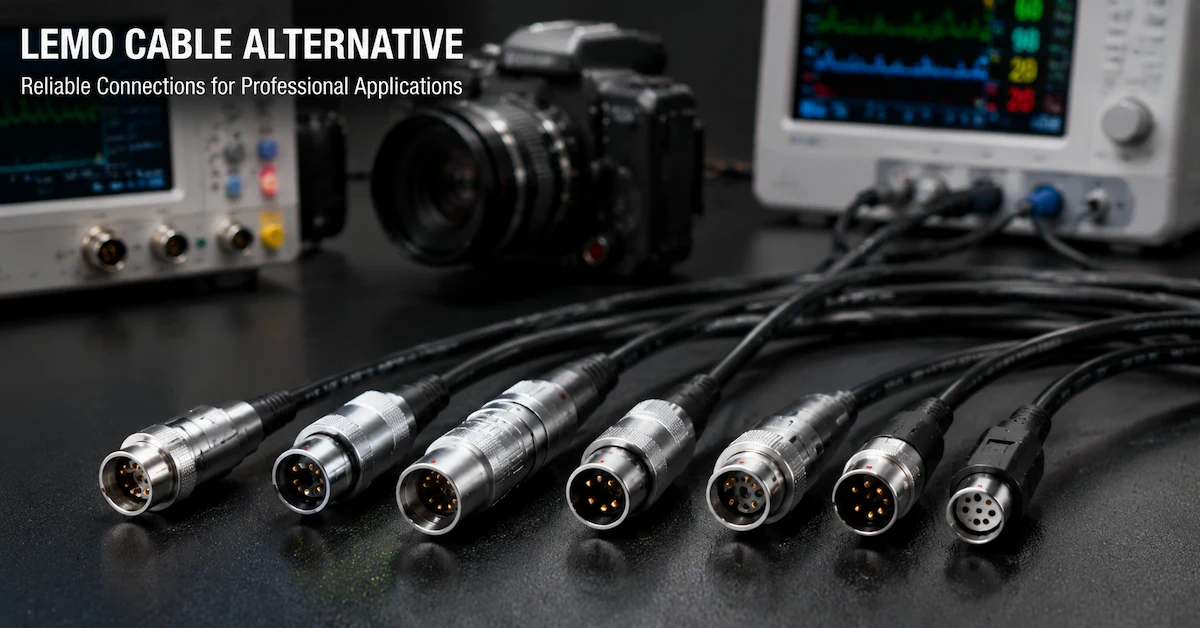
What Is a LEMO Cable Alternative?
A LEMO cable alternative is a compatible cable assembly designed to replace or provide an alternative option to original LEMO cable solutions while meeting specific application requirements.
Depending on the application, an alternative solution may include:
- Compatible push-pull circular connectors
- Custom cable assemblies
- Multi-pin connector cables
- Signal transmission cables
- Power cable assemblies
- Hybrid power and data cables
A professional alternative solution should consider:
- Connector dimensions
- Pin configuration
- Electrical ratings
- Locking mechanism
- Cable structure
- Application environment
- Testing requirements
Why Do Buyers Look for LEMO Cable Alternatives?
1. Improving Supply Chain Flexibility
Some buyers need alternatives because of:
- Long connector lead times
- Limited availability
- Supply chain risks
- Production schedule pressure
- Multiple sourcing requirements
A qualified alternative supplier can provide another reliable sourcing option.
2. Reducing Total Project Cost
Original branded connectors may increase product costs, especially for:
- Large production volumes
- OEM equipment
- Industrial accessories
- Replacement cable programs
A compatible solution can help optimize:
- Component cost
- Production cost
- Inventory management
- Long-term purchasing strategy
However, cost reduction should not compromise:
- Connection reliability
- Electrical performance
- Product lifetime
- Customer requirements
3. Supporting Custom Cable Development
Standard LEMO cables may not perfectly match every equipment design.
A custom alternative can support:
- Different cable lengths
- Special pinouts
- Custom connectors
- Different jacket materials
- Additional shielding
- OEM labeling
- Custom packaging
This provides more flexibility for equipment manufacturers.
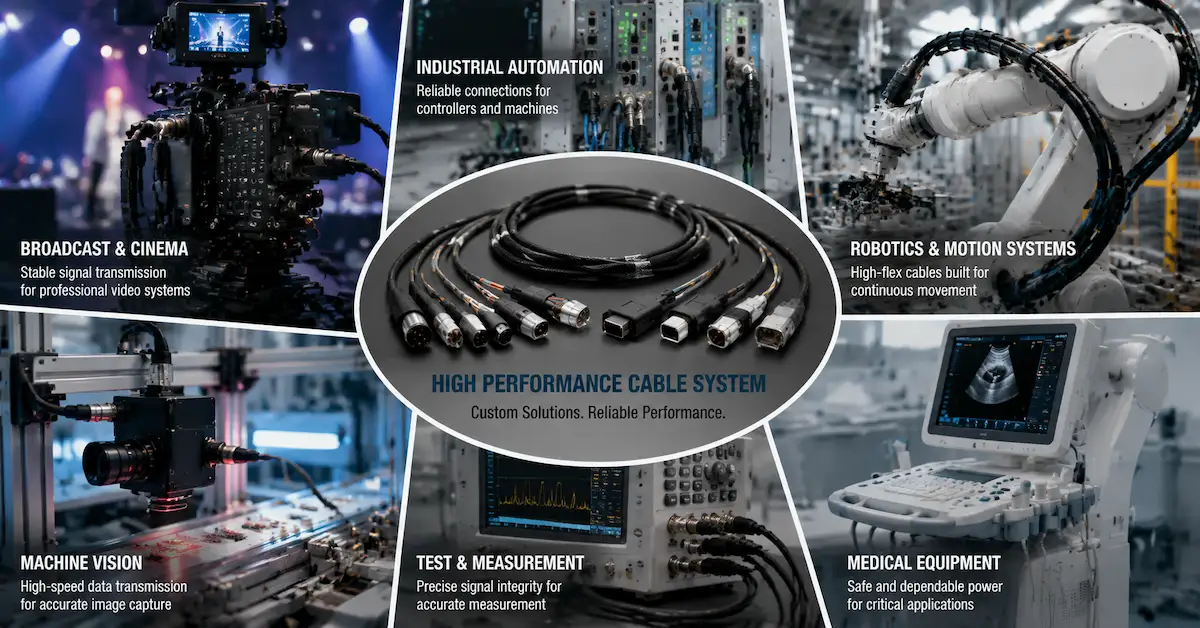
Where Are LEMO Cable Alternatives Used?
| Application | Cable Requirement | Buyer Concern |
|---|---|---|
| Medical equipment | Reliable multi-pin connections | Quality consistency |
| Broadcast equipment | Camera and control connections | Signal stability |
| Test instruments | Precision signal transmission | Accuracy |
| Industrial automation | Rugged equipment connections | Durability |
| Machine vision | Data and power connections | Compatibility |
| Robotics | Flexible moving cables | Service life |
| Research equipment | Custom interfaces | Stable supply |
| OEM electronics | Product integration | Cost control |
Key Factors When Choosing a LEMO Cable Alternative
1. Connector Compatibility
The first consideration is whether the alternative connector matches the application.
Important factors include:
- Connector size
- Pin count
- Contact arrangement
- Locking method
- Mating interface
- Keying position
- Panel compatibility
A visually similar connector may not provide the same mechanical or electrical performance.
2. Electrical Performance
The cable assembly must meet the equipment requirements.
Important parameters include:
- Voltage rating
- Current capacity
- Signal type
- Data requirements
- Shielding
- Grounding method
For sensitive applications, electrical performance is often more important than connector appearance.
3. Cable Construction
The cable structure affects:
- Flexibility
- Durability
- Signal quality
- Installation convenience
Possible options include:
- Flexible cable
- Shielded cable
- High-flex cable
- Rugged jacket cable
- Multi-core cable
- Hybrid cable
4. Mechanical Reliability
Professional equipment often requires repeated connection cycles.
A reliable alternative solution should consider:
- Locking strength
- Connector durability
- Strain relief
- Cable bending
- Pull resistance
- Environmental protection
LEMO Original Cable vs LEMO Alternative Solution
| Option | Advantages | Limitations | Best For |
| Original LEMO cable | Brand recognition and proven performance | Higher cost and sourcing restrictions | Existing certified systems |
| Compatible alternative | Flexible sourcing and customization | Requires supplier evaluation | OEM and industrial projects |
| Custom cable assembly | Exact application matching | Requires engineering support | Special equipment |
| Hybrid solution | Combines different interfaces | Requires technical design | Complex systems |
Common LEMO Compatible Cable Solutions
| Solution Type | Application | Advantage |
| Push-pull circular cable | Professional equipment | Secure connection |
| Multi-pin cable assembly | Control systems | Flexible wiring |
| Shielded connector cable | Sensitive signals | EMI protection |
| Camera connector cable | Broadcast systems | Reliable transmission |
| Medical connector cable | Medical devices | Stable connection |
| Test equipment cable | Measurement systems | Accurate signal transfer |
| Custom OEM cable | Equipment integration | Exact requirements |
LEMO Alternative Development Process
Requirement Analysis
Confirm:
- Original connector information
- Equipment application
- Pin configuration
- Electrical requirements
- Cable length
- Environment
Engineering Evaluation
Review:
- Compatible connector selection
- Cable structure
- Shielding requirements
- Mechanical design
- Production feasibility
Prototype Production
Verify:
- Connector fit
- Pinout accuracy
- Signal performance
- Power performance
- Equipment compatibility
Production and Testing
Control:
- Materials
- Assembly process
- Electrical testing
- Functional inspection
- Documentation
How to Evaluate a LEMO Alternative Supplier?
| Evaluation Point | What to Check |
| Connector experience | Can they provide compatible connector solutions? |
| Engineering support | Can they analyze replacement requirements? |
| Custom ability | Can they develop special cable assemblies? |
| Testing capability | Can they verify electrical performance? |
| Production stability | Can they support repeat orders? |
| Quality control | Are inspection procedures available? |
| OEM support | Can they provide labels and packaging? |
What Information Should Buyers Provide?
For a LEMO cable alternative quotation, prepare:
- Original cable model
- Connector photos or specifications
- Pinout information
- Equipment application
- Cable length
- Signal or power requirements
- Shielding requirements
- Quantity
- Drawings or samples
- Testing requirements
Why Choose Alvin’s Cables for LEMO Cable Alternative Solutions?
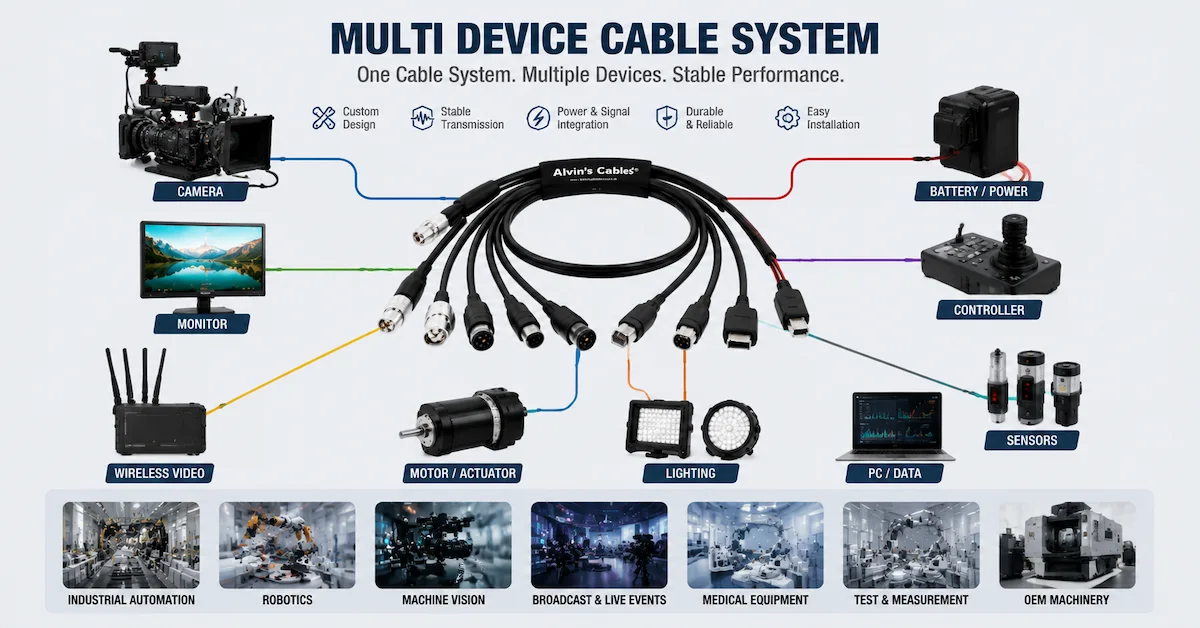
Alvin’s Cables provides customized connector cable solutions for professional video equipment, industrial automation, medical devices, test instruments, robotics, and OEM electronics.
Capabilities include:
- LEMO compatible cable solutions
- Push-pull connector assemblies
- Custom multi-pin cables
- Signal and power cable assemblies
- Shielded cable structures
- Flexible and rugged cable designs
- Custom pinout development
- Prototype production
- Electrical and functional testing
- OEM labeling and packaging
Buyers can explore available products through Alvin’s Cables Products, learn about manufacturing capabilities through About Alvin’s Cables, and review service advantages through Why Choose Alvin’s Cables.
FAQ
1. What is a LEMO cable alternative?
A LEMO cable alternative is a compatible cable solution designed to replace or provide another option to original LEMO cable assemblies.
2. Are LEMO alternatives compatible with original equipment?
Compatibility depends on connector type, pin configuration, mechanical design, and electrical requirements.
3. Why choose a LEMO alternative?
Buyers may choose alternatives for cost optimization, supply flexibility, customization, or long-term sourcing.
4. Can LEMO alternative cables be customized?
Yes. Cable length, pinout, shielding, connectors, labels, and packaging can be customized.
5. What industries use LEMO compatible cables?
They are used in medical, broadcast, industrial, testing, robotics, and OEM electronics applications.
6. How do I verify a compatible connector?
Provide connector photos, specifications, drawings, or samples for engineering evaluation.
7. Can Alvin’s Cables provide samples?
Yes. Prototype and sample development are available before production.
8. What information is needed for quotation?
Provide connector details, cable requirements, application information, quantity, and testing requirements.
Conclusion
A reliable LEMO cable alternative provides equipment manufacturers with more flexible sourcing options while maintaining professional connection performance.
The right alternative solution should balance connector compatibility, electrical requirements, mechanical reliability, customization capability, and long-term supply stability.
If you need a custom LEMO compatible cable solution, contact Alvin’s Cables with your connector details, application requirements, and project specifications.