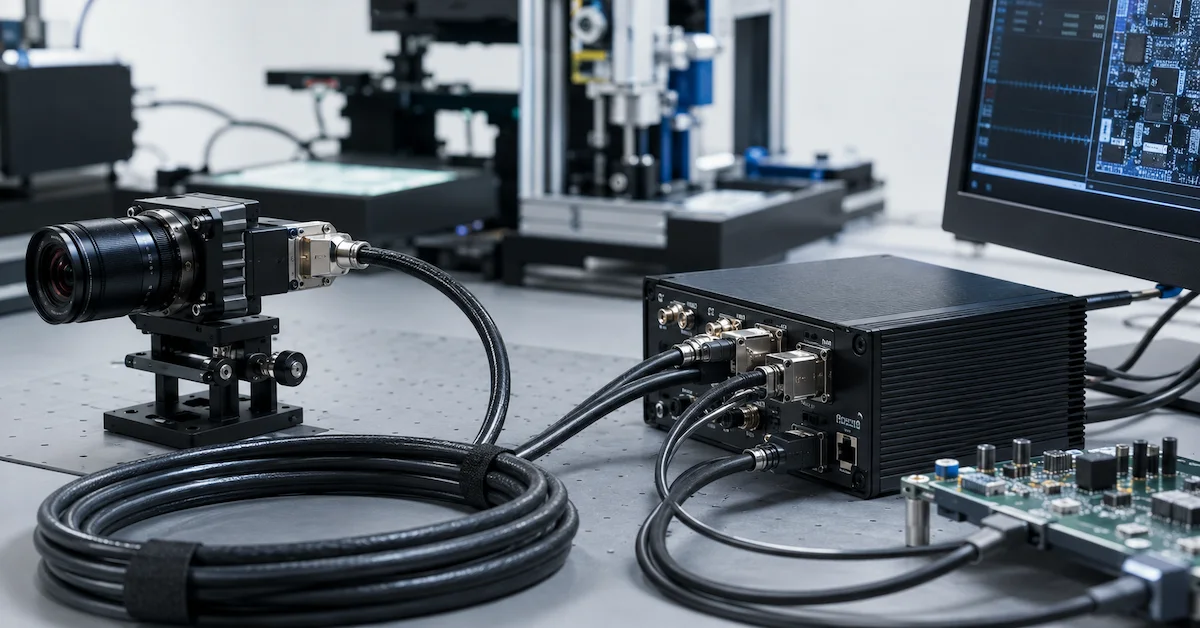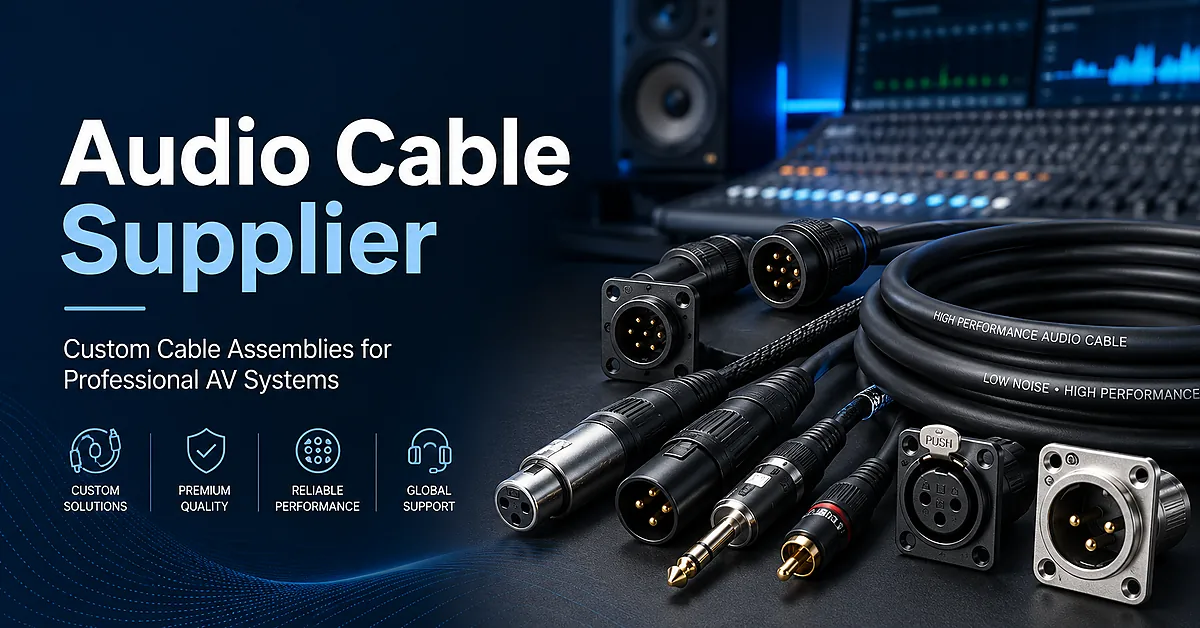
An EMI shielded cable is designed to reduce electromagnetic interference and help maintain stable signal transmission in professional equipment. In camera systems, industrial automation, machine vision, medical devices, test instruments, robotics, AV systems, and OEM electronics, signal cables often work near power cables, motors, wireless devices, lighting equipment, control units, and other electronics.
For B2B buyers, cable shielding is not just a technical detail. It can directly affect signal quality, equipment reliability, installation stability, and long-term maintenance cost.
A poorly shielded cable may cause image noise, data errors, unstable control signals, audio hum, communication failure, or intermittent device operation. A well-designed EMI shielded cable helps reduce these risks and supports more reliable system performance.
What Is an EMI Shielded Cable?
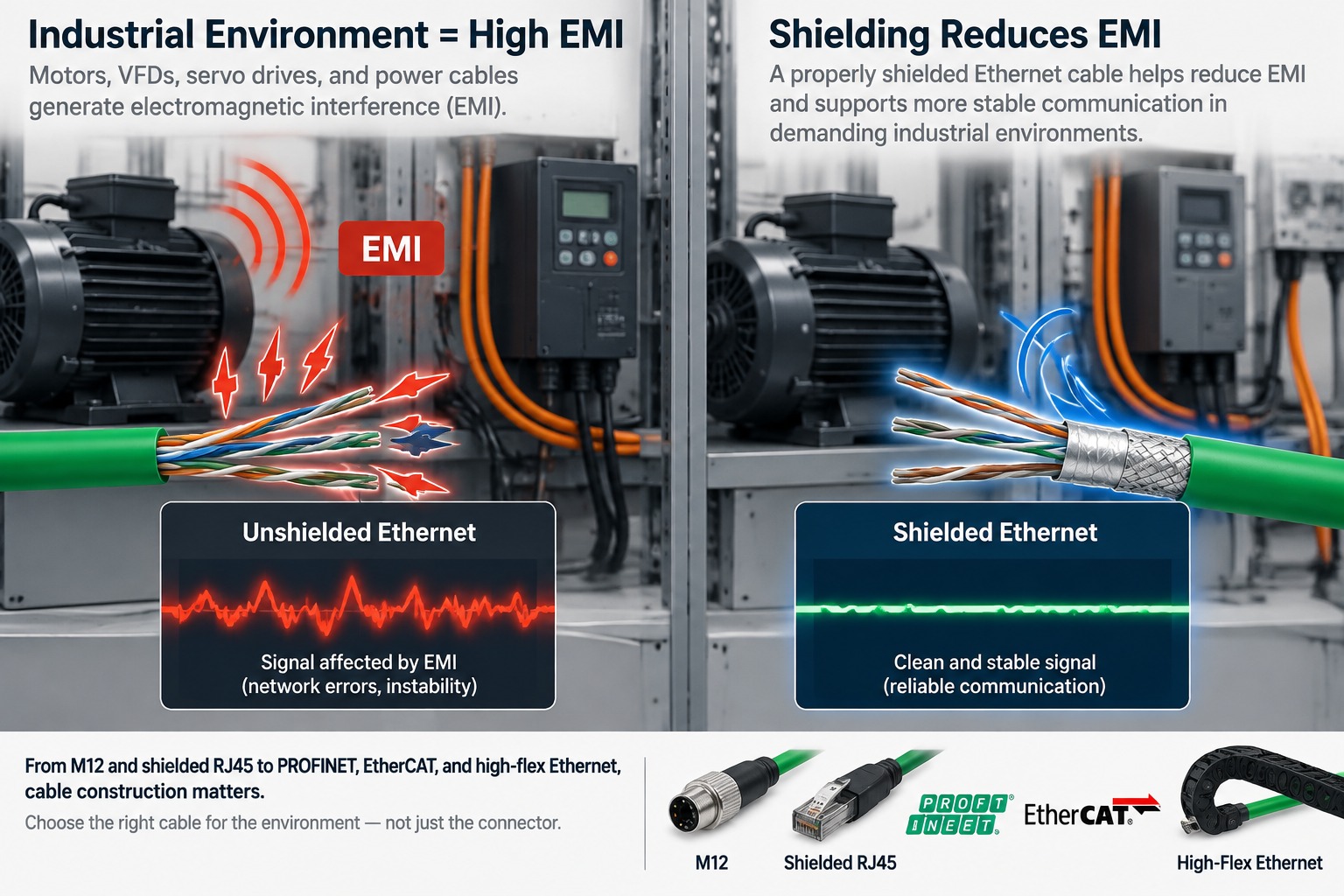
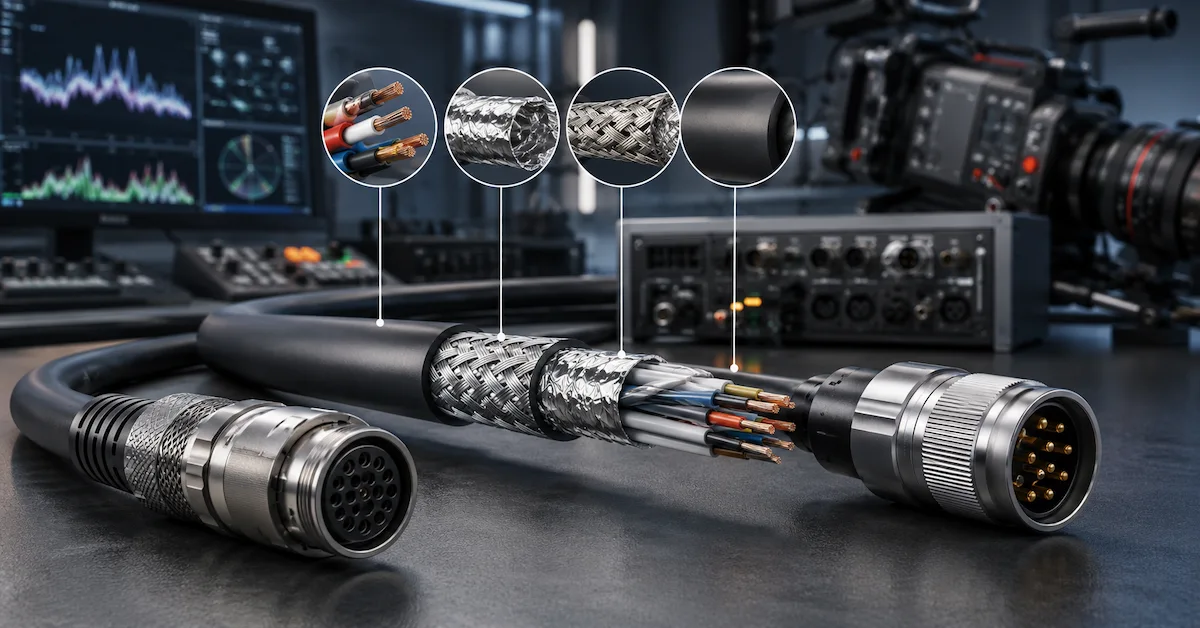
An EMI shielded cable is a cable assembly with shielding layers designed to block or reduce electromagnetic interference. EMI means electromagnetic interference. It can come from motors, power supplies, high-current cables, wireless transmitters, lighting systems, industrial machines, and nearby electronic devices.
An EMI shielded cable may be used for:
- Signal transmission
- Video signal connection
- Sensor wiring
- Control cable connection
- Camera cable assembly
- Data cable assembly
- Audio and AV cable systems
- Medical device cable assemblies
- Test instrument cables
- OEM equipment harnesses
The main purpose is to protect sensitive signals from external interference and prevent the cable itself from causing interference to nearby systems.
Where Are EMI Shielded Cables Used?
| Application | Cable Requirement | Buyer Concern |
|---|---|---|
| Professional camera systems | Video, control, and monitor cable | Image stability and low signal noise |
| Machine vision systems | Camera, trigger, sensor, and lighting cable | Accurate signal and low interference |
| Industrial automation | PLC, motor, sensor, and control wiring | Stable communication and anti-interference |
| Medical devices | Signal and module connection | Consistency and safe signal transfer |
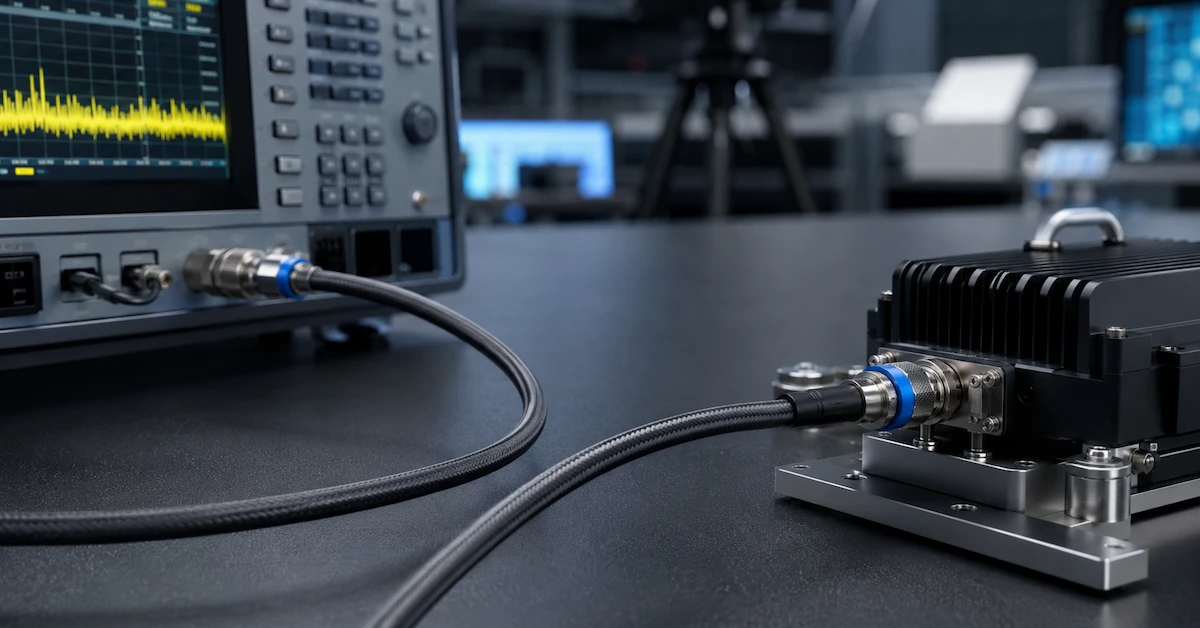
| Test instruments | Measurement and data cable | Signal accuracy and shielding performance |
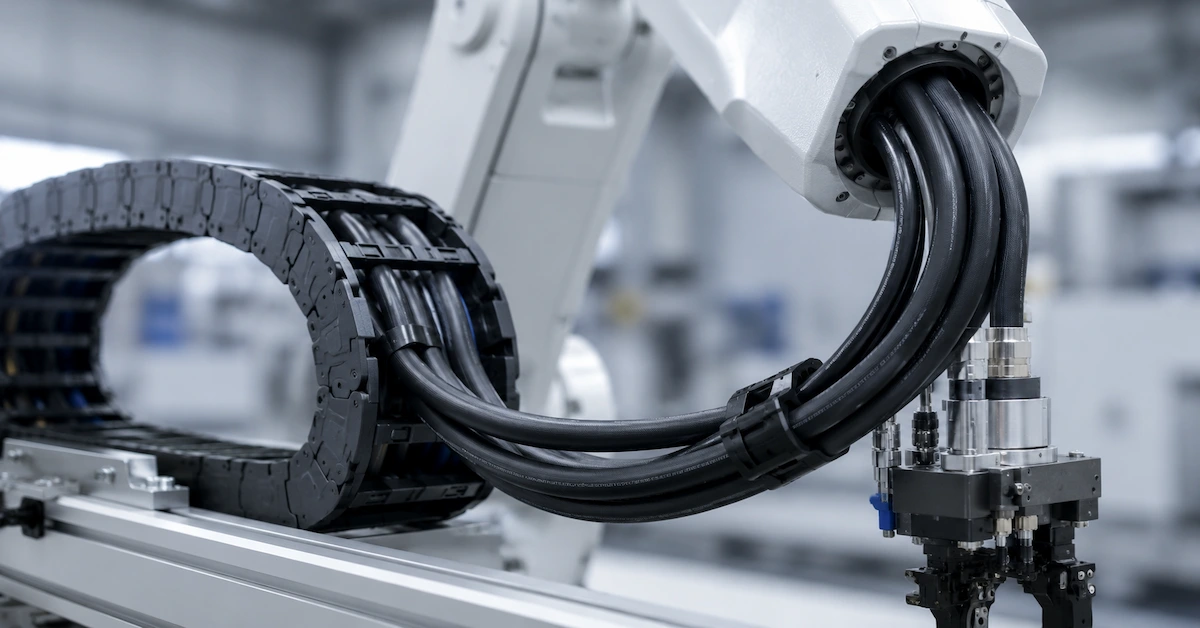
| Robotics | Moving signal and control cable | Flexibility and EMI protection |
| AV systems | Audio, video, and control cable | Noise reduction and stable transmission |
| OEM electronics | Internal or external shielded harness | Batch consistency and integration fit |
A reliable shielded cable should be selected according to the actual equipment environment, not only the connector type.
Why EMI Shielding Matters
1. It Helps Reduce Signal Noise
Signal noise can affect video, audio, sensor, and data transmission. In professional video equipment, interference may appear as image noise or unstable display. In industrial systems, it may cause sensor errors or communication problems.
An EMI shielded cable helps protect the signal path and improve transmission stability.
2. It Supports Reliable Equipment Operation
In industrial and professional systems, cables often run close to power supplies, motors, control cabinets, lighting equipment, and wireless devices. These environments can create strong electromagnetic interference.
Without proper shielding, the equipment may work well during testing but become unstable after installation.
3. It Improves System-Level Reliability
A cable is only one part of the equipment system, but cable failure can affect the whole device. For OEM products, stable shielding design helps reduce after-sales issues and improves user confidence.
4. It Helps Protect Sensitive Signals
Some signals are more sensitive than others, such as:
- Camera trigger signals
- Sensor signals
- Audio signals
- Measurement signals
- Control data
- Medical device signals
- High-speed video or data signals
For these applications, shielding should be considered early in the design stage.
Common EMI Shielding Structures
Different applications require different shielding methods. The right choice depends on signal type, cable length, flexibility, cost, and working environment.
| Shielding Type | Description | Best For |
| Foil shielding | Thin aluminum or copper foil layer around conductors | Compact signal cables and general EMI protection |
| Braided shielding | Woven metal braid around the cable core | Better flexibility and mechanical durability |
| Double shielding | Foil plus braid structure | Higher EMI protection requirements |
| Twisted pair with shielding | Twisted signal pairs plus shielding layer | Data, sensor, and balanced signal applications |
| Shield-to-shell design | Shield connected to connector shell | Professional equipment and stable grounding |
| Separate branch shielding | Shielding applied to selected signal branches | Multi-function custom cable assemblies |
For B2B projects, shielding should be confirmed together with connector design, grounding method, cable length, and equipment layout.
EMI Shielded Cable vs Standard Cable
| Option | Advantages | Limitations | Best For |
| Standard cable | Lower cost and easy sourcing | Limited interference protection | Simple low-risk use |
| Foil shielded cable | Compact and cost-effective | Less mechanical strength than braid | General signal protection |
| Braided shielded cable | Flexible and durable | May be thicker or higher cost | Professional and industrial use |
| Double shielded cable | Stronger EMI protection | Higher cost and larger diameter | High-interference environments |
| Custom EMI shielded cable | Best fit for equipment needs | Requires specification confirmation | OEM and professional systems |
For professional equipment, custom EMI shielded cable assemblies often provide better long-term value because they match the actual signal, connector, and installation requirements.
How to Choose the Right EMI Shielded Cable
1. Confirm the Signal Type
Different signals need different cable structures. A video cable, sensor cable, audio cable, and control cable may all require shielding, but not in the same way.
Buyers should confirm:
- Signal type
- Data rate or frequency requirement
- Voltage and current
- Cable length
- Grounding method
- Connector type
- Noise sensitivity
- Working environment
The cable should be designed according to the real application, not only the cable diameter or jacket appearance.
2. Check the Interference Environment
Before selecting an EMI shielded cable, evaluate nearby interference sources.
Common sources include:
- Motors
- Power supplies
- High-current power cables
- Wireless transmitters
- Lighting systems
- Control cabinets
- Industrial machines
- Audio/video equipment racks
If the cable will be used in a high-interference environment, stronger shielding or better grounding may be needed.
3. Choose the Right Connector
Shielding performance can be reduced if the connector is not assembled properly. For many applications, the shield should connect correctly to the connector shell or grounding structure.
Common connector options include:
- BNC connectors
- Hirose-style connectors
- M8 and M12 connectors
- RJ45 connectors
- D-TAP connectors
- Push-pull circular connectors
- XLR connectors
- Open-end wiring
- Custom connector combinations
A professional supplier should help match the cable structure with connector assembly.
4. Consider Flexibility and Strain Relief
Shielded cables can be less flexible than unshielded cables, especially when braid or double shielding is used. For camera rigs, robotics, portable instruments, and moving systems, flexibility is important.
Buyers should consider:
- Bend radius
- Cable jacket material
- Cable diameter
- Shielding structure
- Strain relief design
- Repeated movement
- Installation space
A cable that is too stiff may protect the signal but create mechanical stress. The design must balance EMI protection and usability.
Common Custom Options for EMI Shielded Cable Assemblies
| Custom Option | Purpose |
| Custom cable length | Fits equipment layout and reduces clutter |
| Shielding structure selection | Matches interference environment |
| Connector customization | Fits device interface |
| Custom pinout | Matches wiring definition |
| Shield-to-shell connection | Improves grounding and EMI protection |
| Flexible jacket | Supports routing and movement |
| Overmolded strain relief | Improves durability |
| Right-angle connector | Saves space in compact equipment |
| Labeling | Helps installation and maintenance |
| OEM packaging | Supports project or brand delivery |
These options are especially useful for camera equipment brands, industrial device manufacturers, AV integrators, medical equipment companies, test instrument makers, and OEM electronics suppliers.
What Information Should Buyers Provide for a Quote?
To receive an accurate quotation for an EMI shielded cable, prepare the following information:
- Application or equipment type
- Signal type
- Connector type and model
- Cable length
- Pinout or wiring diagram
- Voltage and current requirement
- Shielding requirement
- Grounding or shield connection method
- Cable flexibility requirement
- Working environment
- Quantity
- Drawing, photo, specification, or sample
If you are not sure about the shielding structure, you can provide the equipment layout and interference environment. Alvin’s Cables can help evaluate a suitable cable assembly direction.
Why Choose Alvin’s Cables?
Alvin’s Cables supports custom cable assemblies and connector solutions for professional video equipment, camera systems, industrial automation, medical devices, test instruments, robotics, AV systems, and OEM electronics.
For EMI shielded cable projects, Alvin’s Cables can support:
- Custom shielded cable assemblies
- Foil, braid, or double shielding options
- Custom connector integration
- Custom cable length and pinout
- Shielded signal, video, audio, control, and data cable solutions
- Flexible and rugged cable structures
- Straight or right-angle connector assemblies
- Overmolding and strain relief support
- Prototype and sample development
- Low-to-mid volume and batch production
- Multi-stage inspection and functional testing
Buyers can explore related products through Alvin’s Cables Products, learn more about company capability from About Alvin’s Cables, or review service advantages through Why Choose Alvin’s Cables.
FAQ
1. What is an EMI shielded cable?
An EMI shielded cable is a cable designed with shielding layers to reduce electromagnetic interference and help protect signal transmission.
2. What is EMI?
EMI means electromagnetic interference. It can come from motors, power supplies, wireless devices, lighting equipment, machines, and other electronic systems.
3. What types of shielding are used in cables?
Common shielding types include foil shielding, braided shielding, double shielding, twisted pair shielding, and shield-to-shell grounding structures.
4. Where are EMI shielded cables used?
They are used in camera systems, industrial automation, machine vision, medical devices, test instruments, robotics, AV systems, and OEM electronics.
5. Do all cables need EMI shielding?
No. Shielding is needed when signals are sensitive or when the cable works near interference sources. The requirement depends on the application environment.
6. Can EMI shielded cables be customized?
Yes. EMI shielded cables can be customized by cable length, connector type, pinout, shielding structure, jacket material, strain relief, labeling, and packaging.
7. Can Alvin’s Cables make samples before bulk production?
Yes. Alvin’s Cables can support prototype and sample development before batch production.
8. What should I send for a quote?
Send connector type, cable length, signal type, pinout, shielding requirement, application environment, quantity, and any drawing or sample available.
Conclusion
An EMI shielded cable helps protect signal, video, audio, control, sensor, and data transmission in professional equipment. For camera systems, industrial automation, machine vision, medical devices, test instruments, robotics, AV systems, and OEM electronics, the right shielding design can reduce interference risk and improve system reliability.
Buyers should evaluate signal type, shielding structure, connector design, grounding method, cable flexibility, strain relief, sample testing, and supplier production consistency before placing orders.
If you need a custom EMI shielded cable assembly for professional equipment, contact Alvin’s Cables through the Contact Us page and share your connector type, signal type, cable length, shielding requirement, application environment, and order quantity.