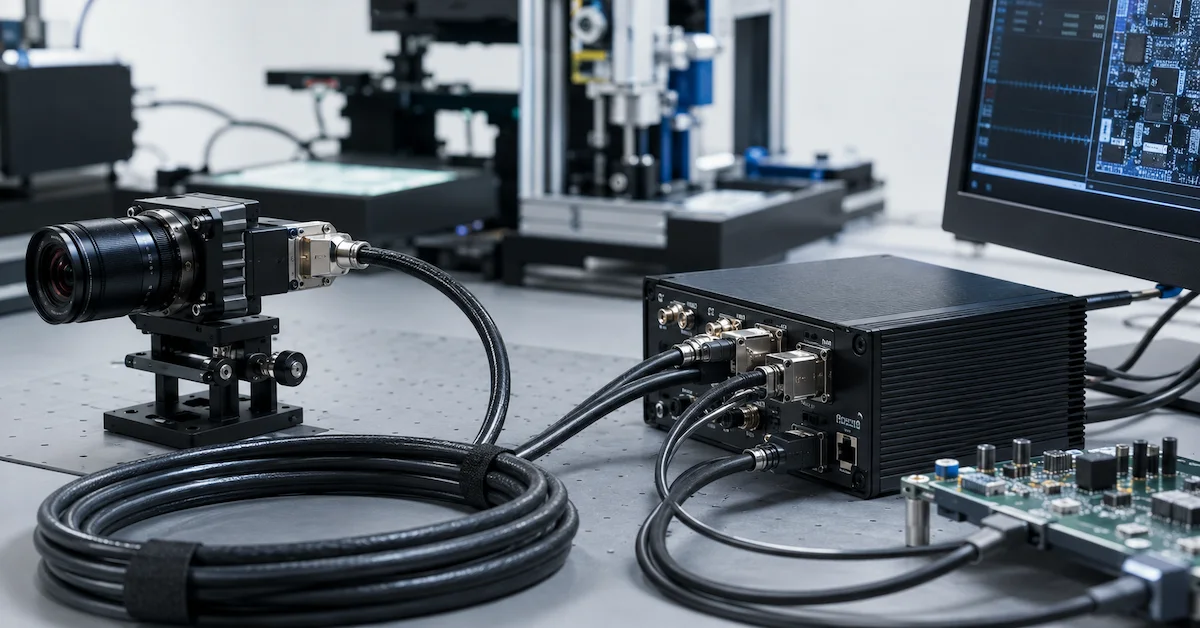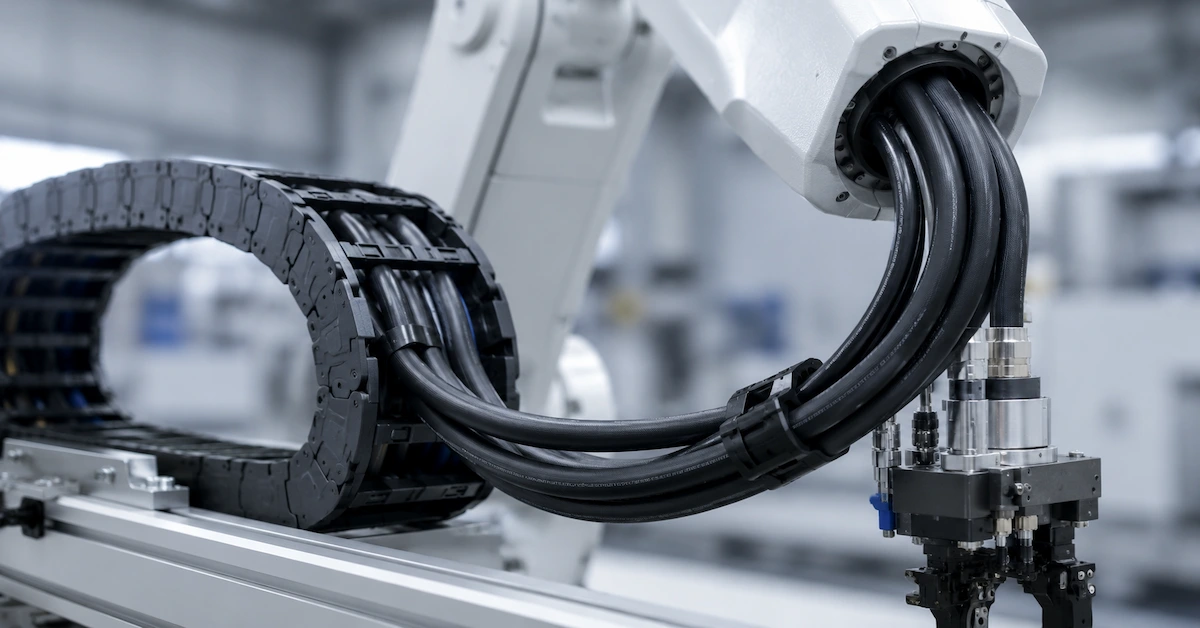
A low loss cable is designed to reduce signal attenuation and maintain stable transmission performance in demanding applications. In professional video systems, communication equipment, test instruments, industrial electronics, RF systems, and OEM devices, signal quality can directly affect equipment performance and system reliability.
For B2B buyers, choosing a low loss cable is not simply about selecting a cable with lower resistance. The complete cable design, including conductor material, insulation, shielding structure, connector quality, impedance control, cable length, and assembly process, all influence transmission performance.
A poorly selected cable may cause signal weakening, data errors, unstable communication, or reduced system efficiency. A properly designed low loss cable assembly helps improve signal integrity and supports reliable long-term operation.
What Is a Low Loss Cable?
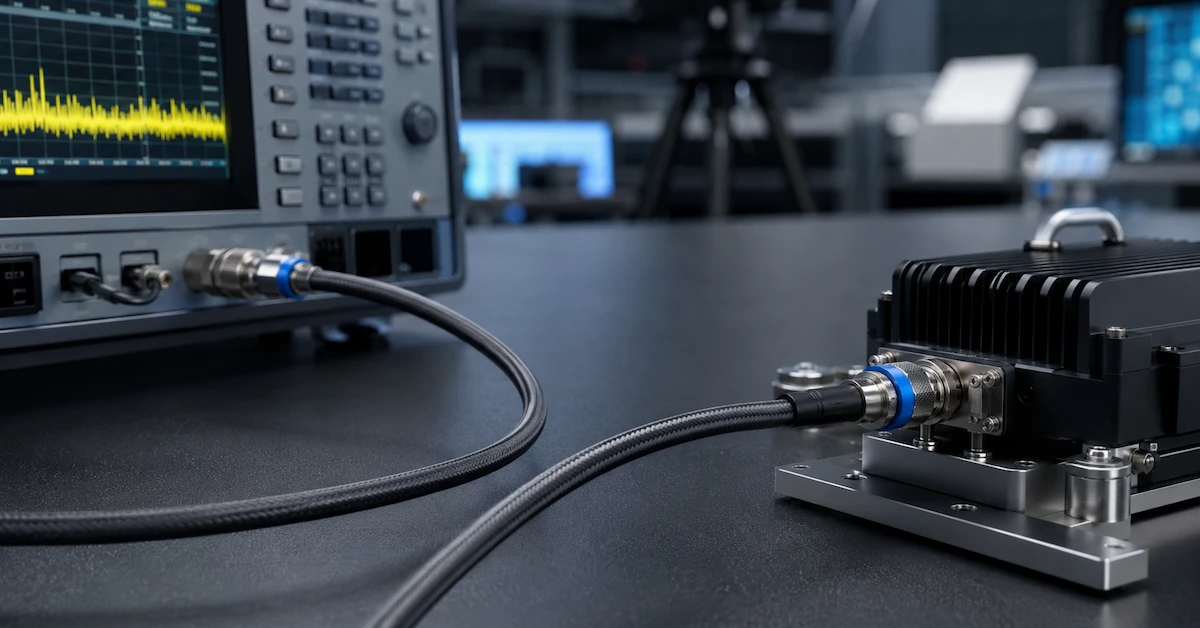
A low loss cable is a cable designed to minimize energy loss when transmitting electrical signals. Compared with standard cables, low loss cables are optimized to reduce attenuation, maintain signal strength, and improve transmission efficiency.
Low loss cable assemblies may be used for:
- High-frequency signal transmission
- Professional video systems
- RF communication equipment
- Test and measurement systems
- Industrial control systems
- Sensor applications
- Data transmission equipment
- OEM electronic devices
For professional applications, low loss performance is usually combined with proper shielding, connector matching, and mechanical reliability.
Where Are Low Loss Cables Used?
| Application | Cable Requirement | Buyer Concern |
|---|---|---|
| Professional video equipment | Stable high-quality signal transmission | Signal degradation and image quality |
| Test instruments | Accurate measurement signals | Signal integrity and consistency |
| Industrial electronics | Reliable communication | Noise and interference |
| Communication systems | Long-distance signal transfer | Attenuation control |
| Sensor systems | Accurate data transmission | Signal stability |
| RF equipment | High-frequency performance | Loss and impedance matching |
| OEM electronics | Custom signal connection | Integration and batch consistency |
A reliable low loss cable should be selected according to frequency, distance, signal type, and application environment.
Why Low Loss Cable Performance Matters
1. Reducing Signal Attenuation
Signal attenuation means signal strength decreases as it travels through a cable. Longer cables, higher frequencies, and unsuitable materials can increase signal loss.
Low loss cable design helps reduce:
- Signal weakening
- Transmission errors
- Communication instability
- Data quality reduction
- System performance issues
For professional equipment, maintaining signal quality is often more important than simply reducing cable cost.
2. Improving Signal Integrity
Signal integrity depends on how well the cable maintains the original signal during transmission.
Important factors include:
- Conductor quality
- Impedance control
- Dielectric material
- Shielding effectiveness
- Connector quality
- Cable length
- Assembly accuracy
A properly designed cable helps maintain stable electrical characteristics throughout the transmission path.
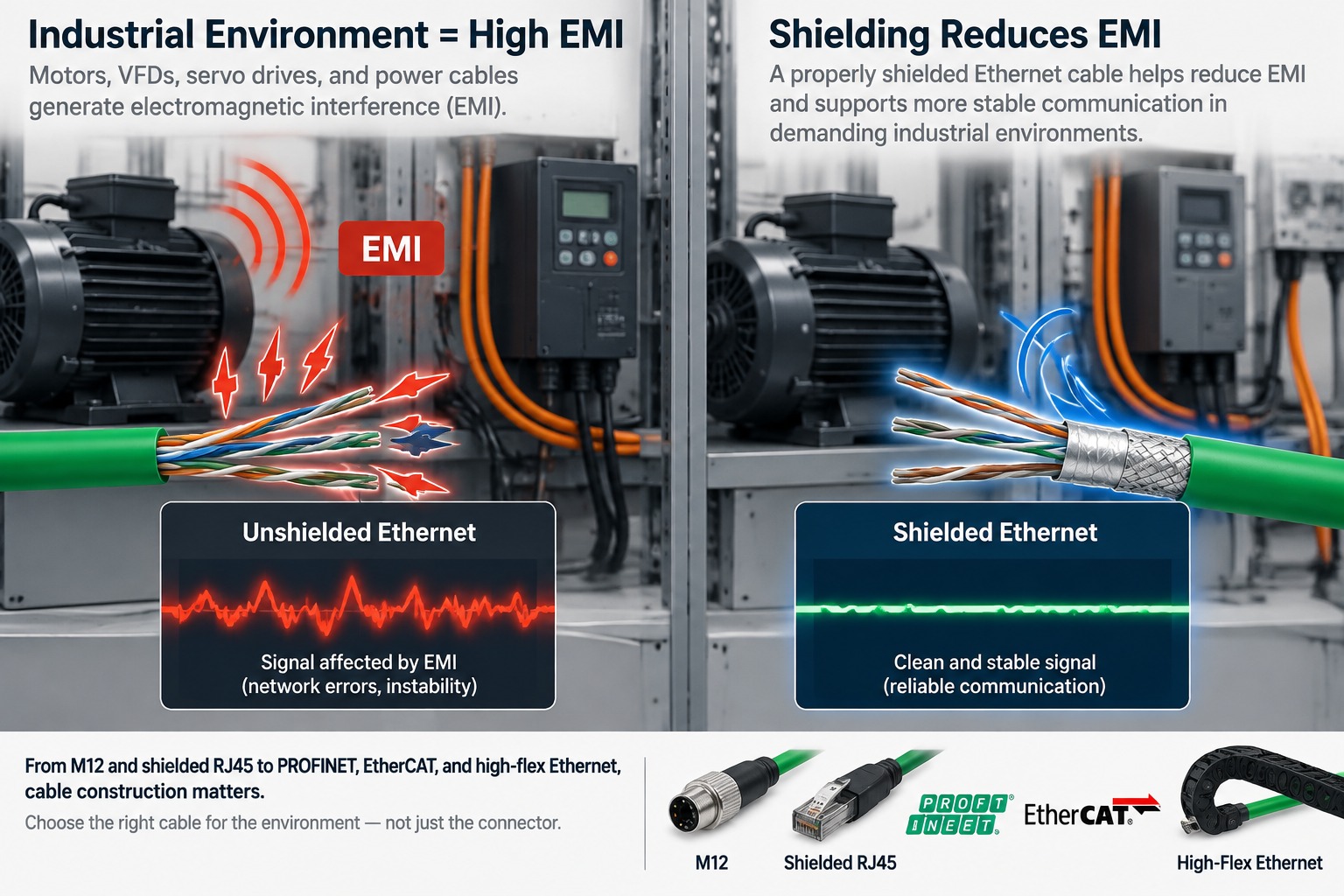
3. Reducing Electromagnetic Interference
Many low loss cables are used near power systems, industrial equipment, motors, wireless devices, and other electronic systems. Without proper shielding, interference may affect signal quality.
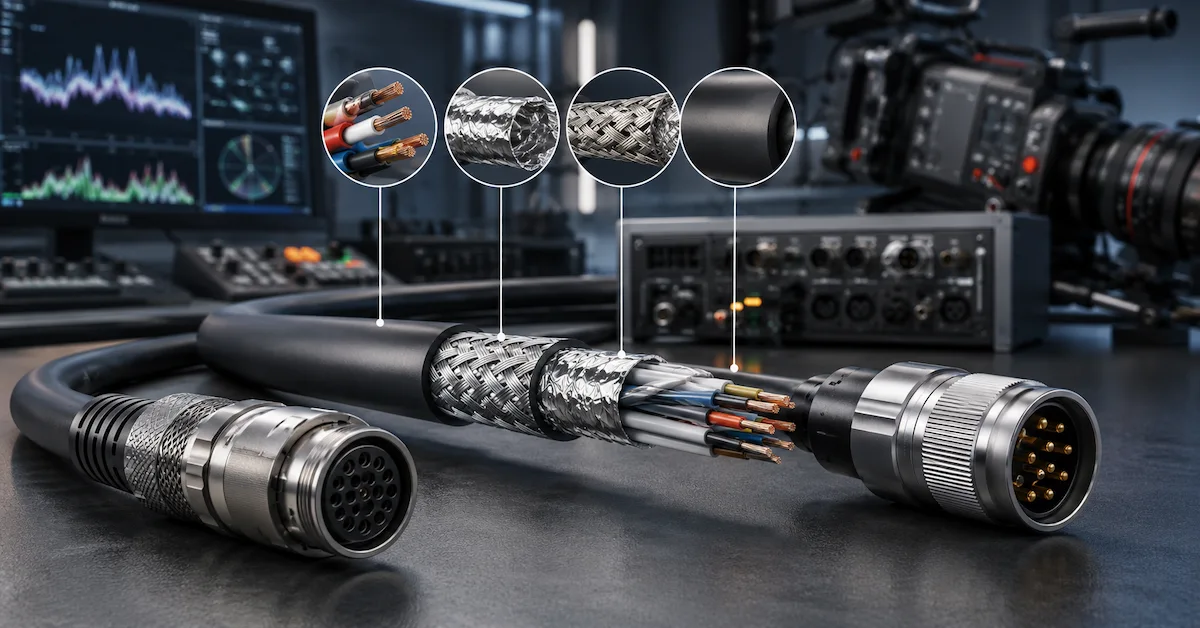
Common protection methods include:
- Foil shielding
- Braided shielding
- Double shielding
- Twisted pair structure
- Shield-to-connector grounding
- Durable outer jacket
The right shielding structure depends on the application environment and signal requirements.
4. Supporting Long-Term System Reliability
For professional and industrial applications, cable performance must remain stable over time.
A reliable low loss cable assembly should provide:
- Stable electrical performance
- Secure connector connection
- Mechanical protection
- Environmental resistance
- Consistent production quality
This is especially important for OEM equipment manufacturers and system integrators.
Key Factors When Choosing Low Loss Cable
1. Signal Type and Frequency Requirement
Different applications require different cable structures. A cable suitable for low-frequency control signals may not perform well in high-frequency applications.
Buyers should confirm:
- Signal type
- Frequency range
- Data transmission requirement
- Cable length
- Operating environment
- Connector interface
The cable should be selected according to the complete system requirement.
2. Cable Length and Signal Loss
Longer cable distances usually create greater transmission loss. For long cable runs, buyers should evaluate:
- Required transmission distance
- Signal frequency
- Allowable loss
- Connector quality
- Installation environment
A professional supplier can help select suitable cable specifications based on the application.
3. Connector Compatibility
Even a high-performance cable may not work properly if the connector design is incorrect.
Buyers should confirm:
- Connector type
- Connector model
- Pin configuration
- Impedance requirement
- Straight or right-angle design
- Cable outlet direction
Common connector options may include:
- BNC
- SMA
- Hirose
- RJ45
- M8
- M12
- Push-pull connectors
- Custom connectors
4. Shielding and Grounding Design
Shielding plays an important role in maintaining signal quality.
Buyers should evaluate:
- Shielding type
- Grounding method
- Connector shell connection
- EMI/RFI environment
- Cable routing conditions
For professional systems, shielding design should be considered together with cable assembly structure.
Common Low Loss Cable Options
| Cable Type | Purpose | Best For |
| Low loss signal cable | Maintains signal quality | Sensors and electronics |
| Low loss video cable | Supports stable video transmission | Professional cameras and monitors |
| Low loss RF cable | Reduces high-frequency loss | Communication systems |
| Shielded low loss cable | Improves interference resistance | Industrial environments |
| Custom low loss cable assembly | Matches equipment requirements | OEM applications |
| Connectorized low loss cable | Ready-to-install solution | Professional systems |
Low Loss Cable vs Standard Cable
| Option | Advantages | Limitations | Best For |
| Standard cable | Lower cost and easy sourcing | Higher signal loss risk | Simple applications |
| Shielded cable | Better interference protection | May increase size or cost | Industrial systems |
| Low loss cable | Better signal preservation | Higher design requirements | Professional applications |
| Custom low loss assembly | Best system integration | Requires technical confirmation | OEM and high-reliability equipment |
For professional equipment, selecting a suitable low loss cable assembly can improve system performance and reduce troubleshooting costs.
How to Choose a Low Loss Cable Supplier
A reliable low loss cable supplier should understand both electrical performance and mechanical requirements.
Buyers should evaluate:
| Evaluation Point | What to Check |
| Technical capability | Can the supplier understand signal requirements? |
| Cable selection | Can they recommend suitable cable structures? |
| Connector support | Can they provide compatible connector solutions? |
| Custom capability | Can they support drawings and samples? |
| Shielding design | Can they provide EMI protection options? |
| Testing process | Do they verify electrical performance and assembly quality? |
| Production consistency | Can they support repeat orders? |
| OEM support | Can they provide labeling and packaging? |
Choosing a supplier only by price may create hidden risks in professional applications.
What Information Should Buyers Provide for a Quote?
To receive an accurate quotation, prepare:
- Application or equipment type
- Signal type
- Frequency requirement if applicable
- Cable length
- Connector type
- Impedance requirement
- Shielding requirement
- Working environment
- Quantity
- Drawing, photo, specification, or sample
If the project has special requirements, provide equipment information and installation details.
Why Choose Alvin’s Cables?
Alvin’s Cables supports custom cable assemblies and connector solutions for professional video systems, industrial electronics, test instruments, medical devices, robotics, AV equipment, and OEM applications.
For low loss cable projects, Alvin’s Cables can support:
- Custom low loss cable assemblies
- Signal, video, data, and control cable solutions
- Shielded cable structures
- Custom connector integration
- M8, M12, Hirose, RJ45, BNC, D-TAP, and custom connector options
- Custom cable length and pinout
- Flexible and rugged cable structures
- Prototype and sample development
- Low-to-mid volume and batch production
- Multi-stage inspection and functional testing
- OEM labeling and packaging support
Buyers can explore related products through Alvin’s Cables Products, learn more about company capability from About Alvin’s Cables, or review service advantages through Why Choose Alvin’s Cables.
FAQ
1. What is a low loss cable?
A low loss cable is designed to reduce signal attenuation and maintain stronger signal quality during transmission.
2. Where are low loss cables used?
They are used in professional video systems, communication equipment, RF systems, test instruments, industrial electronics, sensors, and OEM devices.
3. Why does cable loss matter?
Cable loss reduces signal strength. Lower loss helps maintain transmission quality, especially for longer distances or higher-frequency signals.
4. Can low loss cables be customized?
Yes. They can be customized by cable length, connector type, shielding structure, impedance requirement, labeling, and packaging.
5. Do low loss cables need shielding?
Many low loss signal applications require shielding to reduce interference and improve signal stability.
6. What connectors can be used with low loss cable assemblies?
Depending on the application, options may include BNC, SMA, Hirose, RJ45, M8, M12, push-pull, and custom connectors.
7. Can Alvin’s Cables provide samples before production?
Yes. Alvin’s Cables supports prototype and sample development before batch production.
8. What should I send for a quotation?
Provide cable length, connector type, signal requirement, application environment, quantity, and any drawing, specification, or sample available.
Conclusion
A low loss cable helps professional and industrial systems maintain stable signal transmission by reducing attenuation and improving signal integrity. For video equipment, communication systems, test instruments, industrial electronics, sensors, and OEM products, the right cable design can improve performance and reliability.
Buyers should evaluate signal requirements, cable structure, shielding, connector compatibility, testing, and supplier capability before placing orders.
If you need a custom low loss cable assembly for professional equipment, contact Alvin’s Cables through the Contact Us page and share your signal type, connector requirement, cable length, application environment, and order quantity.