Industrial robots operate in highly dynamic environments where continuous movement, rotation, and high-speed operation place extreme stress on internal wiring systems. Traditional cables often suffer from fatigue, signal degradation, and mechanical failure when exposed to repetitive bending or torsion. This leads to unexpected downtime, maintenance costs, and reduced production efficiency in automated manufacturing lines.
How Robot Cable Assemblies Are Designed
A robot cable assembly is engineered specifically for motion-intensive applications. Unlike standard wiring, these assemblies use highly flexible conductors, reinforced insulation, and optimized shielding structures to withstand continuous mechanical stress. Multi-axis movement requires cables that can bend, twist, and rotate without compromising signal integrity or power transmission.
Robot Cable Assembly vs Standard Industrial Cables
Standard industrial cables are designed for static or low-movement environments, while robotic cable assemblies are built for dynamic motion systems.
Key differences include:
- Higher flex life for continuous movement
- Enhanced abrasion resistance for robotic arms
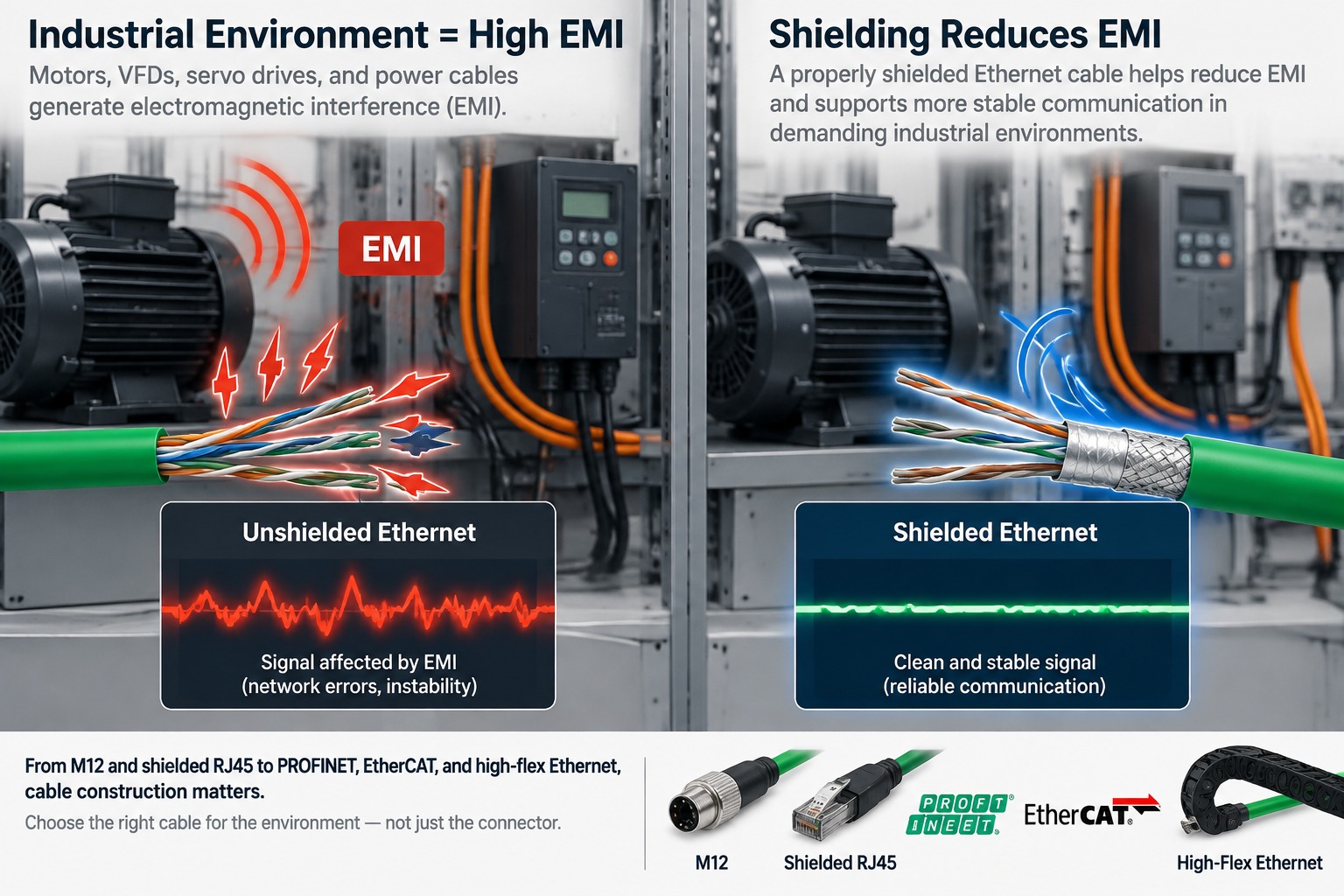
- Improved EMI shielding for signal stability
- Compact construction for confined robotic joints
These differences make robot cable assemblies essential in modern automation systems where uptime and precision are critical.
Engineering the Right Robot Cable Solution
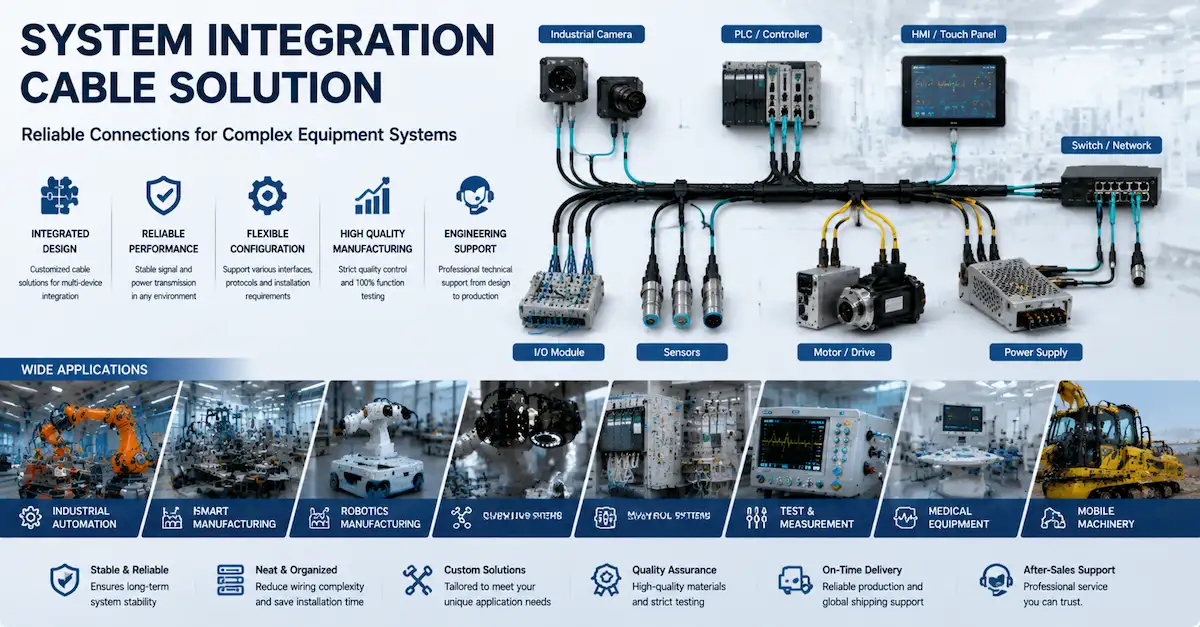
Selecting the right robot cable assembly depends on several technical parameters: conductor flexibility, bending radius, torque resistance, and environmental exposure. Custom configurations allow integration with robotic arms, linear actuators, and multi-axis motion systems.
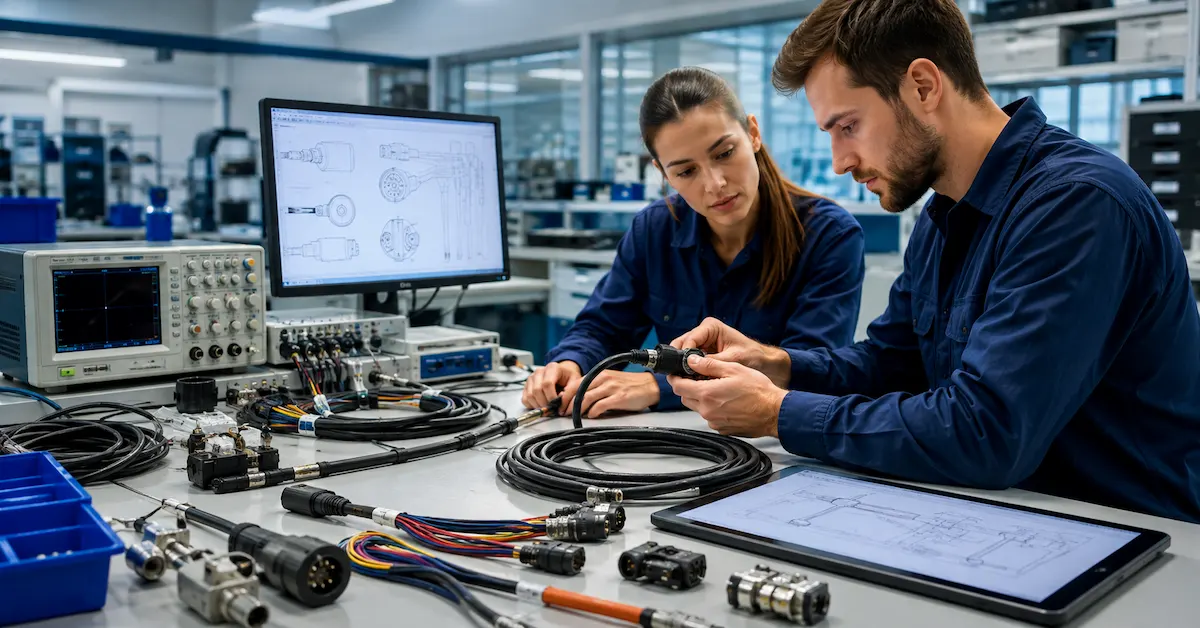
Working with a specialized manufacturer ensures proper design validation and long-term reliability.
Key Advantages of Robot Cable Assemblies
Robot cable assemblies offer several performance advantages in automation environments:
- Extended flex life under continuous motion
- Stable signal transmission during dynamic movement
- Reduced maintenance frequency and downtime
- Improved system reliability in high-speed operations
These advantages directly translate into higher production efficiency and lower operational risk. For custom solutions, our team can tailor assemblies to your exact requirements.
Application Scenarios
Robot cable assemblies are widely used in:
- Industrial robotic arms in assembly lines
- Welding and cutting automation systems
- Pick-and-place robotic systems
- Packaging and sorting automation equipment
- CNC machine integration and smart factories
Their adaptability makes them a core component in smart manufacturing environments.
Selection Tips for Optimal Performance
When choosing a robot cable assembly, consider:
- Required flex cycles and motion intensity
- Operating environment (temperature, oil, abrasion)
- Signal type (power, data, hybrid transmission)
- Robot model compatibility and installation space
Working with a specialized manufacturer ensures proper design validation and longer service life. Learn more about our product categories to match your robotic application.
FAQ
Q1: What is a robot cable assembly?
It is a specially designed flexible cable system used in robotic applications requiring continuous movement and high durability.
Q2: Why are robot cables different from standard cables?
They are engineered for repeated bending, twisting, and dynamic motion without failure.
Q3: Where are robot cable assemblies used?
They are used in industrial robotics, automation systems, CNC machinery, and smart manufacturing lines.
Q4: Can robot cable assemblies be customized?
Yes, they can be tailored based on robot model, motion range, and electrical requirements.
Q5: How do I improve robot cable lifespan?
Proper routing, correct bend radius, and using high-flex rated cables significantly improve lifespan.
Conclusion
Robot cable assemblies are essential for ensuring stable, efficient, and long-lasting performance in modern robotic systems. By using purpose-built flexible designs, manufacturers can significantly reduce downtime and improve automation reliability. For custom robotic wiring solutions, contact our team to get tailored assemblies for your industrial automation needs.