When Standard Cables Don't Fit Your Equipment

blog avatar
Published
Oct 19 2026
  • Exhibition
  • Product Guide
  • Buying Guide
  • Industry Insights
  • Solutions
  • Professional Video & Camera Cable Solutions
  • Industrial Cable Solutions
  • Cable Solutions
  • Industrial Cable Guide

Follow us

when-standard-cables-don-t-fit-your-equipment

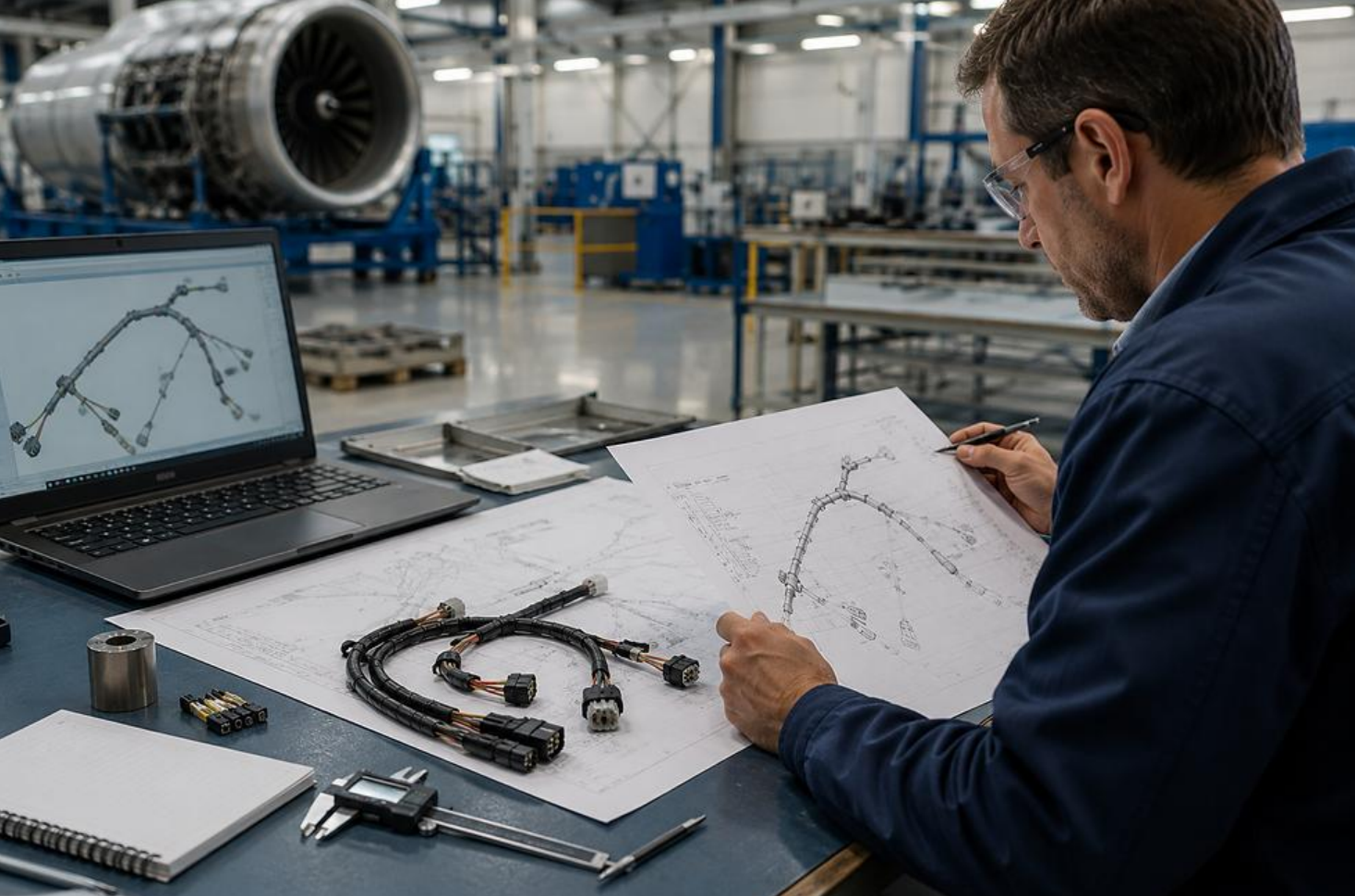
Standard cables work well for many applications, but what happens when your equipment requires a specific connector combination, a non-standard length, or a special cable configuration?

For industrial equipment manufacturers, finding the right cable is about more than matching connectors. It also means meeting electrical requirements, installation constraints, and the demands of the operating environment.

Common Challenges with Standard Cables

Off-the-shelf cables may not always meet your equipment requirements. Common challenges include:

  • Connector compatibility: The required connector types, genders, or pin assignments may differ from standard options.
  • Length and routing: Standard lengths may not fit your equipment layout or installation space.
  • Installation constraints: Straight or angled connectors can make a difference when space is limited.
  • Operating conditions: The cable construction must suit the required movement, temperature, and environmental conditions.

When Should You Consider a Custom Cable Assembly?

A custom industrial cable assembly may be worth considering when standard products cannot meet your application requirements.

Depending on engineering feasibility, custom options may include specific cable lengths, connector combinations, open-wire terminations, and cable constructions suited to the intended application.

For industrial automation and machine vision systems, selecting the right combination of connectors, pinout, and cable specifications is essential for equipment compatibility.

What Information Do You Need?

To help evaluate a custom cable request, prepare the following details:

  • Connector specifications for both ends
  • Pinout or wiring diagram
  • Required cable length
  • Electrical and data-transmission requirements
  • Installation environment and movement conditions
  • Estimated order quantity

Photos of the existing cable, connector drawings, or equipment model information can also help clarify your requirements.

Looking for a Custom Industrial Cable Solution?

At Alvin's Cables, we offer industrial cable assemblies and support custom cable inquiries for automation, machine vision, and specialized equipment applications.

If a standard cable doesn't fit your requirements, contact our team to discuss your application and explore a suitable solution.

Share your specifications with us, and we'll review the available options based on your needs.

#IndustrialCable #CustomCableAssembly #IndustrialAutomation #MachineVision
Featured Blogs

Tag:

  • flexible cable
  • custom cable
  • UAV cable assembly
  • industrial wiring solution
  • industrial wiring system
  • industrial cable comparison
  • integrated cable system
  • OEM Cable Manufacturing
  • Cable Selection Guide
  • Industrial Automation Cables
Share On
Featured Blogs
When Standard Cables Don't Fit Your Equipment

When Standard Cables Don't Fit Your Equipment

Standard cables work well for many applications, but what happens when your equipment requires a specific connector combination, a non-standard length, or a special cable configuration? For industrial equipment manufacturers, finding the right cable is about more than matching connectors. It also means meeting electrical requirements, installation constraints, and the demands of the operating environment.

Static Installation vs. Continuous Motion: Why Cable Selection Matters

Static Installation vs. Continuous Motion: Why Cable Selection Matters

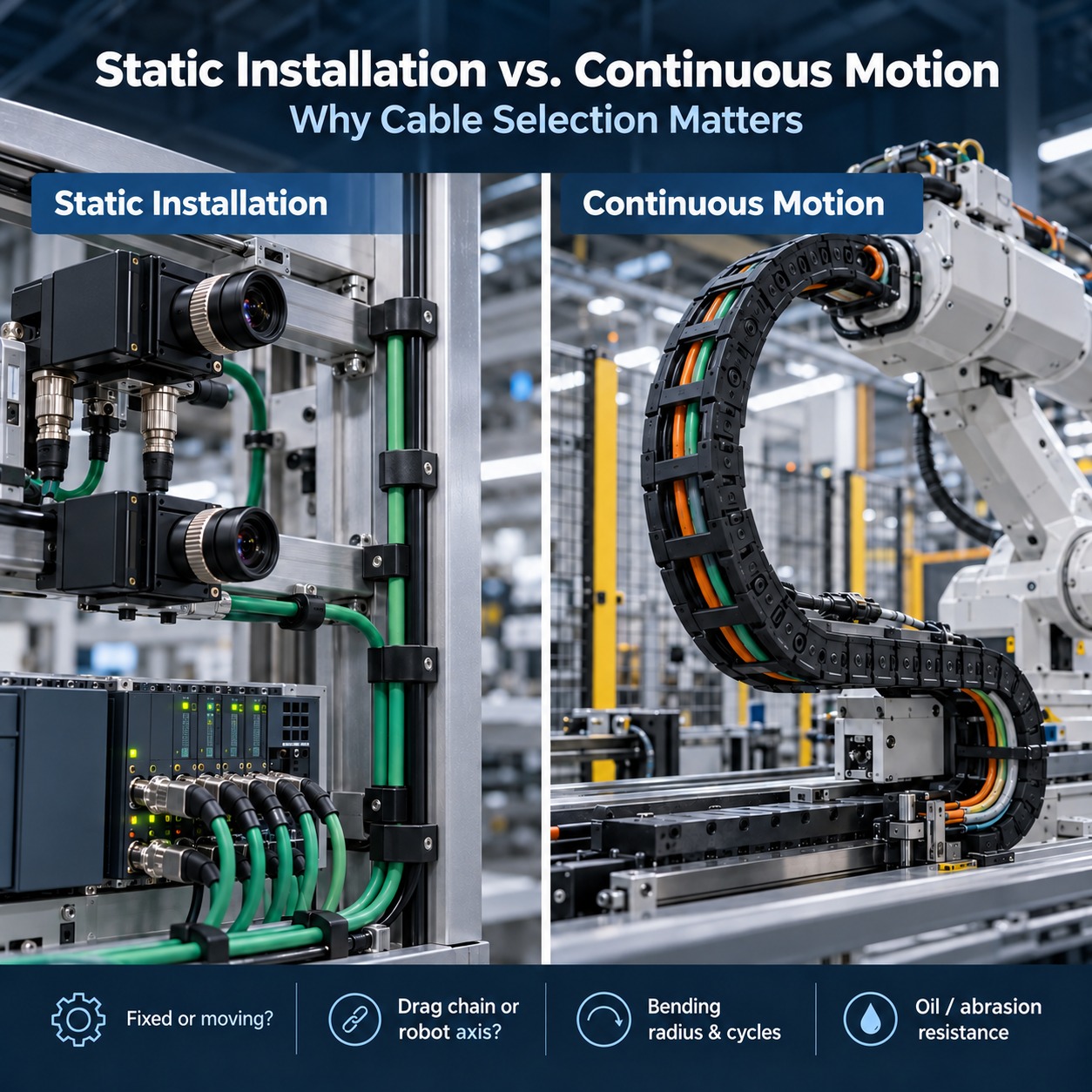
In industrial automation, cables do more than connect equipment. They must also withstand the mechanical conditions in which they operate. A cable installed inside a control cabinet faces different demands from one that moves repeatedly with a robotic arm, CNC machine, or automated inspection system. Choosing the wrong cable construction for an application can contribute to premature wear, conductor fatigue, intermittent connections, and unplanned maintenance. So, what is the difference between static installation cables and cables designed for continuous motion? And what should engineers consider when selecting an industrial cable?

Why Industrial Ethernet Needs Shielding

Why Industrial Ethernet Needs Shielding

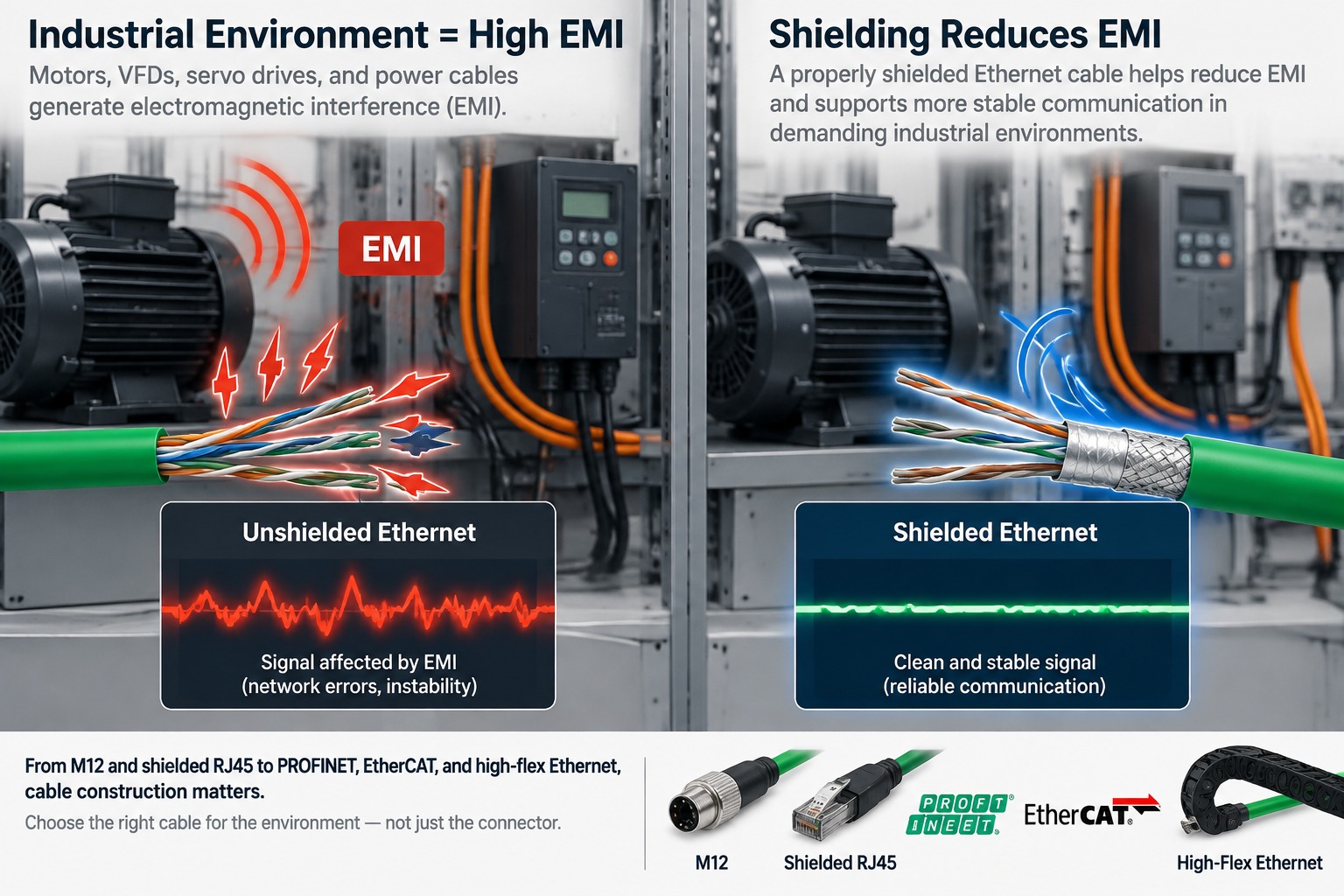
Industrial environments are full of potential sources of electromagnetic interference (EMI), including motors, VFDs, servo drives, and power cables .Without proper protection, interference can affect signal integrity and network reliability. A properly shielded Ethernet cable helps reduce EMI and supports more stable communication in demanding industrial environments. From M12 and shielded RJ45 to PROFINET, EtherCAT, and high-flex Ethernet, cable construction matters. Choose the right cable for the environment—not just the connector.