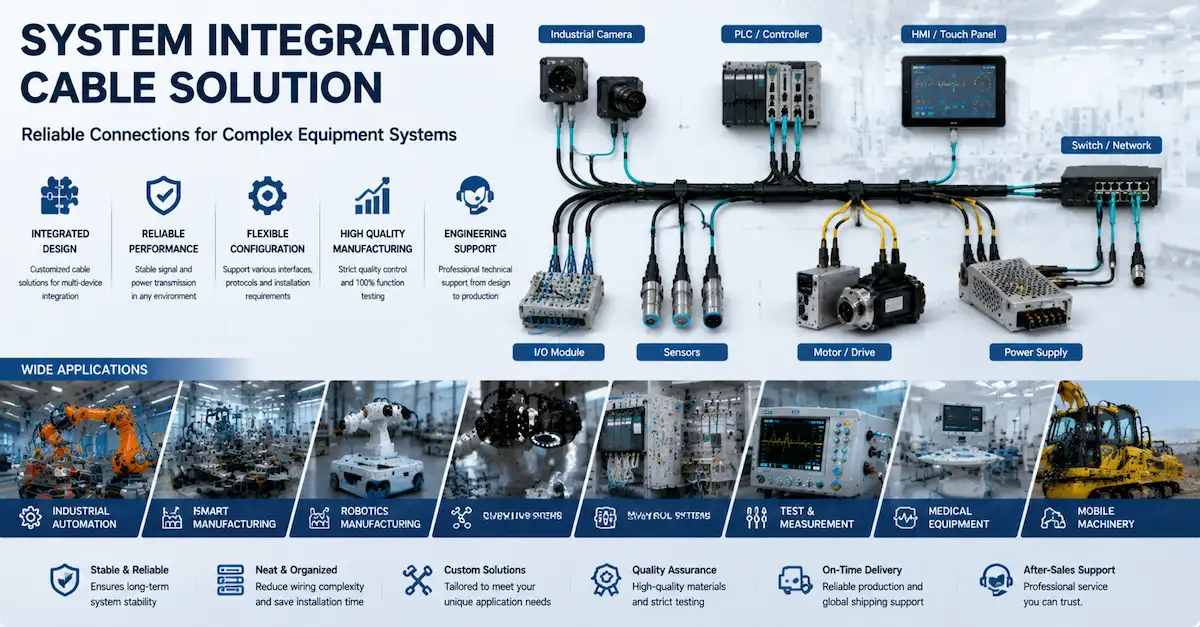
Modern industrial systems often combine multiple devices, sensors, controllers, cameras, motors, communication modules, and power units. A professional system integration cable solution helps engineers create reliable connections between different components while maintaining stable power, signal, and data transmission.
Unlike individual cable purchasing, system integration requires a complete understanding of the entire equipment architecture.
A successful solution must consider:
- Device communication requirements
- Cable routing
- Connector compatibility
- Signal protection
- Power distribution
- Installation environment
- Future maintenance
For industrial automation, robotics, machine vision, and OEM equipment, cable integration plays an important role in overall system performance.
What Is a System Integration Cable Solution?
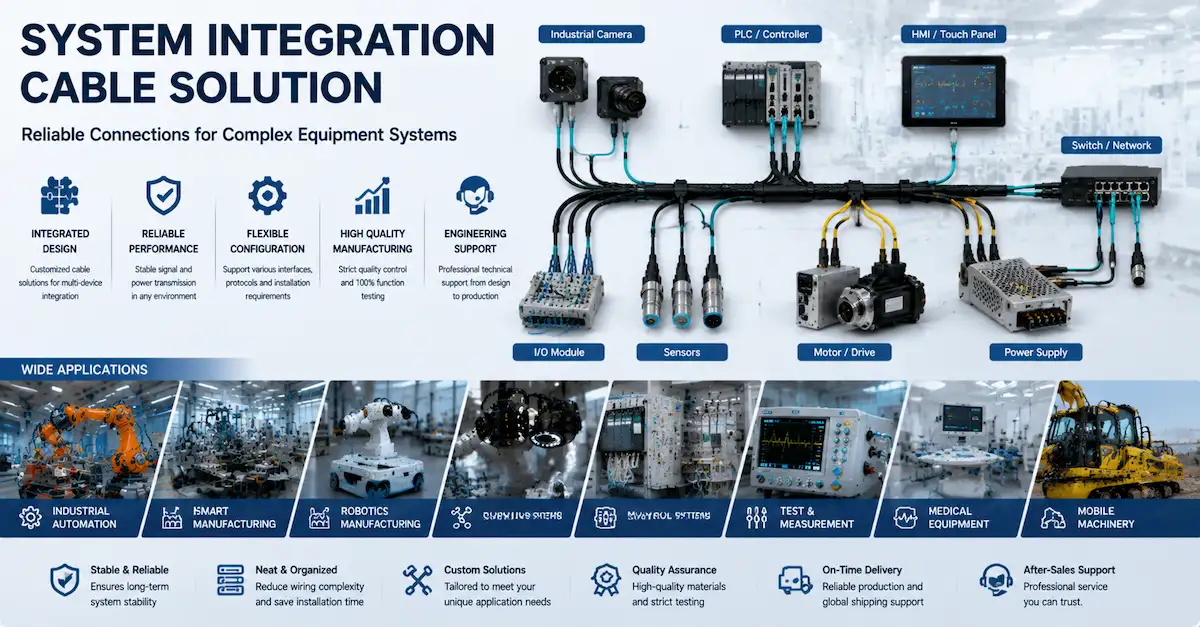
A system integration cable solution is a customized cable architecture designed to connect multiple devices within a complete equipment system.
The solution may include:
- Power cable assemblies
- Signal cables
- Data transmission cables
- Video cables
- Control cables
- Cable harnesses
- Multi-device cable systems
- Custom connector assemblies
The goal is to create an organized connection structure that allows different components to operate together efficiently.
Why System Integration Requires Customized Cable Solutions
1. Complex Systems Require Multiple Connections
Modern equipment often includes:
- Industrial cameras
- Sensors
- Controllers
- PLC systems
- Motors
- Displays
- Communication devices
Each component may require different:
- Connectors
- Cable types
- Signal standards
- Power requirements
A customized integration solution ensures all connections work together properly.
2. Improving System Reliability
Poor cable integration may cause:
- Signal interference
- Incorrect connections
- Power instability
- Difficult maintenance
- Equipment downtime
A professional system integration cable solution improves:
- Connection reliability
- Installation efficiency
- Signal stability
- Equipment service life
3. Simplifying Equipment Installation
Integrated cable solutions help reduce:
- Complex wiring processes
- Installation time
- Human errors
- Maintenance difficulty
Pre-designed cable assemblies allow system builders to install equipment more efficiently.
Applications of System Integration Cable Solutions
| Application | Integration Requirement | Main Concern |
|---|---|---|
| Industrial automation | Sensors, controllers, machines | Stable operation |
| Robotics systems | Motors, sensors, control units | Flexible movement |
| Machine vision | Cameras and processing systems | Signal integrity |
| Smart manufacturing | Multiple equipment connections | Communication reliability |
| Medical systems | Integrated device wiring | Accuracy |
| Test systems | Multiple instruments | Signal stability |
| OEM machinery | Complete equipment wiring | Production consistency |
| Electronic systems | Compact connections | Space optimization |
Key Elements of System Integration Cable Design
1. Connection Architecture Planning
Before cable development, engineers analyze:
- Device relationships
- Connection points
- Signal flow
- Power requirements
- Installation space
Proper planning prevents cable conflicts and improves system organization.
2. Connector Selection
Different devices may require different connector solutions.
Common options include:
- M8
- M12
- Hirose
- RJ45
- BNC
- SDI
- HDMI
- XLR
- D-TAP
- Circular connectors
- Custom interfaces
Selection depends on:
- Electrical requirements
- Mechanical structure
- Environmental conditions
- Mating frequency
3. Cable Routing Optimization
System integration requires careful routing planning.
Important considerations include:
- Cable length
- Installation space
- Bend radius
- Moving components
- Maintenance access
Proper routing reduces mechanical stress and improves service life.
4. Signal and Power Management
Integrated systems may combine:
- Power cables
- Data cables
- Control signals
- Video transmission
Engineering must consider:
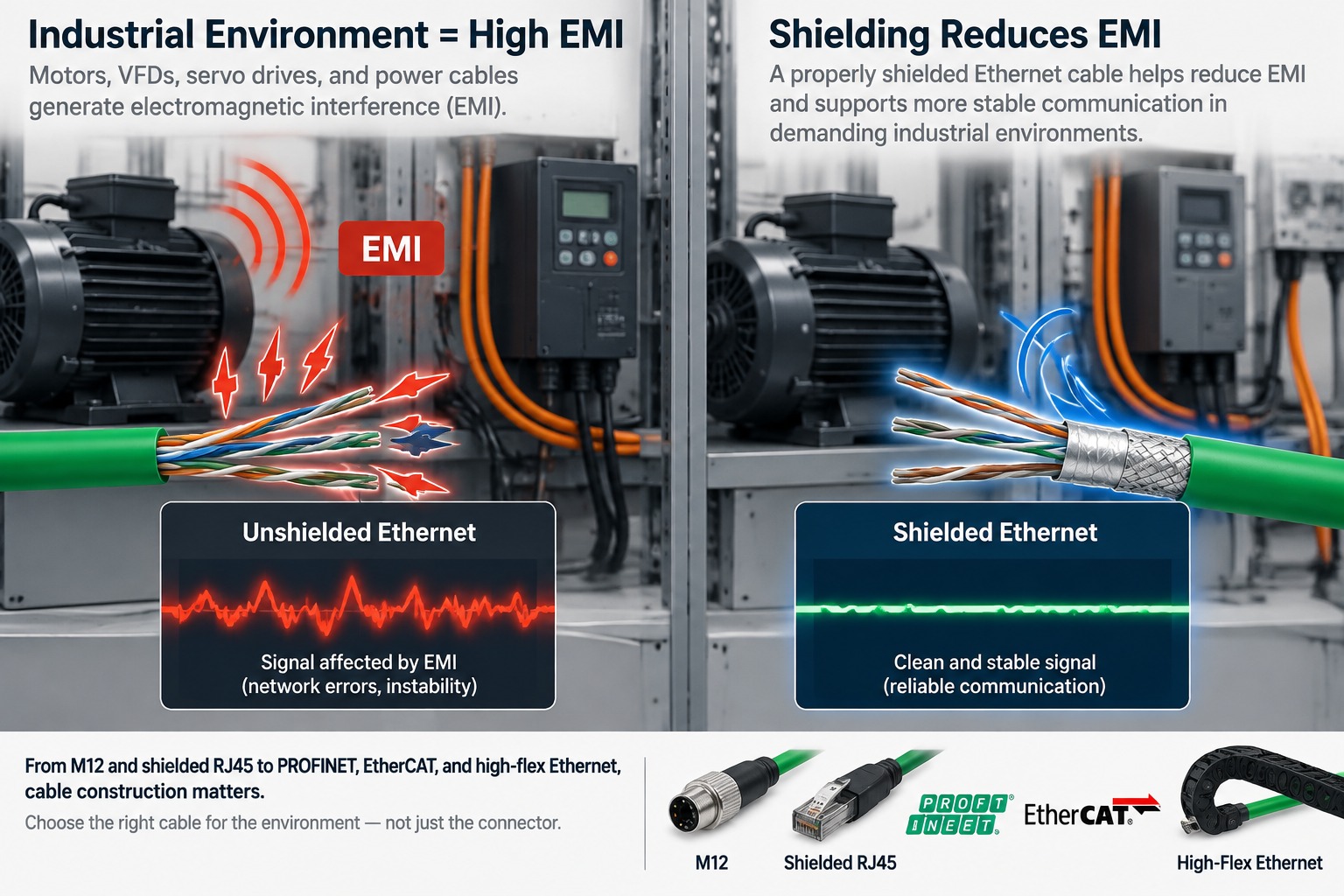
- EMI protection
- Shielding
- Grounding
- Signal separation
- Cable structure
System Integration Cable Development Process
| Stage | Main Activity |
| System analysis | Understand equipment architecture |
| Requirement review | Define power, signal, and connection needs |
| Cable design | Select structures and connectors |
| Prototype development | Build integration samples |
| System testing | Verify equipment compatibility |
| Optimization | Improve routing and performance |
| Mass production | Manufacture approved solutions |
| Long-term supply | Maintain consistency |
System Integration Cable Solution vs Individual Cable Purchasing
| Factor | Individual Cables | Integrated Cable Solution |
| Design | Separate selection | System-based design |
| Installation | More complex | Simplified |
| Wiring management | Limited | Organized |
| Customization | Limited | High |
| Maintenance | More difficult | Easier |
| OEM integration | Moderate | Strong |
For complex equipment, integrated solutions provide better overall control.
Quality Control for Integrated Cable Systems
A professional supplier should manage:
Material Control
Including:
- Cable specifications
- Connector quality
- Component availability
Assembly Control
Including:
- Wiring accuracy
- Connector installation
- Branch structure
- Protection methods
System Testing
Testing may include:
- Continuity testing
- Pinout verification
- Signal testing
- Power testing
- Functional validation
How to Choose a System Integration Cable Partner?
| Evaluation Point | What to Check |
| Engineering capability | Can they understand complete systems? |
| Cable design ability | Can they develop integrated solutions? |
| Connector knowledge | Can they support multiple interfaces? |
| Testing capability | Can they validate system performance? |
| Production ability | Can they support repeat orders? |
| Documentation | Can they provide drawings and specifications? |
| OEM experience | Have they supported equipment manufacturers? |
Common Challenges in System Integration Cable Projects
Multiple Interface Compatibility
Complex systems may involve different communication standards.
Solutions include:
- Correct connector selection
- Accurate wiring documentation
- Prototype testing
Space Limitations
Compact equipment requires:
- Optimized routing
- Smaller connectors
- Flexible cable structures
Future Expansion
A good solution should consider:
- Additional devices
- Future upgrades
- Replacement requirements
What Information Should Buyers Provide?
For a system integration cable solution project, provide:
- System architecture
- Connected devices
- Connector requirements
- Power specifications
- Signal requirements
- Cable routing information
- Environmental conditions
- Quantity
- Testing requirements
- Drawings or samples
Why Choose Alvin’s Cables for System Integration Cable Solutions?
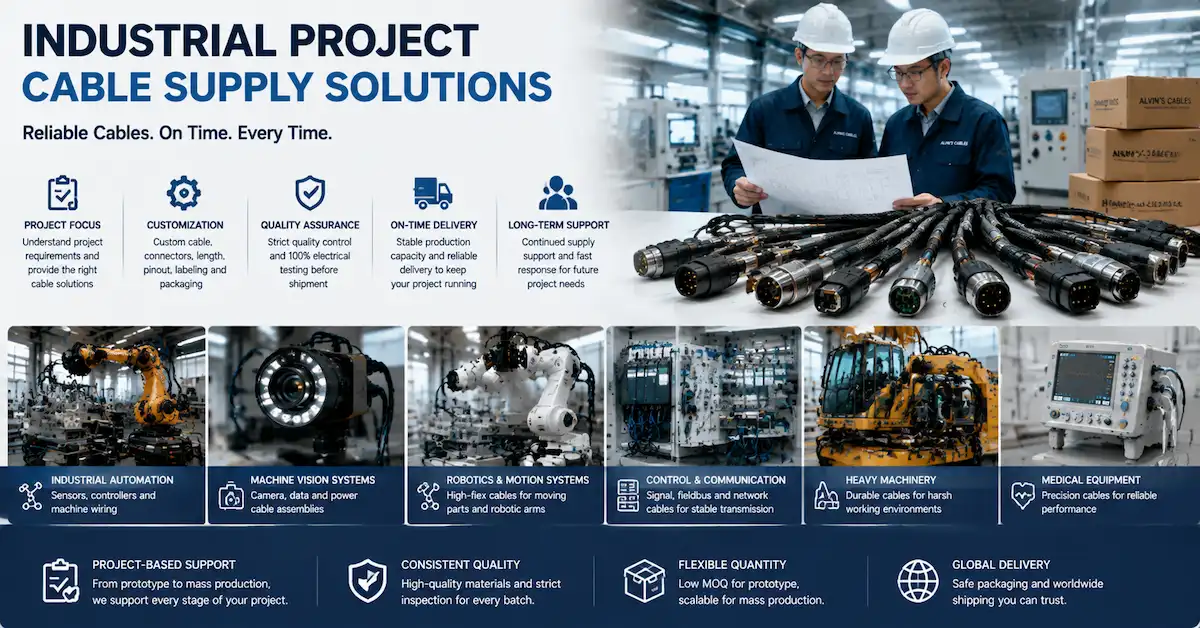
Alvin’s Cables provides customized system integration cable solutions for industrial automation, robotics, machine vision, professional video equipment, test instruments, and OEM systems.
Capabilities include:
- Integrated cable system development
- Custom cable assemblies
- Multi-device cable solutions
- Cable harness engineering
- Signal and power integration
- M8, M12, Hirose, RJ45, BNC, SDI, HDMI, D-TAP, XLR, and custom connectors
- Shielded and flexible cable designs
- Prototype development
- Electrical and functional testing
- OEM production support
Buyers can explore available products through Alvin’s Cables Products, learn about manufacturing capabilities through About Alvin’s Cables, and review service advantages through Why Choose Alvin’s Cables.
FAQ
1. What is a system integration cable solution?
A system integration cable solution is a customized connection system designed to link multiple devices within complex equipment.
2. Why are integrated cable solutions important?
They improve connection reliability, simplify installation, and reduce wiring complexity.
3. What industries use system integration cable solutions?
They are used in automation, robotics, machine vision, medical systems, testing equipment, and OEM machinery.
4. Can integrated cable systems combine power and signals?
Yes. Proper design can combine multiple functions while maintaining reliable performance.
5. What connectors can be used?
Common options include M8, M12, RJ45, Hirose, BNC, HDMI, XLR, and custom connectors.
6. Can system integration cables be customized?
Yes. Cable length, connectors, routing, shielding, and packaging can be customized.
7. Why are prototypes important?
They verify system compatibility, installation, and performance before mass production.
8. What information is needed for quotation?
Provide system requirements, connected devices, specifications, drawings, samples, and quantities.
Conclusion
A reliable system integration cable solution helps complex equipment achieve organized, stable, and efficient connections.
The right cable integration partner provides engineering support, customized design, testing, and long-term production capability.
For industrial and OEM system integration projects, contact Alvin’s Cables with your system requirements and technical specifications.