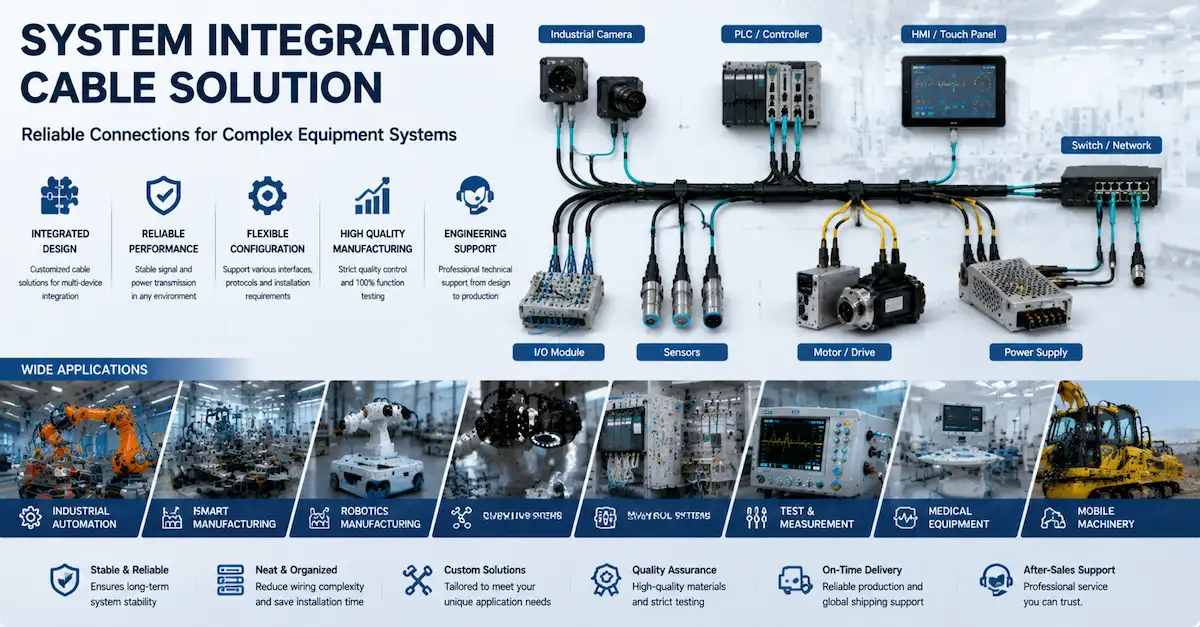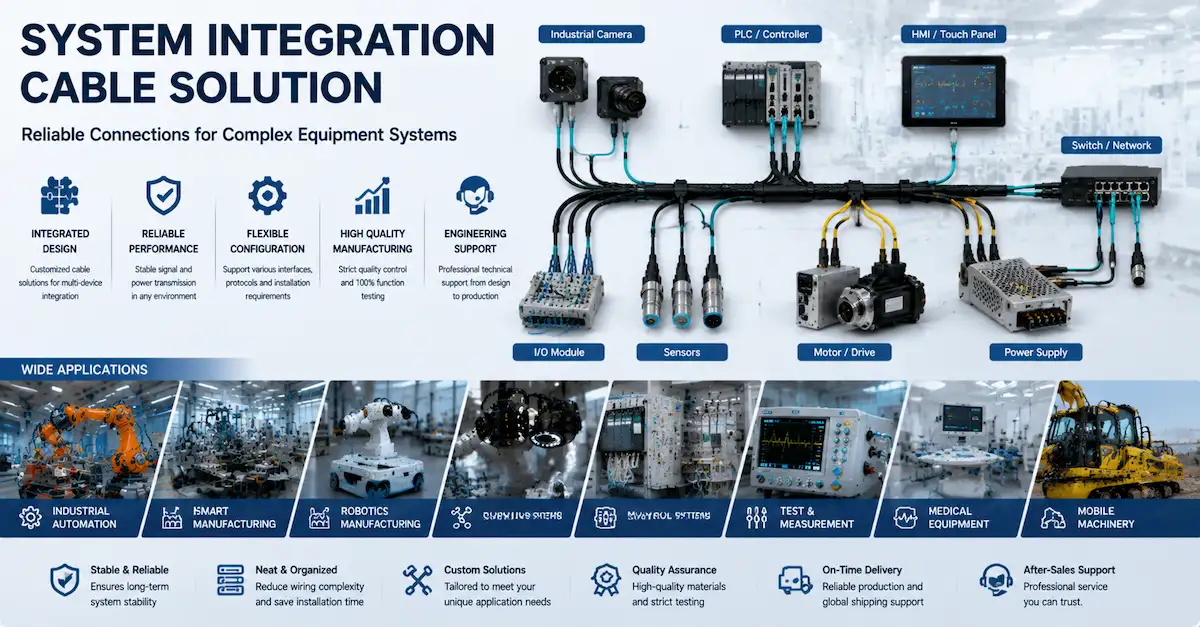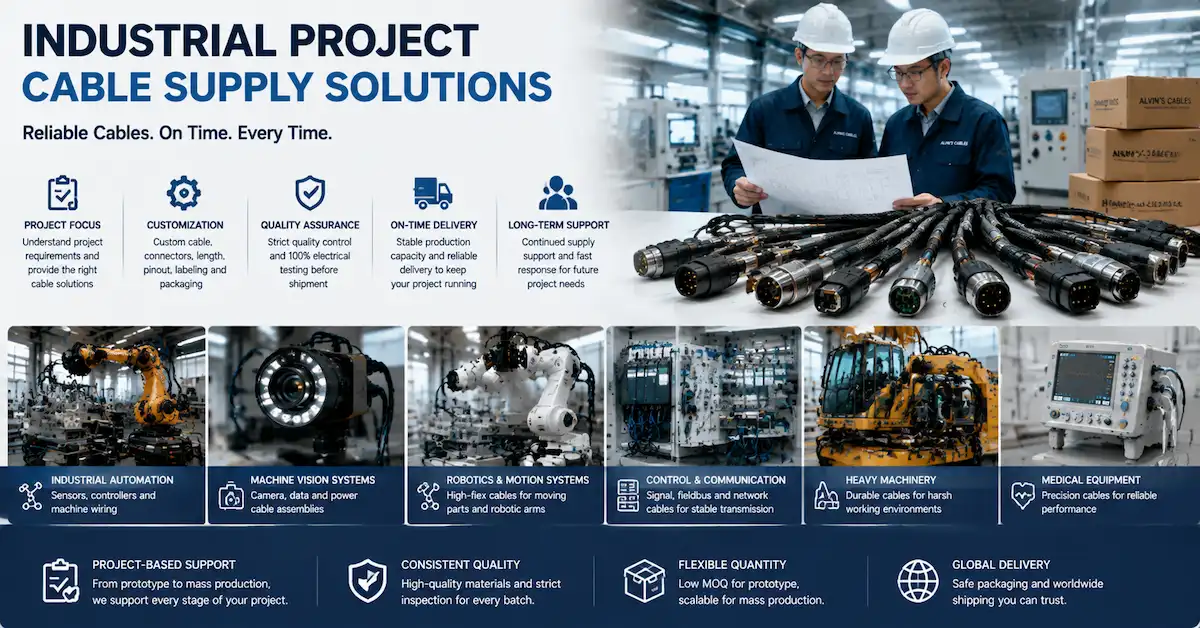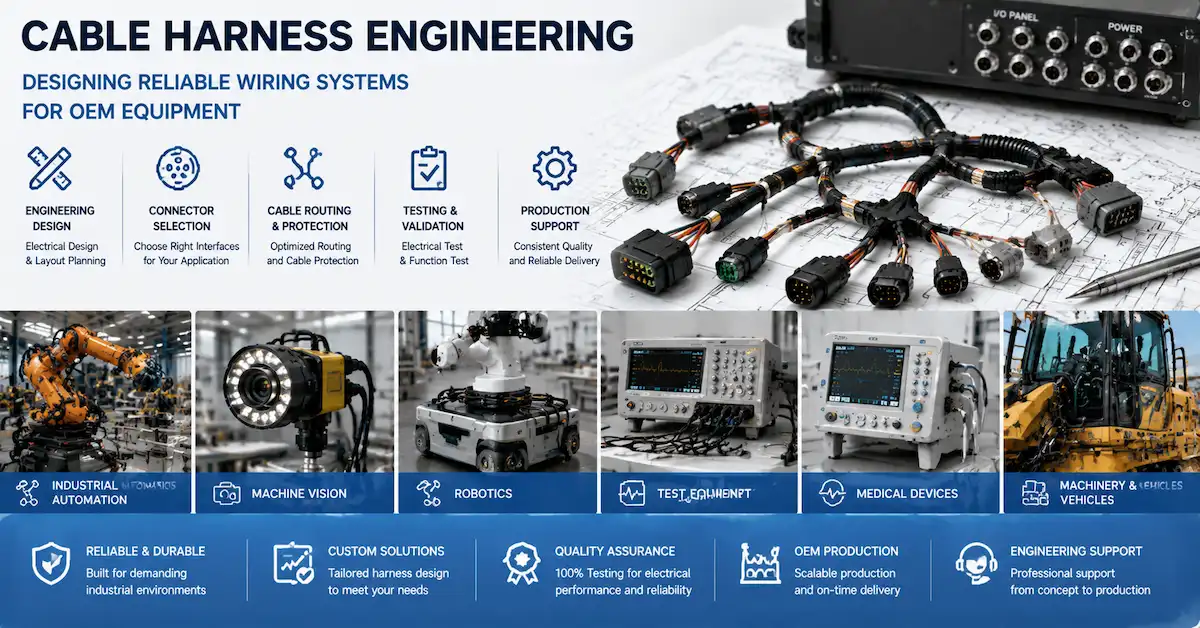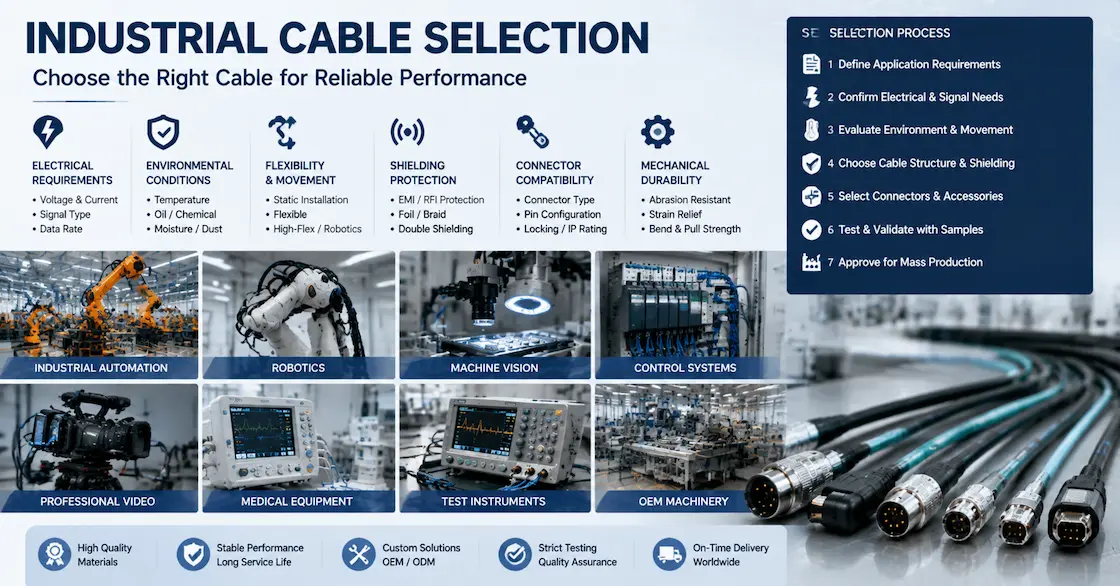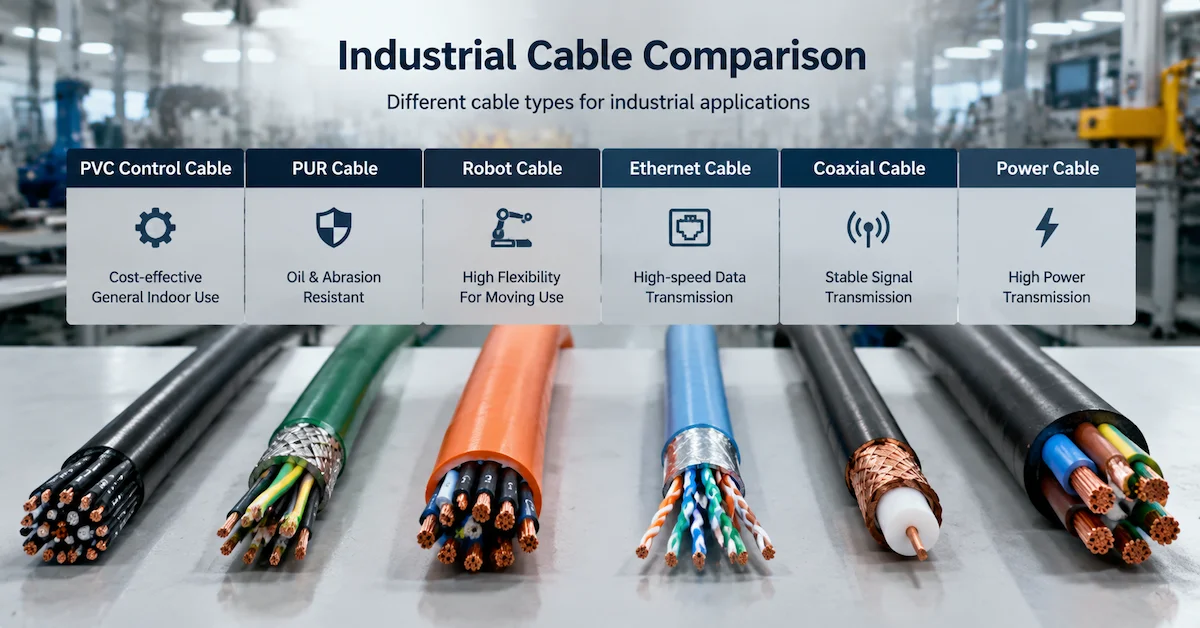
Modern industrial equipment is becoming increasingly compact and multifunctional, requiring more sensors, controllers, motors, cameras, and communication modules inside limited installation spaces. A professional complex cable routing solution helps organize these connections while maintaining reliable electrical performance and efficient maintenance.
In automation systems, robotics, machine vision equipment, medical devices, and OEM machinery, poor cable routing can lead to installation difficulties, signal interference, excessive bending, connector stress, and increased maintenance costs.
A well-designed cable routing solution considers the entire cable path, including connection points, bending requirements, protection methods, accessibility, and future equipment upgrades.
For B2B buyers, effective cable routing is not only about arranging wires. It is an important part of equipment reliability and manufacturing efficiency.
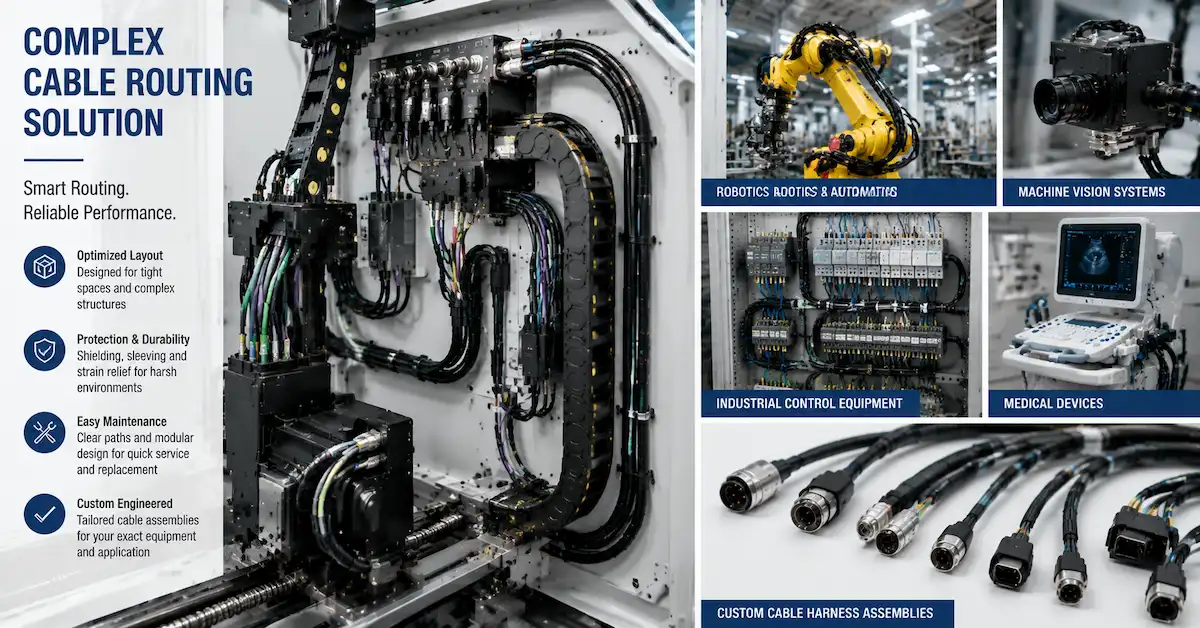
What Is a Complex Cable Routing Solution?
A complex cable routing solution is a customized cable management design that organizes multiple cables and harnesses through complicated equipment structures.
Unlike simple cable installation, complex routing requires consideration of:
- Multiple connection points
- Limited installation space
- Different cable types
- Moving components
- Signal interference risks
- Maintenance requirements
- Production assembly efficiency
A complete routing solution may include:
- Custom cable assemblies
- Cable harnesses
- Multi-branch wiring systems
- Flexible cable structures
- Protective sleeving
- Strain relief components
- Custom connectors
- Mounting solutions
Where Are Complex Cable Routing Solutions Used?
| Application | Routing Challenge | Buyer Concern |
|---|---|---|
| Industrial automation | Multiple sensors and controllers | Installation efficiency |
| Robotics | Continuous movement | Cable fatigue |
| Machine vision systems | Camera and lighting connections | Signal stability |
| Medical equipment | Compact internal structures | Safety and organization |
| Test equipment | Multiple measurement connections | Accuracy |
| OEM machinery | Limited internal space | Production consistency |
| Semiconductor equipment | Precision wiring layouts | Reliability |
| Advanced electronics | High-density connections | Thermal and signal management |
Why Complex Cable Routing Matters
1. Improving Equipment Reliability
Incorrect cable routing can create:
- Excessive bending
- Connector stress
- Cable damage
- Signal interference
- Difficult troubleshooting
A professional routing solution helps ensure:
- Proper cable paths
- Suitable bending radius
- Secure connections
- Reduced mechanical stress
- Longer service life
2. Managing Limited Installation Space
Modern equipment often requires more functions in smaller spaces.
Routing design must consider:
- Component positions
- Cable diameter
- Connector size
- Movement area
- Heat sources
- Maintenance access
Optimized routing helps manufacturers achieve cleaner and more efficient equipment designs.
3. Protecting Signal Performance
Complex systems often combine:
- Power cables
- Signal cables
- Data cables
- Communication cables
Poor routing may increase interference between different cable types.
Solutions may include:
- Cable separation
- Shielded cables
- Twisted pair structures
- Grounding design
- Optimized cable paths
4. Improving Assembly Efficiency
For OEM manufacturers, cable routing affects production time.
A good solution helps:
- Reduce installation steps
- Simplify assembly
- Improve consistency
- Reduce wiring mistakes
- Support repeat production
Common Complex Cable Routing Solutions
| Solution Type | Application | Advantage |
| Custom cable harness | Complex equipment | Organized wiring |
| Multi-branch cable assembly | Multiple devices | Simplified connections |
| Flexible routing cable | Moving systems | Better movement performance |
| Shielded routing system | Sensitive signals | EMI protection |
| Hybrid power and signal cable | Integrated equipment | Space saving |
| Modular cable system | Expandable equipment | Easy maintenance |
| Overmolded cable solution | Harsh environments | Improved protection |
Key Design Factors for Cable Routing Solutions
Cable Path Planning
A professional routing design evaluates:
- Starting and ending points
- Cable length
- Installation direction
- Connector positions
- Service access
- Future replacement requirements
Proper planning prevents unnecessary cable stress.
Bend Radius Management
Each cable has a minimum bending radius.
Incorrect bending may cause:
- Internal conductor damage
- Signal degradation
- Reduced cable life
- Connector stress
Routing should provide enough space for natural cable movement.
Connector Orientation
Connector direction affects installation efficiency.
Important considerations include:
- Straight connectors
- Right-angle connectors
- Locking direction
- Access space
- Maintenance convenience
Cable Protection
Depending on the environment, protection may include:
- Braided sleeving
- Spiral wrapping
- Corrugated tubing
- Heat shrink
- Flexible jackets
- Overmolding
Complex Cable Routing Solution Development Process
Step 1: Equipment Analysis
Review:
- Equipment structure
- Connection locations
- Available space
- Movement requirements
- Environmental conditions
Step 2: Routing Design
Develop:
- Cable paths
- Harness layout
- Connector positions
- Protection methods
- Installation procedures
Step 3: Prototype Verification
Confirm:
- Equipment fit
- Cable length
- Flexibility
- Connector accessibility
- Signal performance
Step 4: Production Preparation
Finalize:
- Drawings
- Cable specifications
- Assembly instructions
- Testing requirements
- Packaging
Complex Cable Routing Solution vs Standard Cable Installation
| Option | Advantages | Limitations | Best For |
| Individual cable installation | Simple and flexible | More clutter | Basic equipment |
| Cable bundle | Lower complexity | Limited optimization | Small systems |
| Custom routing solution | Better organization and reliability | Requires engineering | Complex equipment |
| Integrated harness system | Maximum efficiency | Higher design requirement | OEM machinery |
How to Choose a Cable Routing Solution Supplier?
| Evaluation Point | What to Check |
| Engineering ability | Can they analyze equipment structure? |
| Cable knowledge | Can they select suitable cable types? |
| Harness experience | Can they design complex assemblies? |
| Connector capability | Can they manage multiple interfaces? |
| Prototype support | Can they validate designs? |
| Testing ability | Can they verify performance? |
| Production capability | Can they support repeat orders? |
| OEM support | Can they provide documentation and packaging? |
What Information Should Buyers Provide?
For a complex cable routing project, prepare:
- Equipment drawings
- Cable connection points
- Cable types
- Connector requirements
- Installation space information
- Movement requirements
- Environmental conditions
- Signal and power requirements
- Quantity
- Samples or specifications
Why Choose Alvin’s Cables for Complex Cable Routing Solutions?
Alvin’s Cables provides customized cable routing solutions for industrial automation, robotics, machine vision, professional video equipment, test instruments, and OEM machinery.
Capabilities include:
- Complex cable harness development
- Multi-device cable systems
- Custom cable assemblies
- Cable routing optimization
- M8, M12, Hirose, RJ45, BNC, D-TAP, XLR, and custom connectors
- Flexible and rugged cable structures
- Shielded cable solutions
- Prototype development
- Electrical and functional testing
- OEM labeling and packaging
Buyers can explore available products through Alvin’s Cables Products, learn about manufacturing capabilities through About Alvin’s Cables, and review service advantages through Why Choose Alvin’s Cables.
FAQ
1. What is a complex cable routing solution?
A complex cable routing solution organizes multiple cables and harnesses through advanced equipment structures while maintaining reliable performance.
2. Why is cable routing important?
Proper routing reduces cable stress, improves reliability, simplifies installation, and supports easier maintenance.
3. What industries need complex cable routing?
Industries include automation, robotics, medical equipment, machine vision, semiconductor equipment, and OEM machinery.
4. Can cable routing solutions include custom harnesses?
Yes. Custom harnesses are commonly used to organize multiple connections in complex systems.
5. How does routing affect cable life?
Proper routing prevents excessive bending, pulling, vibration damage, and connector stress.
6. Can power and signal cables share the same routing system?
Yes, but proper separation, shielding, and grounding must be considered.
7. Can Alvin’s Cables provide prototypes?
Yes. Prototype development and validation are available before production.
8. What information is needed for quotation?
Provide equipment details, drawings, connection requirements, cable specifications, quantity, and environmental conditions.
Conclusion
A reliable complex cable routing solution helps advanced equipment achieve cleaner installation, improved reliability, and easier maintenance.
For industrial automation, robotics, machine vision, and OEM machinery, optimized cable routing reduces wiring challenges and improves overall system performance.
If you need a custom cable routing solution, contact Alvin’s Cables with your equipment layout, cable requirements, and project specifications.