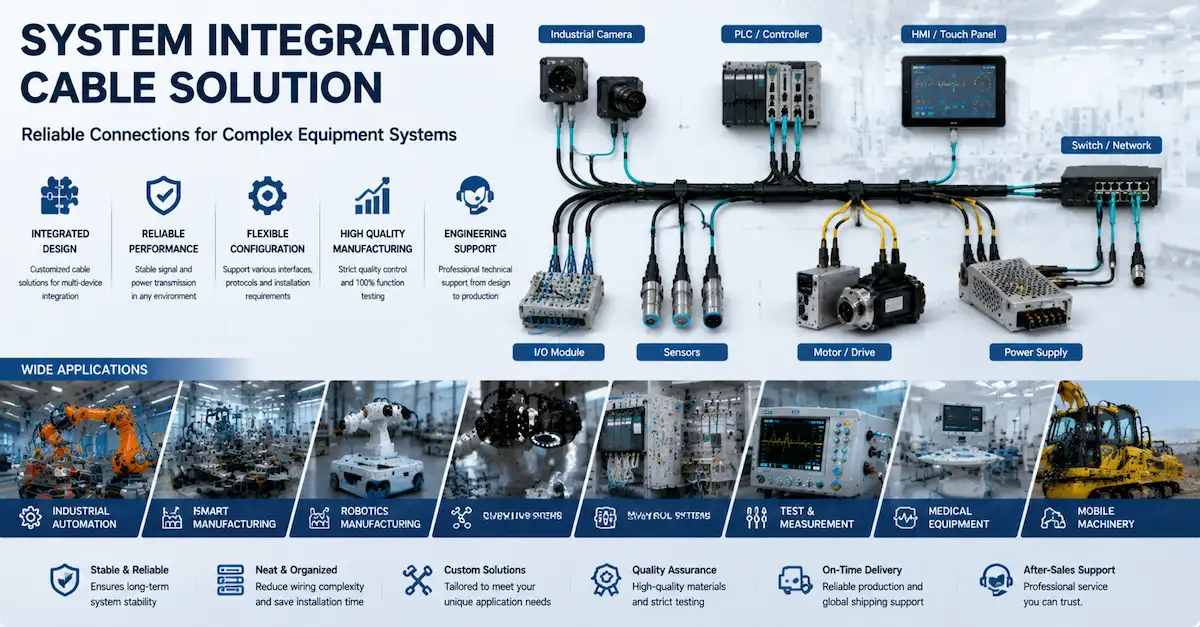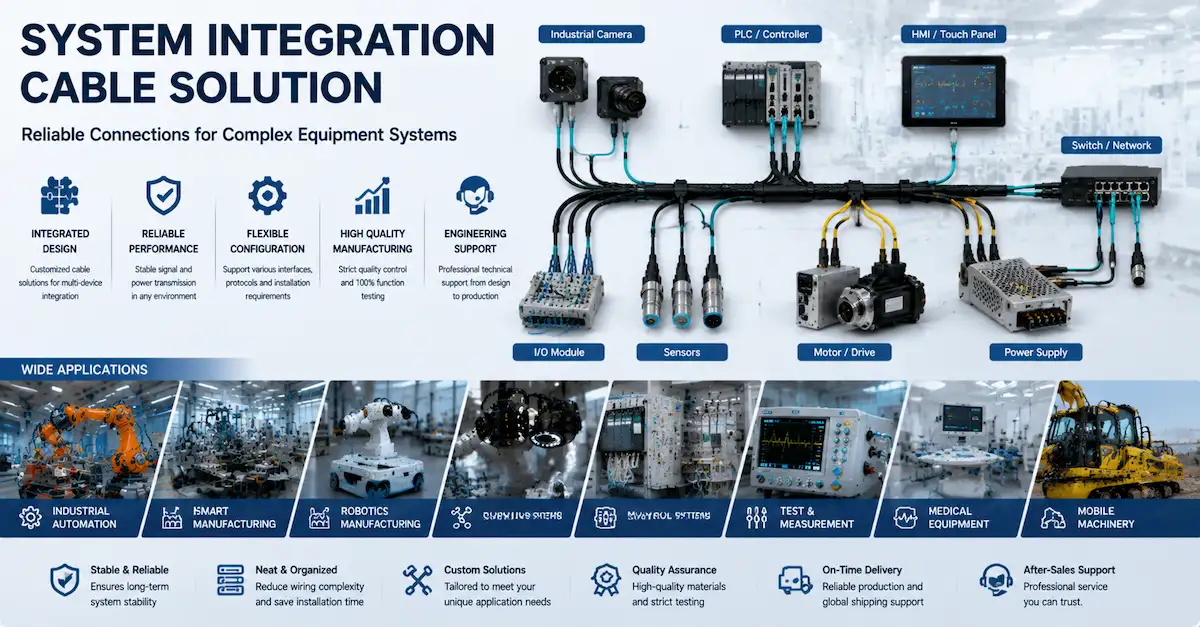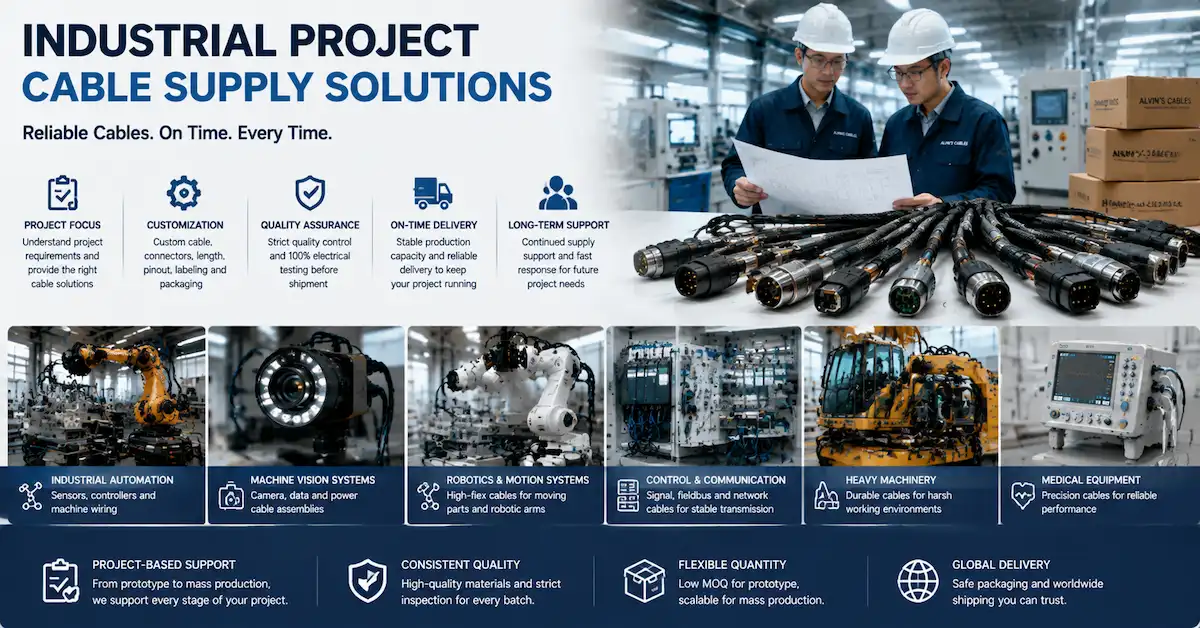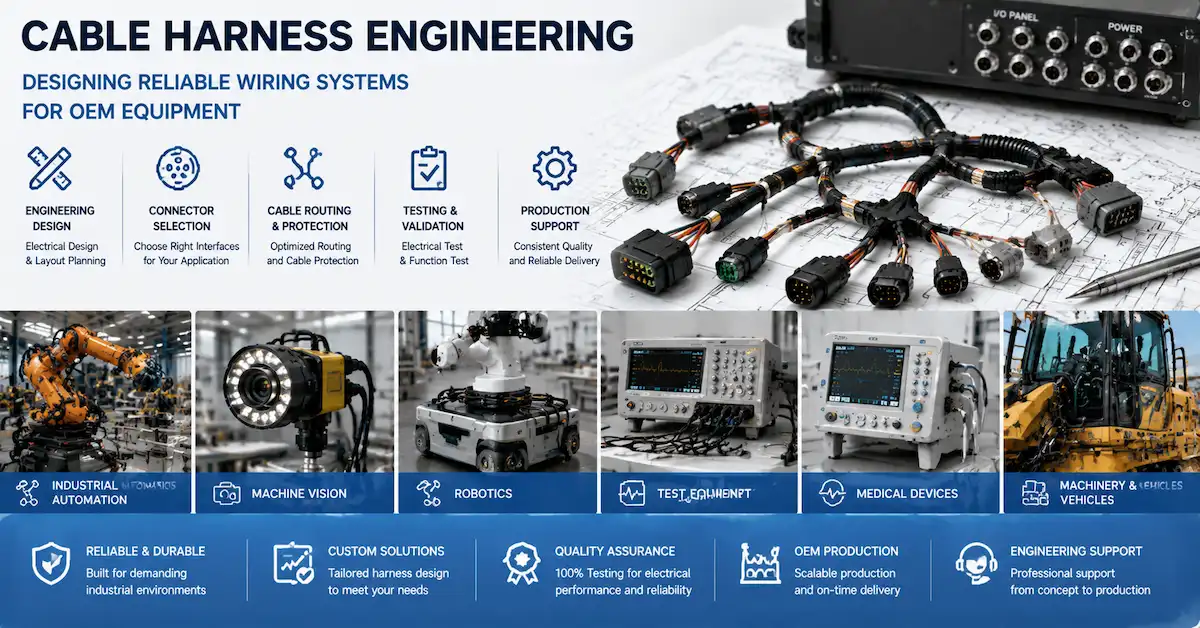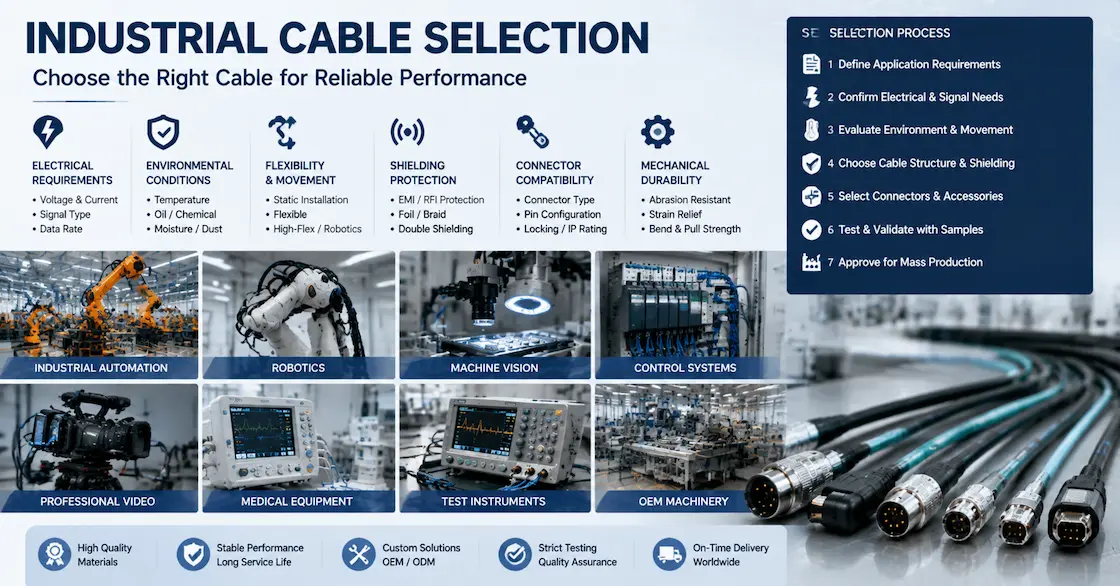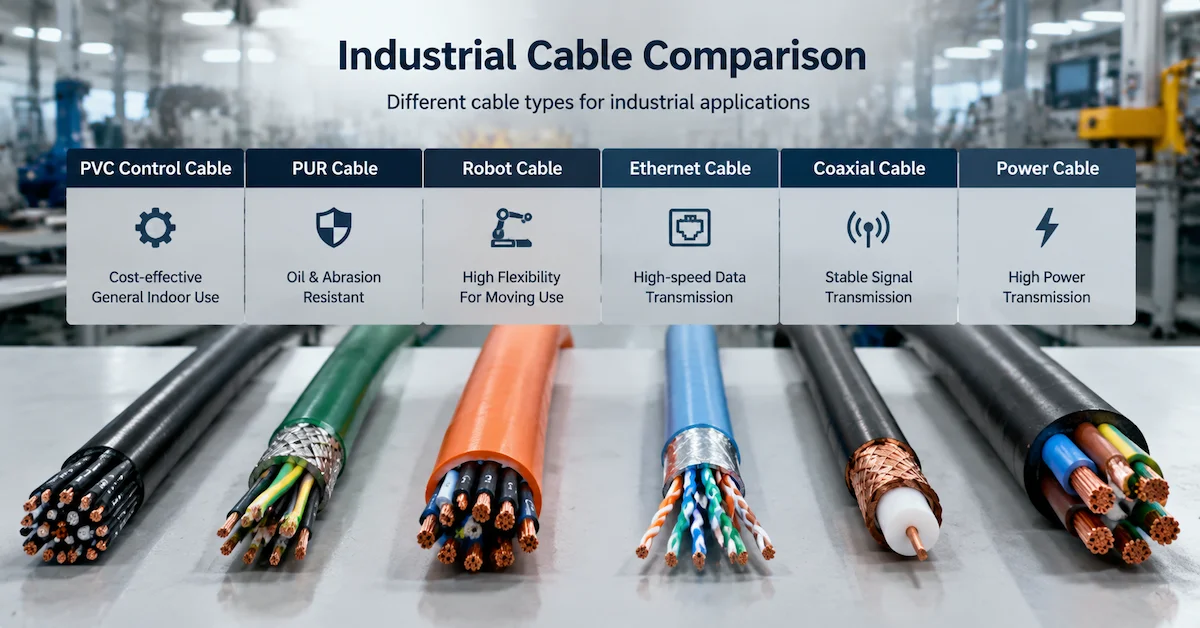
Modern industrial equipment depends on reliable cable connections to transfer power, signals, data, and control information between different modules. A professional industrial cable solutions provider helps equipment manufacturers design cable assemblies that match their specific operating conditions, installation requirements, and performance expectations.
In industrial environments, cables are often exposed to vibration, continuous operation, electromagnetic interference, temperature changes, movement, and mechanical stress. Standard cables may not provide enough reliability for these applications.
A complete industrial cable solution considers the entire connection system, including cable structure, connectors, wiring configuration, shielding, protection, testing, and production consistency.
For automation manufacturers, robotics companies, machine builders, and OEM equipment suppliers, the right cable solution can improve system reliability, reduce maintenance costs, and support long-term equipment performance.
What Are Industrial Cable Solutions?
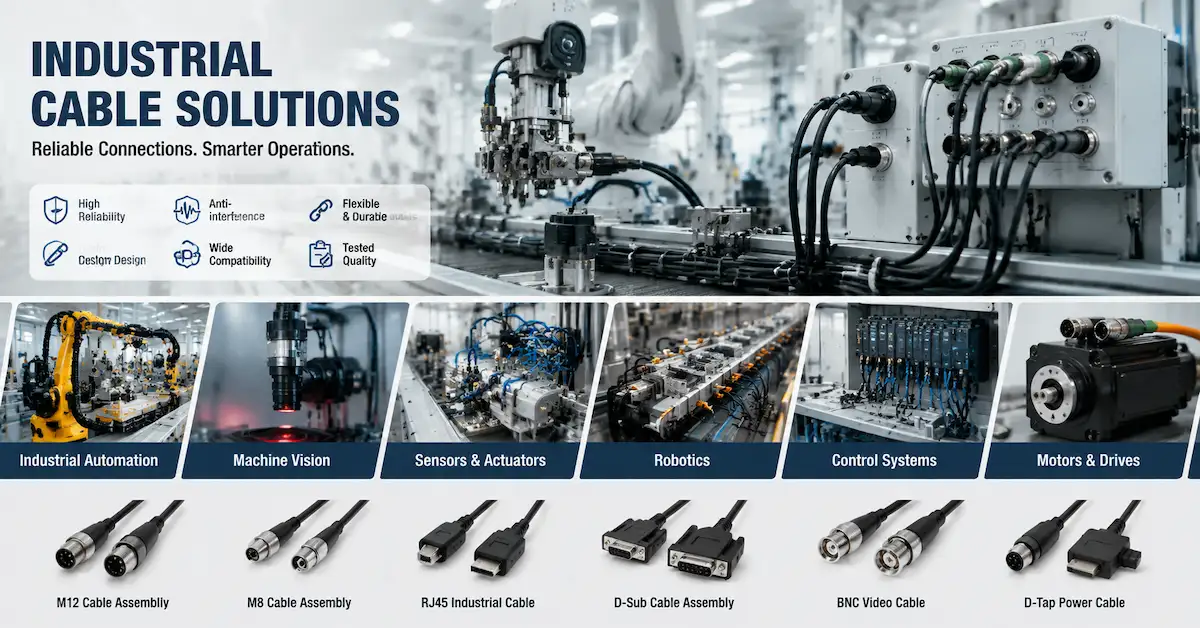
Industrial cable solutions are customized cable assemblies designed for industrial equipment and professional applications.
Unlike simple replacement cables, industrial solutions focus on:
- Equipment compatibility
- Electrical performance
- Mechanical durability
- Environmental protection
- Installation efficiency
- Long-term reliability
A complete solution may include:
- Power cable assemblies
- Signal cable assemblies
- Sensor cables
- Data transmission cables
- Industrial Ethernet cables
- Camera cables
- Cable harnesses
- Multi-connector assemblies
- Shielded cable systems
The goal is not only to connect two devices but to create a reliable connection system that performs under real working conditions.
Where Are Industrial Cable Solutions Used?
| Application | Cable Requirement | Buyer Concern |
|---|---|---|
| Industrial automation | Power, sensor, and control connections | Stable operation |
| Robotics | Flexible and durable cable routing | Movement fatigue |
| Machine vision | Camera and data transmission | Signal integrity |
| Manufacturing equipment | Continuous machine operation | Downtime reduction |
| Test equipment | Accurate signal transmission | Measurement reliability |
| Medical equipment | Precise cable integration | Quality consistency |
| Control systems | Organized wiring | Installation efficiency |
| OEM machinery | Custom cable integration | Repeat production |
Industrial cable solutions are widely used wherever equipment reliability and continuous operation are important.
Why Industrial Cable Solutions Matter
1. Improving Equipment Reliability
Industrial systems often operate continuously. Cable failures can interrupt production and increase maintenance costs.
A properly designed industrial cable solution helps reduce:
- Signal interruptions
- Power instability
- Connector failures
- Unplanned downtime
- Maintenance frequency
For manufacturers, cable reliability directly affects overall equipment performance.
2. Supporting Complex Equipment Integration
Modern equipment often includes multiple modules:
- Sensors
- Cameras
- Controllers
- Motors
- Displays
- Communication devices
- Power systems
A custom cable solution helps organize these connections through:
- Correct connector selection
- Accurate pinout design
- Proper cable routing
- Clear labeling
- Suitable protection
This simplifies installation and maintenance.
3. Protecting Against Industrial Interference
Factories often contain sources of electromagnetic interference, including:
- Motors
- Power supplies
- Welding equipment
- Industrial controllers
- High-current cables
Industrial cable solutions may include:
- Foil shielding
- Braided shielding
- Double shielding
- Twisted pair structures
- Shield grounding
- EMI-resistant cable jackets
The correct design depends on signal sensitivity and working conditions.
4. Increasing Service Life
Industrial cables must withstand demanding environments.
Durability factors include:
- Cable jacket material
- Connector strength
- Strain relief
- Bend radius
- Vibration resistance
- Temperature resistance
- Moisture protection
A well-designed cable assembly reduces replacement frequency and improves total equipment value.
Main Types of Industrial Cable Solutions
| Cable Solution | Application | Key Advantage |
| Industrial cable assembly | Machinery and automation | Reliable integration |
| Sensor cable | Sensors and controllers | Stable signal transmission |
| M8 cable assembly | Compact industrial devices | Space-saving connection |
| M12 cable assembly | Industrial automation | Rugged locking connection |
| Shielded cable assembly | High-interference environments | EMI protection |
| High flex cable | Robotics and moving systems | Repeated bending performance |
| Cable harness | Complex equipment wiring | Organized installation |
| Power cable assembly | Industrial power systems | Stable energy delivery |
| Data cable assembly | Communication systems | Fast transmission |
Industrial Cable Solutions vs Standard Cable Products
| Option | Advantages | Limitations | Best For |
| Standard cable | Easy sourcing | Limited customization | Basic replacement |
| Flexible cable | Easier installation | Limited harsh environment use | Light movement |
| Industrial cable solution | Application-specific design | Requires technical discussion | Industrial systems |
| Custom OEM solution | Full equipment integration | Requires development process | Professional equipment |
For industrial applications, the best solution is usually based on equipment requirements rather than choosing the cheapest available cable.
Key Design Factors for Industrial Cable Solutions
Connector Selection
The connector affects:
- Electrical performance
- Mechanical strength
- Installation method
- Environmental protection
Common industrial connector options include:
- M8
- M12
- RJ45 industrial Ethernet
- Hirose
- BNC
- D-TAP
- Push-pull connectors
- Custom connectors
Cable Structure
The cable structure should match the application.
Important factors include:
- Conductor size
- Signal type
- Voltage requirement
- Current capacity
- Shielding
- Flexibility
- Temperature range
Mechanical Protection
Industrial environments require protection against:
- Pulling
- Bending
- Vibration
- Abrasion
- Moisture
Common solutions include:
- Overmolding
- Strain relief
- Protective sleeving
- Rugged jackets
- Waterproof connectors
Testing Requirements
Professional industrial cable solutions should include testing such as:
- Continuity testing
- Short-circuit testing
- Pinout verification
- Polarity testing
- Connector inspection
- Functional testing
Testing helps ensure reliability before installation.
How to Choose an Industrial Cable Solutions Provider?
Buyers should evaluate:
| Evaluation Point | What to Check |
| Industry experience | Does the supplier understand industrial applications? |
| Engineering capability | Can they support custom design? |
| Connector knowledge | Can they recommend suitable interfaces? |
| Production ability | Can they support repeat orders? |
| Testing capability | Do they verify cable performance? |
| Quality control | Are processes documented? |
| Customization | Can they support OEM requirements? |
| Communication | Can they solve technical problems quickly? |
A good industrial cable partner should provide technical solutions, not just products.
Industrial Cable Development Process
Requirement Analysis
Confirm:
- Equipment application
- Connection points
- Cable specifications
- Operating environment
- Quantity requirements
Engineering Review
Evaluate:
- Connector compatibility
- Pinout
- Shielding
- Cable routing
- Mechanical requirements
Prototype Production
Verify:
- Equipment fit
- Electrical performance
- Installation convenience
- Cable durability
Mass Production
Control:
- Materials
- Assembly process
- Testing
- Packaging
- Delivery
This process helps ensure stable quality for repeat orders.
What Information Should Buyers Provide?
For an industrial cable solution quotation, prepare:
- Equipment application
- Cable type
- Connector requirements
- Cable length
- Pinout or wiring diagram
- Signal or power requirements
- Shielding requirements
- Environmental conditions
- Quantity
- Drawings, specifications, or samples
Complete information helps suppliers provide accurate recommendations.
Why Choose Alvin’s Cables for Industrial Cable Solutions?
Alvin’s Cables provides customized industrial cable solutions for automation equipment, professional video systems, robotics, machine vision, test instruments, and OEM electronics.
Capabilities include:
- Custom industrial cable assemblies
- Signal and power cable solutions
- M8 and M12 industrial connections
- Shielded cable structures
- High-flex cable solutions
- Cable harness development
- Custom connectors
- Prototype production
- Electrical and functional testing
- OEM labeling and packaging
Buyers can explore available cable products through Alvin’s Cables Products, learn about manufacturing capabilities through About Alvin’s Cables, and review service advantages through Why Choose Alvin’s Cables.
FAQ
1. What are industrial cable solutions?
Industrial cable solutions are customized cable assemblies designed for industrial equipment, automation systems, and OEM applications.
2. What industries use industrial cable solutions?
They are used in automation, robotics, machine vision, manufacturing equipment, medical devices, and industrial electronics.
3. Can industrial cable solutions be customized?
Yes. Cable length, connectors, pinout, shielding, materials, and packaging can be customized.
4. Why do industrial cables need shielding?
Shielding helps reduce electromagnetic interference and improves signal reliability.
5. What connectors are commonly used?
Common connectors include M8, M12, RJ45, Hirose, BNC, push-pull, and custom connectors.
6. Can industrial cables support moving equipment?
Yes. High-flex industrial cables are designed for robotics and repeated movement applications.
7. What testing is required?
Testing may include continuity, pinout, polarity, connector fit, and functional verification.
8. How do I request a custom solution?
Provide equipment details, connector information, cable requirements, quantity, and application environment.
Conclusion
Reliable industrial cable solutions help manufacturers build safer, more efficient, and more reliable industrial systems.
The right solution combines electrical performance, mechanical durability, connector compatibility, testing, and production consistency.
For custom industrial cable solutions, contact Alvin’s Cables with your equipment requirements, cable specifications, and application details.