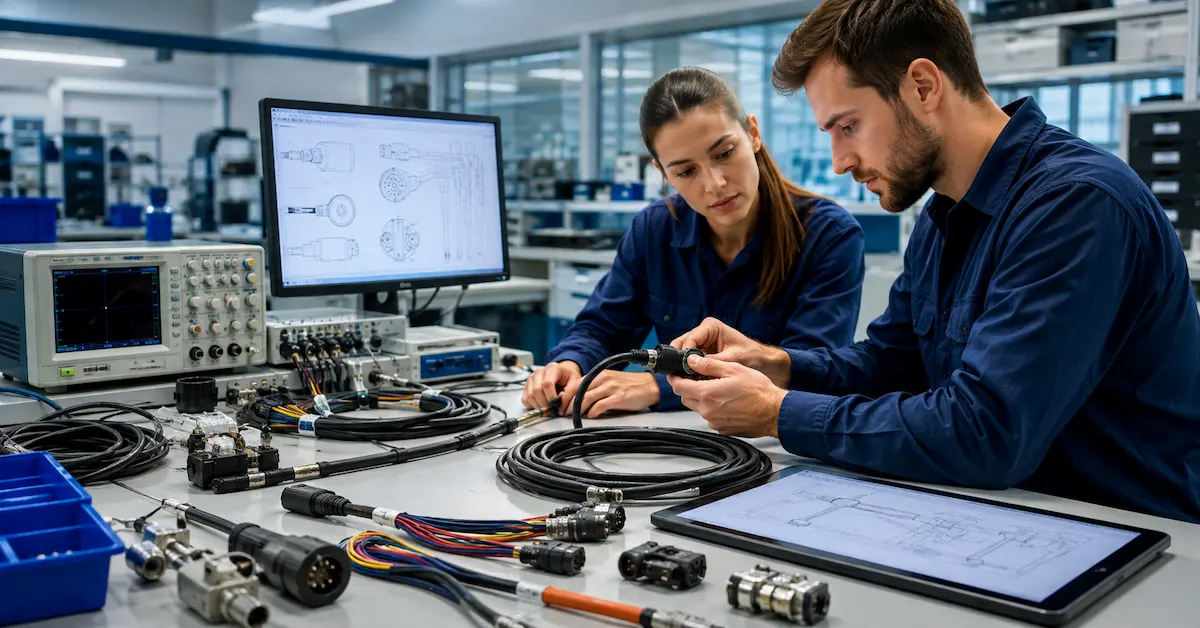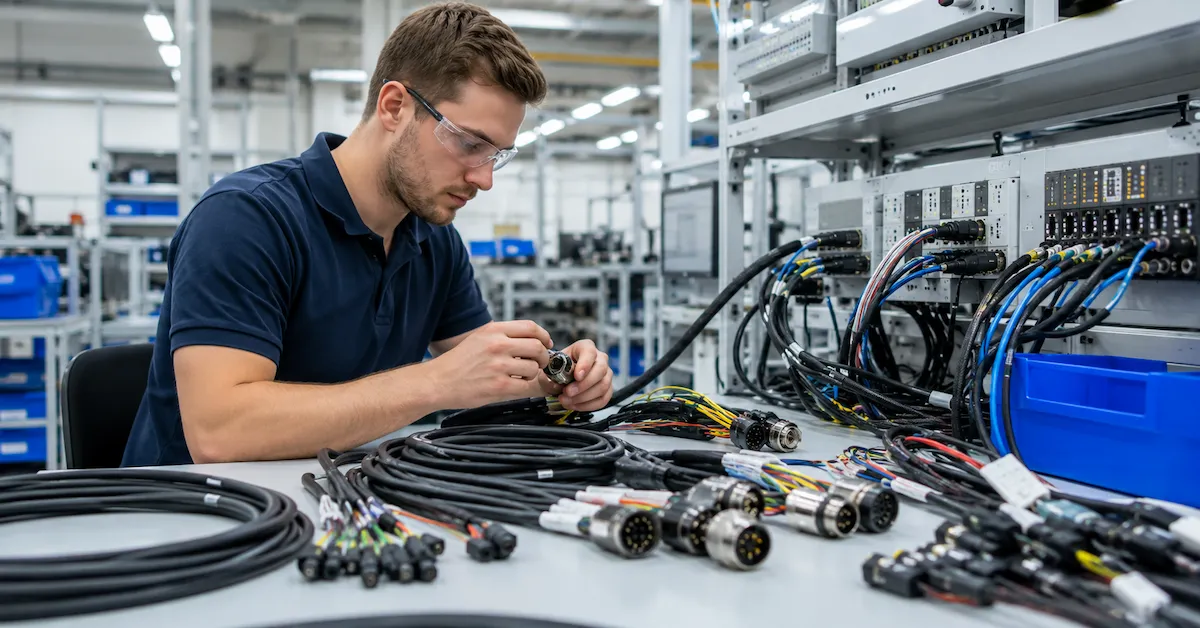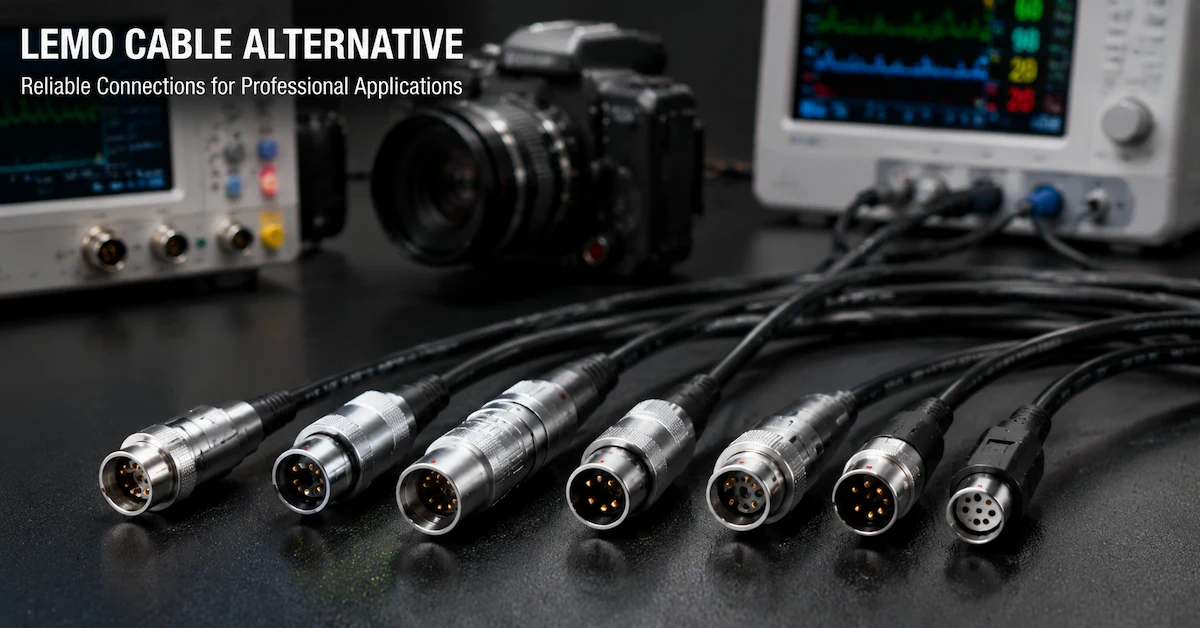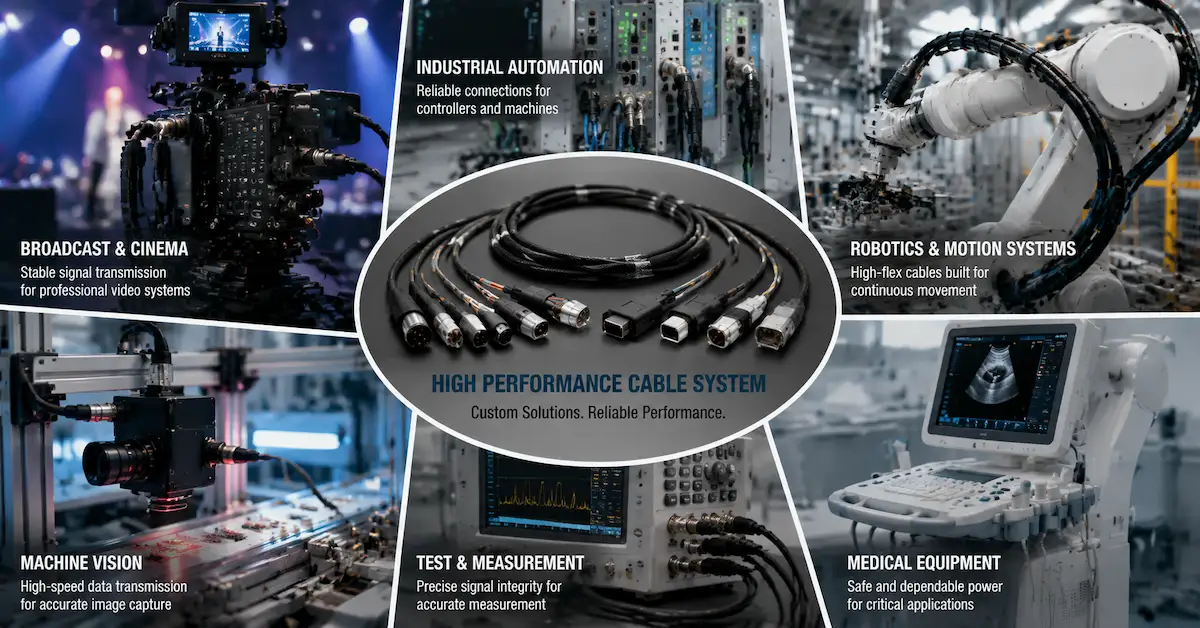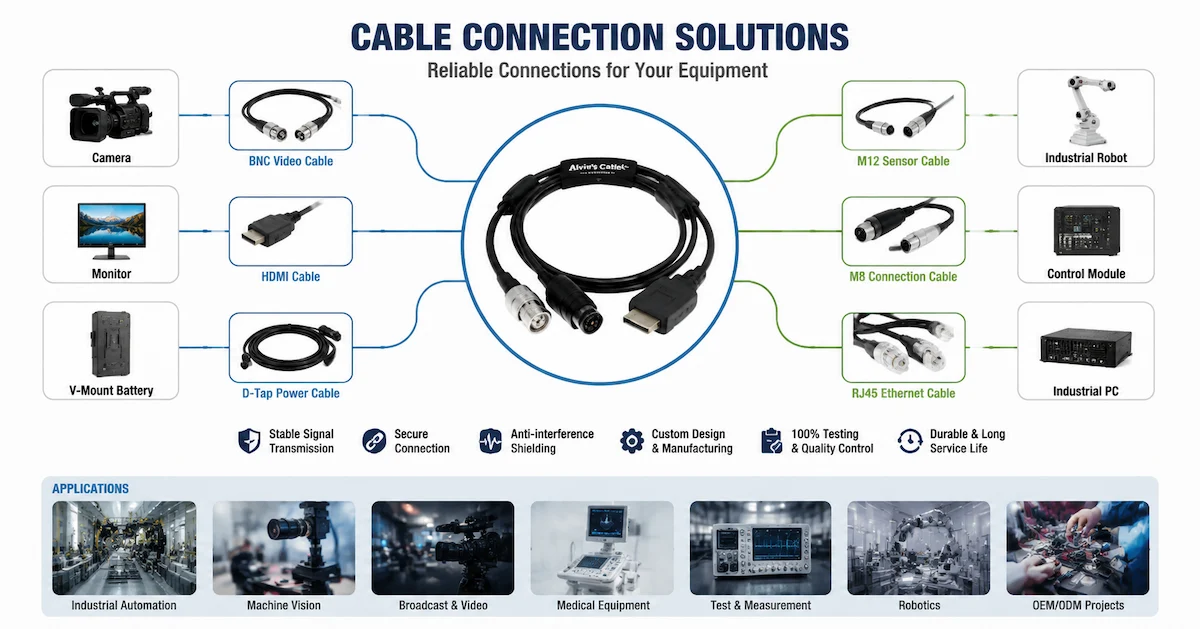
Modern equipment often includes multiple components that must communicate and operate together. A multi device cable system provides an organized connection solution that combines power, signal, data, and control interfaces into a reliable cable network.
In industrial automation, professional video systems, robotics, medical equipment, machine vision, and OEM electronics, a single device may need to connect with cameras, controllers, sensors, displays, power modules, and communication units at the same time.
Without proper cable planning, complex systems may face problems such as tangled wiring, incorrect connections, signal interference, difficult maintenance, and unreliable operation.
A well-designed multi device cable system simplifies equipment integration by providing customized cable assemblies, organized routing, reliable connectors, and consistent performance.
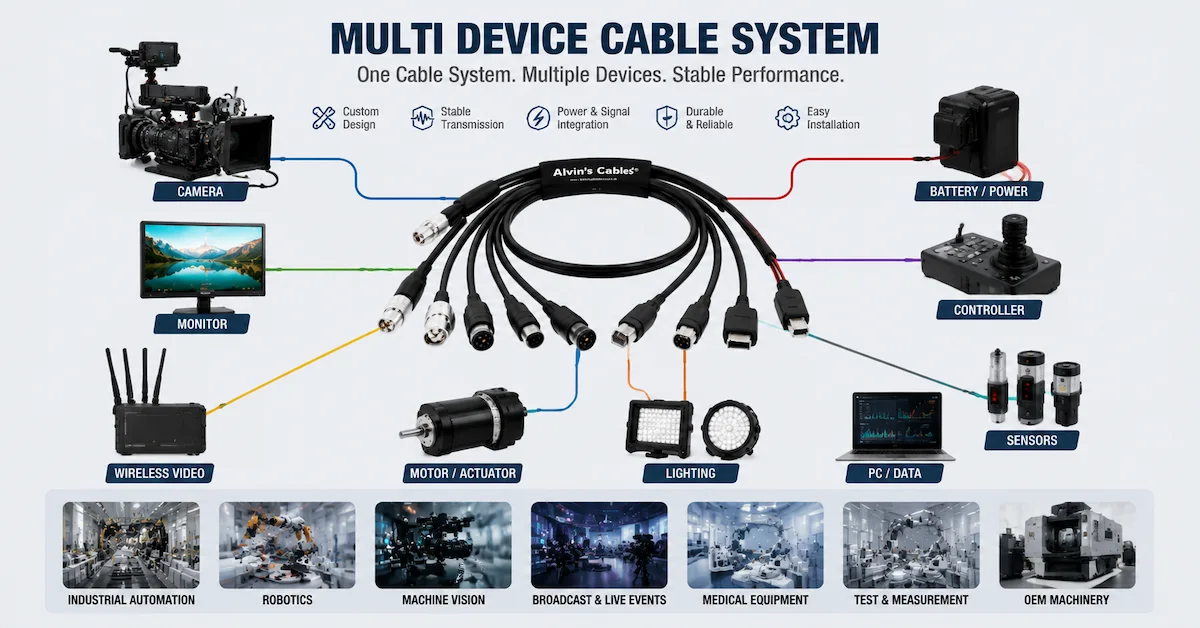
What Is a Multi Device Cable System?
A multi device cable system is a customized cable solution designed to connect multiple devices within one equipment system.
Instead of using separate cables without coordination, a multi-device solution considers the complete connection structure.
A system may include:
- Power cables
- Signal cables
- Data cables
- Video cables
- Control cables
- Cable harnesses
- Multi-branch assemblies
- Multiple connector interfaces
The design focuses on:
- Device compatibility
- Wiring accuracy
- Installation efficiency
- Signal stability
- Mechanical protection
- Future maintenance
Where Are Multi Device Cable Systems Used?
| Application | Connected Devices | Main Requirement |
|---|---|---|
| Industrial automation | Sensors, PLCs, controllers, motors | Reliable communication |
| Machine vision | Cameras, lighting, controllers, computers | Stable image transmission |
| Robotics | Motors, sensors, control units | Flexible movement |
| Professional video systems | Cameras, monitors, recorders, accessories | Organized connections |
| Medical equipment | Modules, displays, control units | High consistency |
| Test systems | Instruments, sensors, data modules | Accurate signal transfer |
| OEM machines | Multiple internal components | Custom integration |
| Electronic systems | Power and communication modules | Compact wiring |
Multi-device cable systems are especially valuable when equipment contains multiple connection points and limited installation space.
Why Multi Device Cable Systems Matter
1. Simplifying Complex Equipment Wiring
Modern equipment often contains many separate modules.
Without a structured cable system, problems may include:
- Excessive cable clutter
- Difficult troubleshooting
- Incorrect connections
- Longer installation time
- Poor equipment appearance
A customized multi-device system organizes cables based on the equipment layout.
Benefits include:
- Cleaner installation
- Faster assembly
- Easier maintenance
- Reduced wiring errors
- Better product consistency
2. Improving System Reliability
When multiple devices communicate together, every connection point affects system performance.
A reliable cable system helps maintain:
- Stable power delivery
- Accurate signal transmission
- Secure connector connections
- Reduced interference
- Better mechanical protection
This is important for industrial equipment that operates continuously.
3. Supporting Different Connection Interfaces
Multi-device systems often combine different connector types.
Possible combinations include:
- M8 connectors
- M12 connectors
- RJ45 Ethernet
- BNC
- HDMI
- Hirose
- XLR
- D-TAP
- USB interfaces
- Custom connectors
A professional supplier should understand how different interfaces work together within one system.
4. Reducing Installation and Maintenance Costs
A properly designed cable system can reduce:
- Assembly time
- Wiring mistakes
- Maintenance difficulty
- Replacement complexity
For OEM manufacturers, this can improve production efficiency and customer experience.
Common Multi Device Cable System Structures
| System Type | Description | Application |
| Multi-branch cable assembly | One main cable connects multiple devices | Industrial equipment |
| Cable harness system | Multiple wires organized together | OEM machinery |
| Hybrid power and signal cable | Combines different functions | Cameras and automation |
| Modular cable system | Allows flexible connections | Equipment platforms |
| Custom connector system | Matches unique interfaces | Specialized devices |
| Shielded multi-device system | Protects sensitive signals | Industrial environments |
Multi Device Cable System Design Factors
Connector Compatibility
The first step is confirming every connection interface.
Important details include:
- Connector model
- Pin count
- Contact type
- Locking method
- Mounting style
- Cable outlet direction
- Mating requirements
A connector that fits physically may still fail electrically if the pin configuration is incorrect.
Wiring Architecture
A multi-device cable system requires accurate wiring planning.
Consider:
- Signal routing
- Power distribution
- Grounding
- Shielding
- Branch positions
- Cable separation
- Future expansion
A clear wiring diagram helps avoid production errors.
Signal and Power Separation
Combining different signals requires careful design.
Potential issues include:
- Electromagnetic interference
- Voltage interference
- Signal degradation
- Heat generation
Solutions may include:
- Shielded cables
- Separate conductors
- Twisted pairs
- Proper grounding
- Optimized cable layout
Mechanical Protection
Complex cable systems may experience:
- Vibration
- Movement
- Pulling force
- Repeated installation
- Limited space
Protection options include:
- Strain relief
- Protective sleeving
- Flexible jackets
- Overmolding
- Cable clamps
- Reinforced branches
Multi Device Cable System vs Individual Cables
| Option | Advantages | Limitations | Best For |
| Individual cables | Simple replacement | More wiring clutter | Basic systems |
| Standard cable bundles | Lower initial cost | Limited customization | Simple equipment |
| Multi device cable system | Organized integration | Requires design | Complex equipment |
| Custom cable harness | Best system optimization | Requires engineering support | OEM products |
For professional equipment, a complete cable system often provides better reliability than multiple independent cables.
Multi Device Cable Development Process
Requirement Analysis
Confirm:
- Connected devices
- Interface types
- Power requirements
- Signal requirements
- Installation environment
- Quantity
System Design
Evaluate:
- Cable architecture
- Connector selection
- Wiring diagram
- Shielding
- Mechanical protection
Prototype Production
Verify:
- Device connections
- Wiring accuracy
- Cable routing
- Signal performance
- Installation convenience
Production
Control:
- Materials
- Assembly process
- Testing
- Packaging
- Documentation
How to Choose a Multi Device Cable Supplier?
| Evaluation Point | What to Check |
| System design ability | Can they understand complete equipment connections? |
| Connector experience | Can they integrate different interfaces? |
| Wiring capability | Can they manage complex pinouts? |
| Manufacturing ability | Can they support repeat production? |
| Testing process | Can they verify complete assemblies? |
| Quality control | Are processes documented? |
| OEM support | Can they provide labeling and packaging? |
| Communication | Can they solve technical issues? |
A capable supplier should understand the entire equipment system, not only individual cables.
What Information Should Buyers Provide?
For a multi-device cable system quotation, prepare:
- Equipment layout
- Connected devices
- Connector requirements
- Wiring diagram
- Cable lengths
- Power requirements
- Signal requirements
- Shielding requirements
- Environmental conditions
- Quantity
- Drawings or samples
Complete information helps suppliers design a reliable solution.
Why Choose Alvin’s Cables?
Alvin’s Cables provides customized multi-device cable systems for industrial automation, professional video equipment, robotics, machine vision, test instruments, and OEM electronics.
Capabilities include:
- Multi-device cable assemblies
- Custom cable harness solutions
- Power and signal integration
- Multiple connector combinations
- M8, M12, Hirose, RJ45, BNC, HDMI, D-TAP, XLR, and custom connectors
- Shielded cable structures
- Flexible and rugged designs
- Prototype development
- Electrical and functional testing
- OEM labeling and packaging
Buyers can explore available products through Alvin’s Cables Products, learn about company capabilities through About Alvin’s Cables, and review service advantages through Why Choose Alvin’s Cables.
FAQ
1. What is a multi device cable system?
A multi device cable system is a customized cable solution that connects multiple devices through organized power, signal, data, and control connections.
2. Where are multi device cable systems used?
They are used in automation, robotics, machine vision, professional video, medical equipment, and OEM systems.
3. Can multiple connector types be combined?
Yes. A customized system can integrate different connectors according to equipment requirements.
4. Why use a multi device cable system instead of separate cables?
It improves organization, installation efficiency, reliability, and maintenance convenience.
5. Can power and signal cables be combined?
Yes, but proper shielding, grounding, conductor selection, and system design are required.
6. Can multi-device systems be customized?
Yes. Cable length, connectors, wiring, branches, shielding, labels, and packaging can be customized.
7. Can Alvin’s Cables develop prototypes?
Yes. Prototype development and sample validation are available before production.
8. What information is needed for quotation?
Provide device connections, connector details, wiring requirements, dimensions, quantity, and application environment.
Conclusion
A reliable multi device cable system helps complex equipment achieve organized, stable, and efficient connections between multiple components.
For industrial automation, robotics, camera systems, machine vision, and OEM equipment, a professionally designed cable system reduces wiring complexity and improves long-term reliability.
If you need a custom multi-device cable solution, contact Alvin’s Cables with your equipment requirements, connection details, and project specifications.