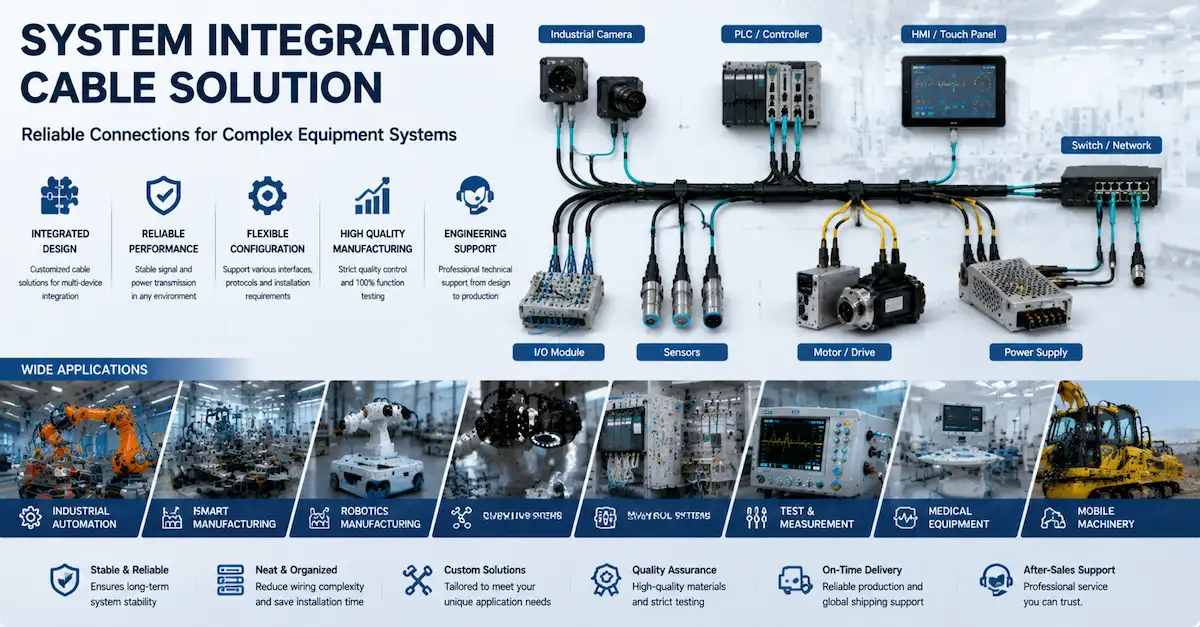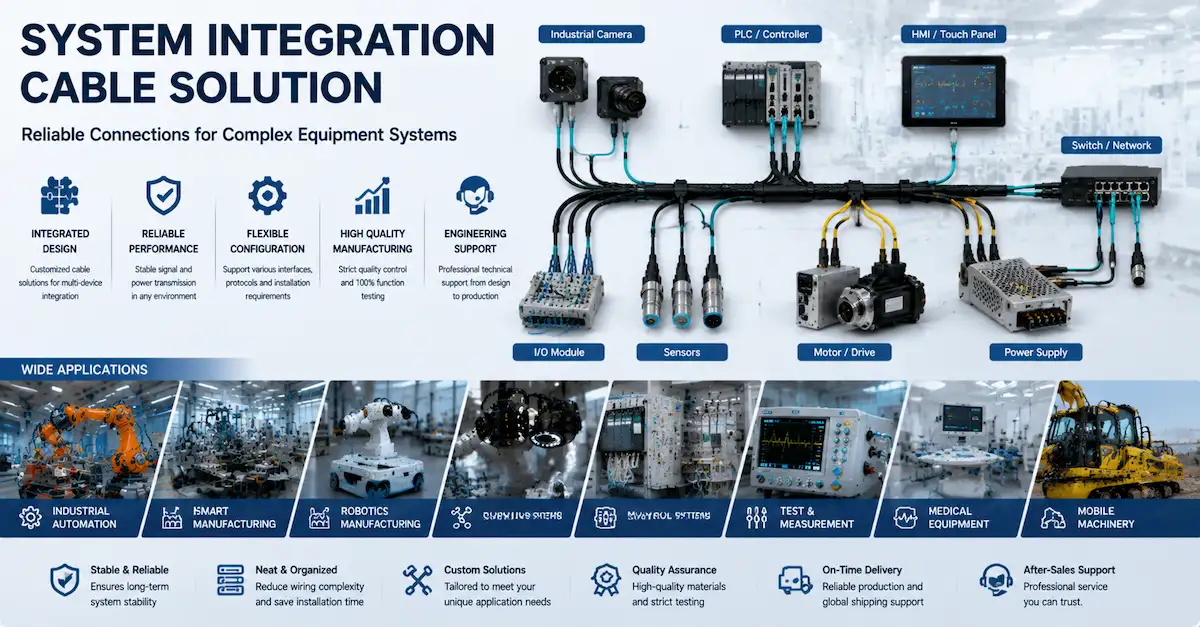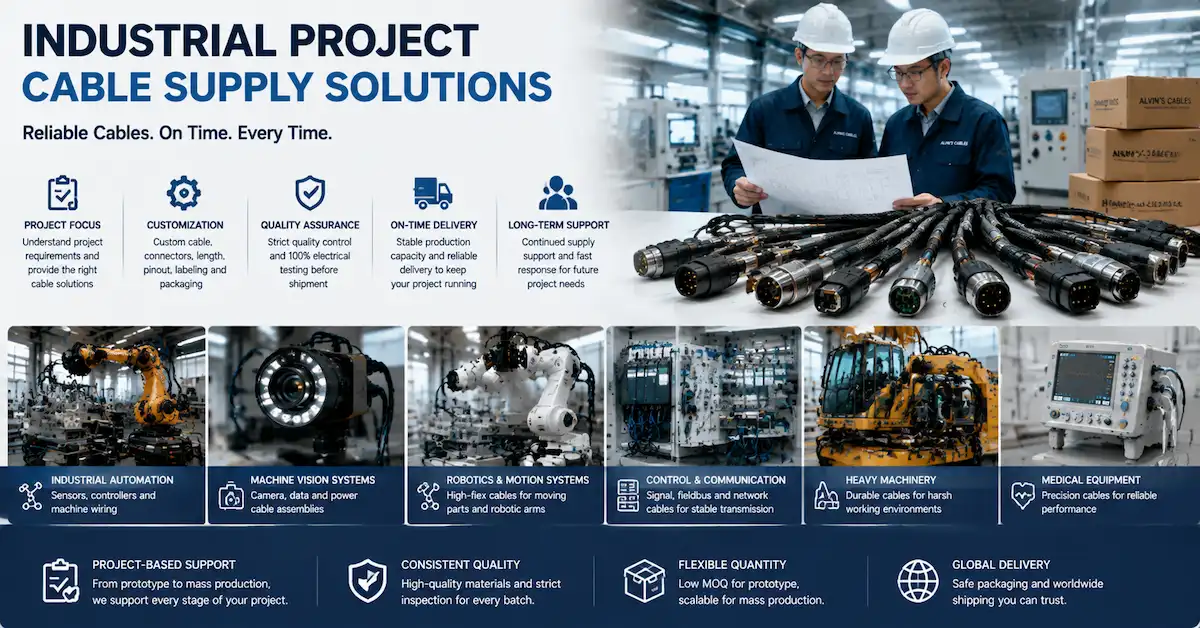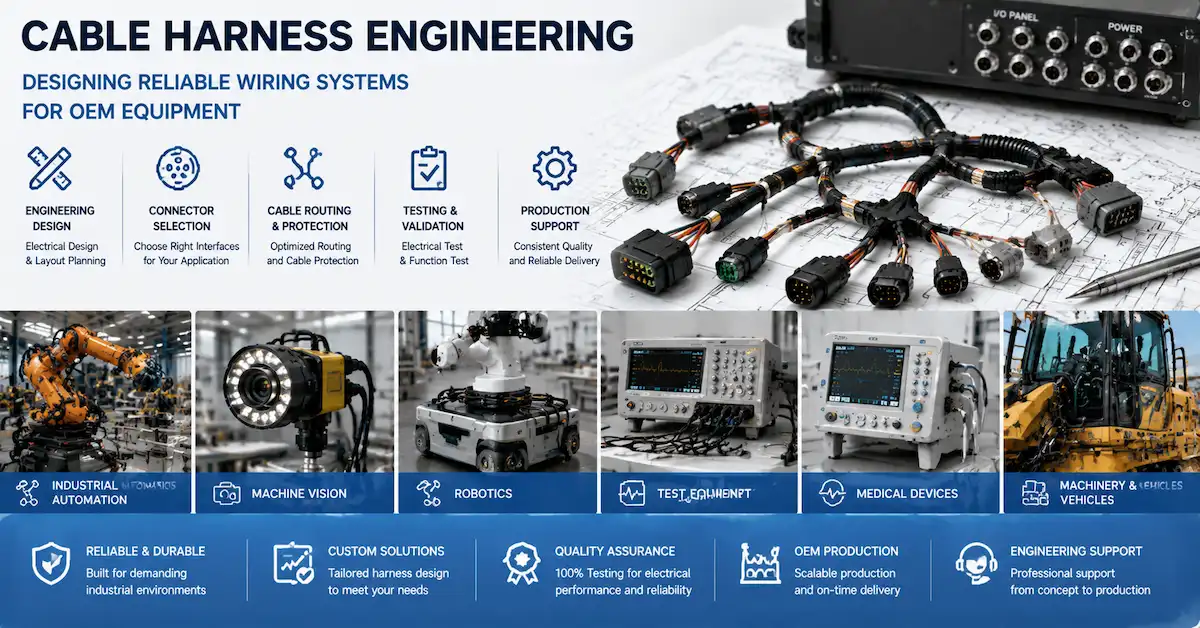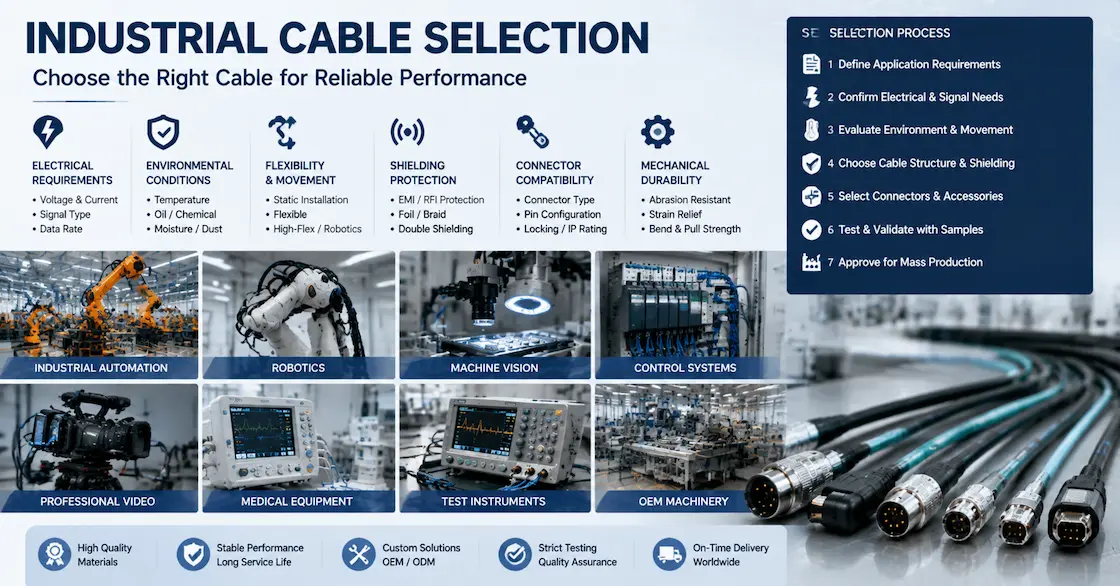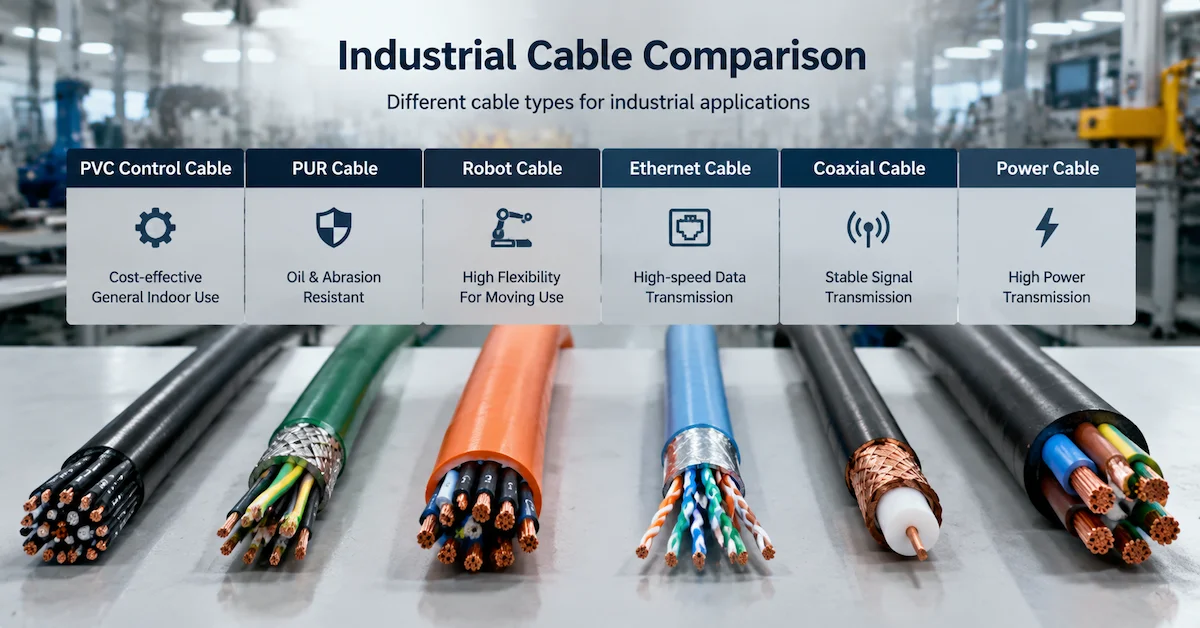
A reliable power cable solution is essential for equipment that requires stable electrical power delivery. From industrial machines and automation systems to professional cameras, robotics, and OEM electronics, power cables directly affect equipment safety, performance, and operating reliability.
Unlike standard power cords, professional power cable solutions are designed according to specific requirements such as voltage rating, current capacity, connector type, cable length, environmental conditions, and installation method.
A properly engineered power cable solution helps prevent issues such as overheating, voltage instability, connector damage, and unexpected equipment downtime.
For B2B buyers, selecting the right power cable partner means evaluating electrical design capability, connector compatibility, material quality, testing procedures, and production consistency.
What Is a Power Cable Solution?
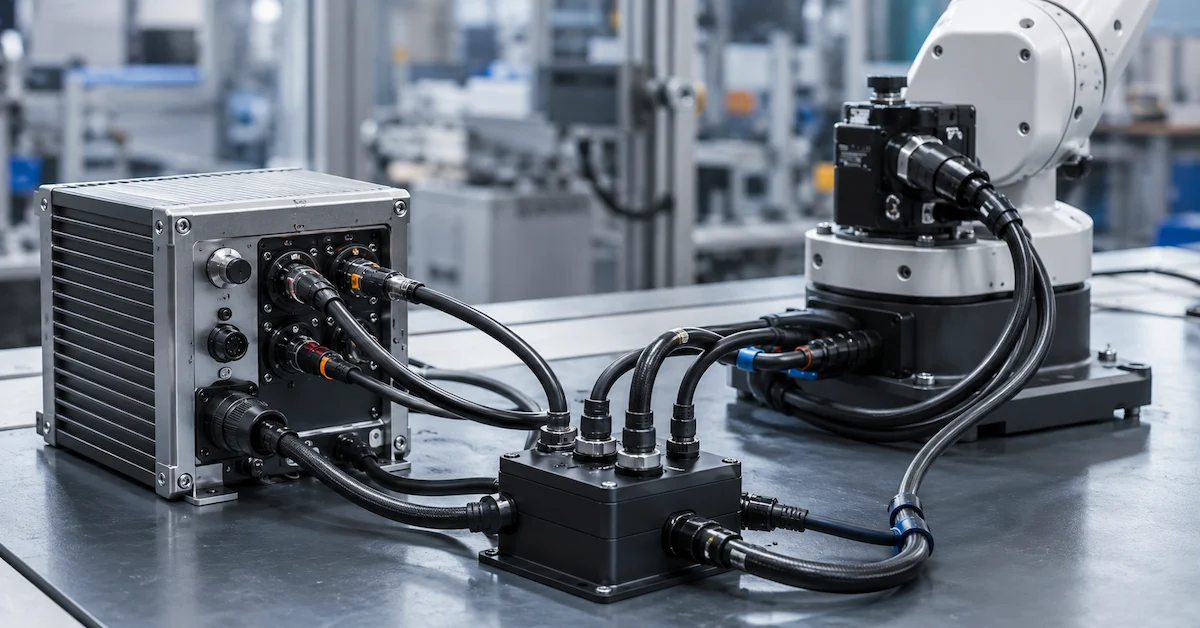
A power cable solution is a customized cable assembly designed to deliver electrical power between equipment, power sources, batteries, control systems, and electronic modules.
A complete solution may include:
- AC power cables
- DC power cables
- Battery cables
- Camera power cables
- Industrial power assemblies
- Equipment power harnesses
- Custom connector power cables
- Hybrid power and signal cables
A professional power cable solution considers:
- Voltage requirements
- Current capacity
- Wire gauge
- Connector rating
- Cable length
- Environmental protection
- Safety requirements
- Mechanical durability
Where Are Power Cable Solutions Used?
| Application | Power Requirement | Buyer Concern |
|---|---|---|
| Industrial machinery | Continuous equipment power | Safety and reliability |
| Automation systems | Power for controllers and motors | Stable operation |
| Robotics | Moving power connections | Flexibility |
| Professional cameras | Camera and accessory power | Reliable field use |
| Battery systems | DC power transmission | Current capacity |
| Test equipment | Stable electrical supply | Accuracy |
| Medical equipment | Controlled power delivery | Quality consistency |
| OEM products | Customized integration | Repeat production |
Why Professional Power Cable Solutions Matter
1. Ensuring Stable Power Delivery
Equipment performance depends on consistent electrical supply.
A poor cable design may cause:
- Voltage drop
- Overheating
- Intermittent power
- Connector failure
- Equipment shutdown
A suitable power cable solution considers:
- Conductor size
- Cable length
- Current load
- Connector rating
- Heat management
2. Matching Electrical Requirements
Different applications require different electrical designs.
Important parameters include:
- Rated voltage
- Continuous current
- Peak current
- Wire gauge
- Insulation rating
- Temperature range
- Grounding requirements
A cable that works for one device may not be suitable for another system.
3. Improving Safety and Protection
Power cables carry electrical energy, making safety a critical consideration.
Protection features may include:
- Flame-resistant jackets
- Insulation protection
- Grounding design
- Secure connectors
- Strain relief
- Waterproof sealing
Proper design reduces electrical risks and improves equipment reliability.
4. Supporting Custom Equipment Integration
Many OEM products require custom power connections.
A custom power cable solution can support:
- Unique connectors
- Special cable lengths
- Custom wiring
- Right-angle connectors
- Multi-branch power distribution
- Custom labels
- OEM packaging
This helps manufacturers integrate power connections directly into their products.
Common Power Cable Solutions
| Cable Type | Application | Advantage |
| DC power cable | Cameras and electronic devices | Flexible power connection |
| AC power cable | Industrial equipment | Reliable electrical supply |
| D-TAP power cable | Cinema and broadcast equipment | Professional camera power |
| Battery cable assembly | Energy systems | High current support |
| Industrial power cable | Machinery | Durable operation |
| Hybrid power cable | Integrated equipment | Power and signal combination |
| Custom connector power cable | OEM products | Exact compatibility |
Power Cable Solution vs Standard Power Cable
| Option | Advantages | Limitations | Best For |
| Standard power cable | Easy availability | Limited customization | General equipment |
| Heavy-duty power cable | Better durability | Limited flexibility | Harsh environments |
| Custom power cable solution | Exact equipment matching | Requires engineering | OEM systems |
| Integrated power harness | Multiple connections organized | More complex design | Advanced equipment |
Key Design Factors for Power Cable Solutions
Voltage and Current Capacity
The cable must match the electrical load.
Important considerations include:
- Operating voltage
- Maximum current
- Wire diameter
- Cable length
- Connector rating
- Heat generation
Incorrect selection may reduce performance or create safety problems.
Connector Selection
Power connectors must provide:
- Correct electrical rating
- Secure connection
- Mechanical strength
- Suitable locking method
Common options include:
- D-TAP
- XLR
- DC connectors
- Circular connectors
- M8
- M12
- Custom connectors
Cable Structure
The cable structure depends on:
- Installation environment
- Flexibility requirement
- Temperature conditions
- Protection needs
Options include:
- Flexible jackets
- Shielded structures
- Rugged outer layers
- High-flex designs
- Waterproof protection
Mechanical Protection
Power cables may experience:
- Pulling
- Bending
- Vibration
- Repeated connection cycles
Protection methods include:
- Strain relief
- Overmolding
- Protective sleeving
- Reinforced connectors
- Durable jackets
Power Cable Development Process
Requirement Analysis
Confirm:
- Equipment type
- Power requirement
- Connector interface
- Cable length
- Environment
Engineering Design
Evaluate:
- Wire gauge
- Connector selection
- Protection structure
- Safety requirements
Prototype Production
Verify:
- Connection fit
- Power performance
- Temperature behavior
- Installation convenience
Testing and Production
Testing may include:
- Continuity testing
- Polarity testing
- Voltage testing
- Current testing
- Connector inspection
- Functional testing
How to Choose a Power Cable Solution Supplier?
| Evaluation Point | What to Check |
| Electrical knowledge | Can they evaluate voltage and current requirements? |
| Connector capability | Can they support suitable power interfaces? |
| Custom design | Can they create application-specific solutions? |
| Material selection | Can they recommend suitable cable structures? |
| Testing ability | Can they verify electrical performance? |
| Production capability | Can they support repeat orders? |
| Quality control | Are processes documented? |
| OEM support | Can they provide packaging and labeling? |
A reliable supplier should provide engineering support instead of only selling standard cables.
What Information Should Buyers Provide?
For a power cable solution quotation, prepare:
- Equipment application
- Voltage requirement
- Current requirement
- Connector type
- Cable length
- Polarity information
- Environmental conditions
- Flexibility requirements
- Quantity
- Drawings or samples
Why Choose Alvin’s Cables for Power Cable Solutions?
Alvin’s Cables provides customized power cable solutions for industrial equipment, professional video systems, robotics, automation machines, test instruments, and OEM products.
Capabilities include:
- Custom power cable assemblies
- AC and DC power solutions
- D-TAP, XLR, circular, M8, M12, and custom connectors
- Camera power cables
- Industrial power cables
- Hybrid power and signal cables
- Rugged and flexible cable designs
- Prototype development
- Electrical testing
- Functional inspection
- OEM labeling and packaging
Buyers can explore available products through Alvin’s Cables Products, learn about manufacturing capabilities through About Alvin’s Cables, and review service advantages through Why Choose Alvin’s Cables.
FAQ
1. What is a power cable solution?
A power cable solution is a customized cable assembly designed to safely deliver electrical power between equipment and power sources.
2. What industries use power cable solutions?
They are used in industrial automation, robotics, cameras, battery systems, medical equipment, test systems, and OEM products.
3. Can power cables be customized?
Yes. Cable length, connectors, wire size, shielding, labels, and packaging can be customized.
4. How do I select the correct power cable?
Consider voltage, current, cable length, connector rating, environment, and equipment requirements.
5. Why is wire gauge important?
Wire gauge affects current capacity, heat generation, and voltage drop.
6. Can power and signal be combined?
Yes. Hybrid cable assemblies can combine power and signal when properly designed.
7. Can Alvin’s Cables provide samples?
Yes. Prototype and sample development are available before production.
8. What information is needed for quotation?
Provide equipment details, voltage, current, connectors, cable length, quantity, and application environment.
Conclusion
A reliable power cable solution ensures safe, stable, and efficient power delivery for professional and industrial equipment.
For automation systems, cameras, robotics, OEM products, and electronic devices, the right cable design improves reliability, safety, and long-term performance.
If you need a custom power cable solution, contact Alvin’s Cables with your electrical requirements, connector details, and application information.