A high reliability cable harness is designed for equipment where stable electrical connection, long service life, and consistent performance are essential. In industrial automation, robotics, medical equipment, test systems, professional electronics, and OEM machinery, cable harness quality directly affects system reliability and operational efficiency.
For B2B buyers, a cable harness is not simply a group of wires combined together. A professional high reliability cable harness requires careful consideration of wire selection, connector compatibility, routing design, shielding, protection materials, strain relief, and manufacturing control.
A poorly designed harness may create wiring errors, signal instability, difficult maintenance, and unexpected equipment downtime. A properly engineered cable harness helps simplify installation, improve reliability, and support long-term production.
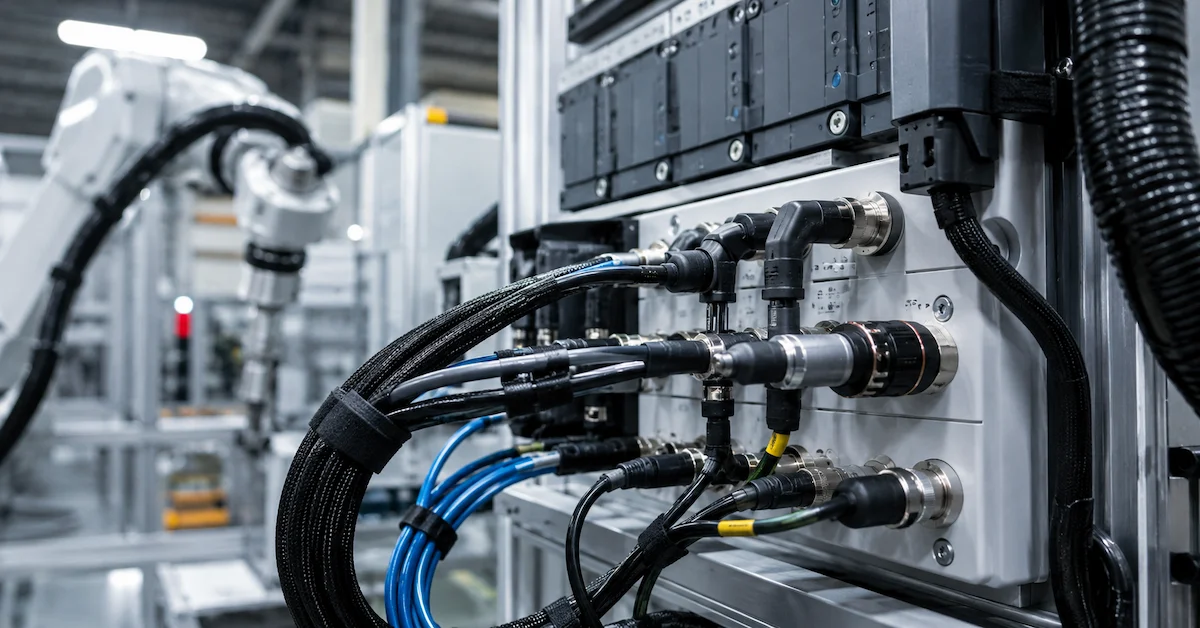
What Is a High Reliability Cable Harness?
A high reliability cable harness is a customized wiring assembly that organizes multiple wires, cables, and connectors into a structured solution for power distribution, signal transmission, and equipment communication.
Compared with standard wiring solutions, high reliability cable harnesses focus on:
- Accurate wiring configuration
- Secure connector integration
- Mechanical protection
- Signal stability
- Efficient installation
- Long service life
- Consistent production quality
A cable harness may include:
- Power wires
- Signal wires
- Data cables
- Shielded cables
- Multiple connectors
- Protective sleeving
- Branch structures
- Labels and identification
- Custom mounting solutions

Where Are High Reliability Cable Harnesses Used?
| Application | Cable Requirement | Buyer Concern |
|---|---|---|
| Industrial automation | Stable machine wiring | Production reliability |
| Robotics | Flexible multi-wire connection | Movement and fatigue |
| Medical equipment | Precise electrical connection | Safety and consistency |
| Test equipment | Accurate signal transmission | Signal integrity |
| Machine vision | Camera and sensor wiring | Data stability |
| Control systems | Power and communication wiring | Correct routing |
| OEM machinery | Custom harness integration | Batch consistency |
| Electronic equipment | Internal wiring solutions | Space optimization |
High reliability cable harnesses are especially important where cable replacement is difficult, expensive, or affects system operation.
Why High Reliability Cable Harness Design Matters
1. Improving System Reliability
In complex equipment, one wiring failure can affect the entire system. A reliable cable harness reduces risks related to loose connections, incorrect wiring, and mechanical damage.
Benefits include:
- Reduced downtime
- Easier maintenance
- Improved equipment stability
- Lower replacement frequency
- Better product quality
For OEM manufacturers, harness reliability directly influences customer satisfaction.
2. Ensuring Accurate Wiring and Connection
A cable harness often contains multiple wires and connectors. Incorrect wiring can lead to:
- Signal errors
- Power failure
- Communication problems
- Equipment damage
Professional harness production should include:
- Wiring verification
- Pinout confirmation
- Connector inspection
- Electrical testing
- Label verification
Accurate documentation and sample approval are important before mass production.
3. Protecting Against Mechanical Stress
Cable harnesses often operate in environments with:
- Vibration
- Movement
- Pulling force
- Repeated installation
- Limited routing space
To improve durability, a high reliability cable harness may include:
- Protective sleeving
- Flexible cable structure
- Strain relief
- Reinforced branches
- Secure connector locking
- Proper routing design
4. Supporting Signal and Power Performance
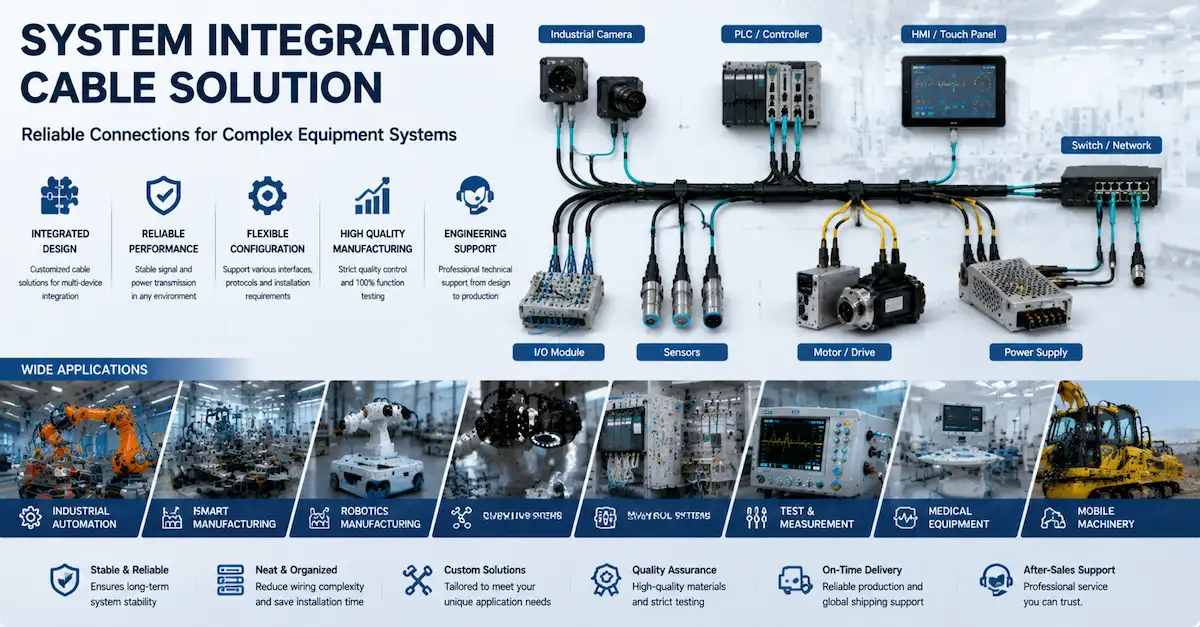
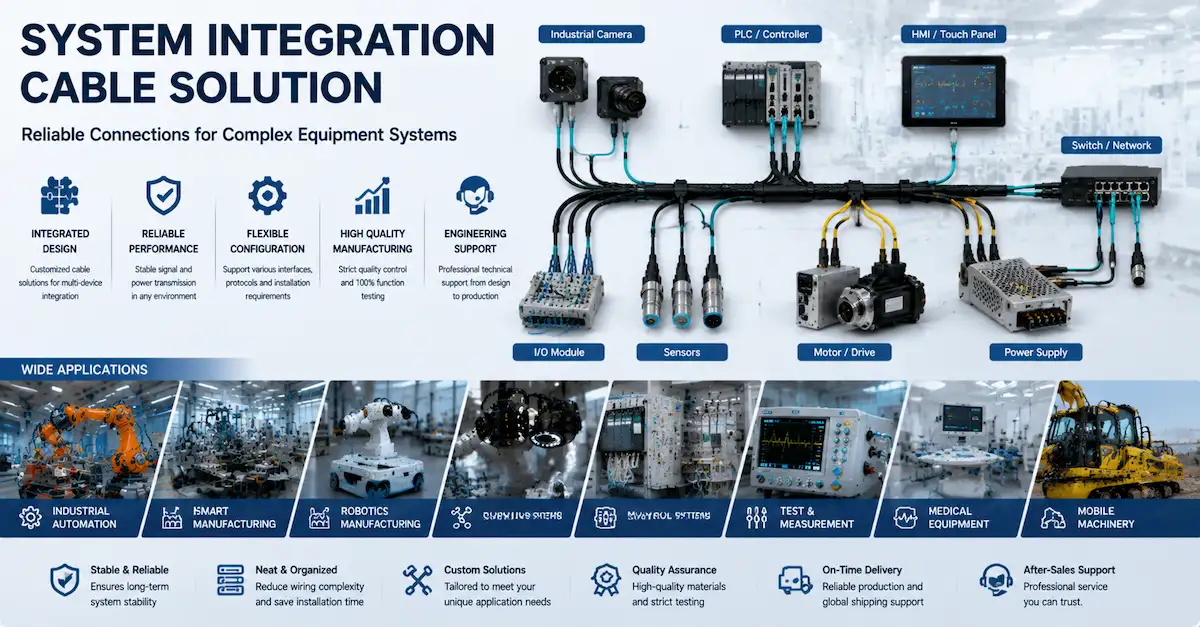
Modern equipment often combines power, control, data, and signal lines in one harness.
Important design factors include:
- Wire selection
- Shielding
- Grounding
- Cable separation
- Connector quality
- Signal compatibility
A well-designed harness helps maintain stable system performance.
Key Components of a Reliable Cable Harness
| Component | Function | Buyer Consideration |
| Wire conductor | Transfers power or signal | Current and signal requirement |
| Connector | Provides equipment interface | Compatibility and durability |
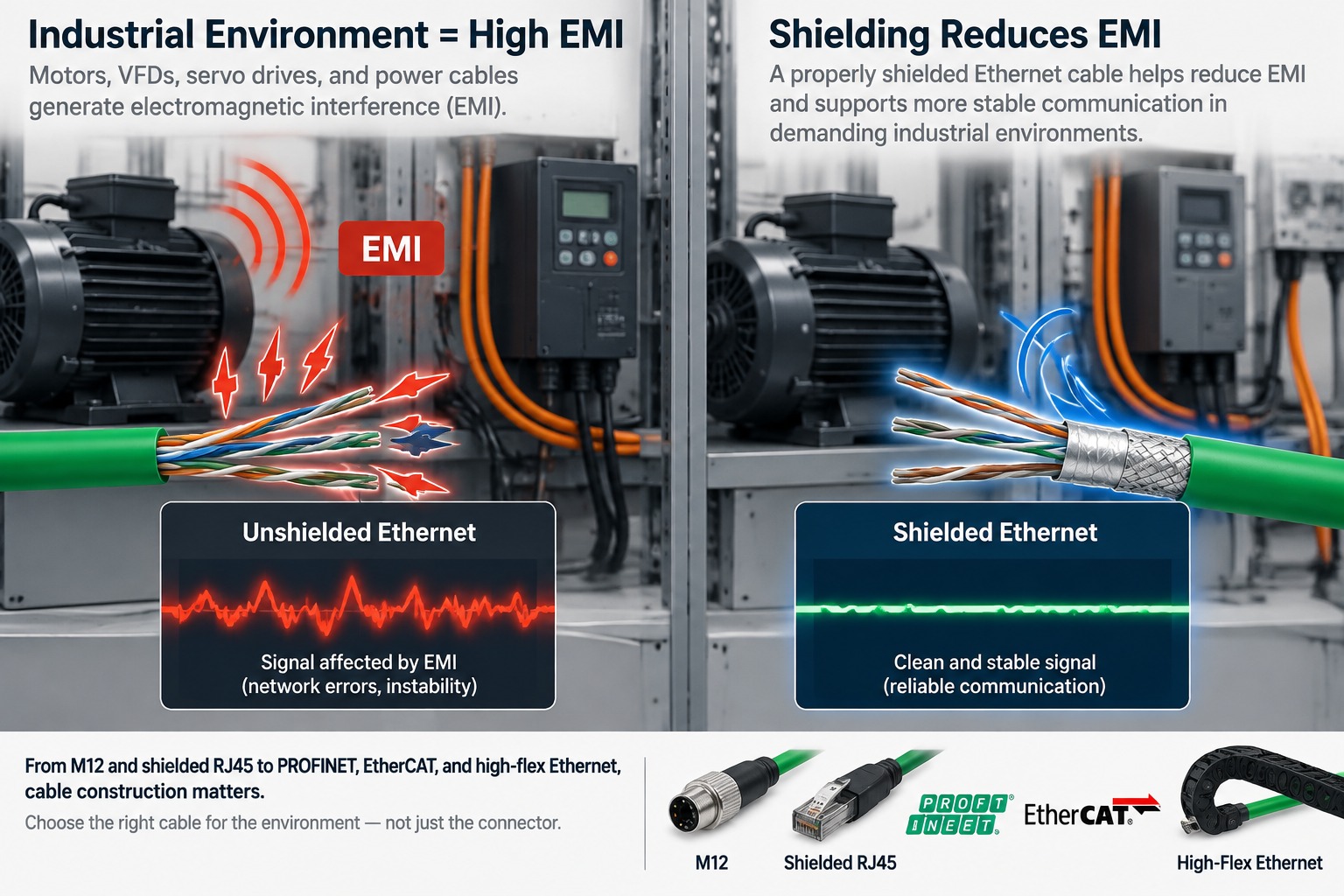
| Shielding | Reduces interference | EMI/RFI protection |
| Sleeving | Protects wire bundles | Abrasion and environment |
| Strain relief | Protects connection points | Mechanical stress resistance |
| Labels | Supports installation | Maintenance efficiency |
| Mounting parts | Secures harness routing | Equipment integration |
A professional supplier should evaluate the complete harness design instead of only assembling wires.
High Reliability Cable Harness vs Standard Harness
| Option | Advantages | Limitations | Best For |
| Standard wiring harness | Lower cost and simple design | Limited customization | Basic equipment |
| Custom cable harness | Better equipment integration | Requires specifications | OEM systems |
| High reliability cable harness | Improved durability and performance | Higher design requirements | Critical equipment |
| Rugged harness assembly | Designed for harsh environments | Requires engineering evaluation | Industrial applications |
For professional equipment, investing in a reliable harness can reduce long-term operating costs.
Common Custom Cable Harness Options
| Custom Option | Purpose |
| Custom wire length | Fits equipment layout |
| Custom connector selection | Matches device interface |
| Custom pinout | Supports special wiring requirements |
| Shielded wiring | Reduces interference |
| Protective sleeving | Improves mechanical protection |
| Branch customization | Supports complex routing |
| Labeling | Simplifies installation |
| Waterproof protection | Supports harsh environments |
| Overmolding | Improves connector protection |
| OEM packaging | Supports product delivery |
How to Choose a High Reliability Cable Harness Supplier
A reliable supplier should provide both engineering support and manufacturing capability.
Buyers should evaluate:
| Evaluation Point | What to Check |
| Engineering capability | Can they review wiring requirements? |
| Custom production | Can they build according to drawings? |
| Connector options | Can they support different connectors? |
| Testing process | Do they verify electrical performance? |
| Quality control | Can they maintain batch consistency? |
| Material selection | Can they recommend suitable materials? |
| OEM support | Can they support labeling and packaging? |
Choosing only based on price may increase failure risks later.
What Information Should Buyers Provide for a Quote?
Prepare:
- Equipment application
- Wiring diagram
- Connector requirements
- Cable length
- Number of branches
- Signal and power requirements
- Shielding requirement
- Environmental conditions
- Quantity
- Drawing, specification, or sample
For complex projects, providing a sample harness or assembly drawing can significantly improve quotation accuracy.
Why Choose Alvin’s Cables?
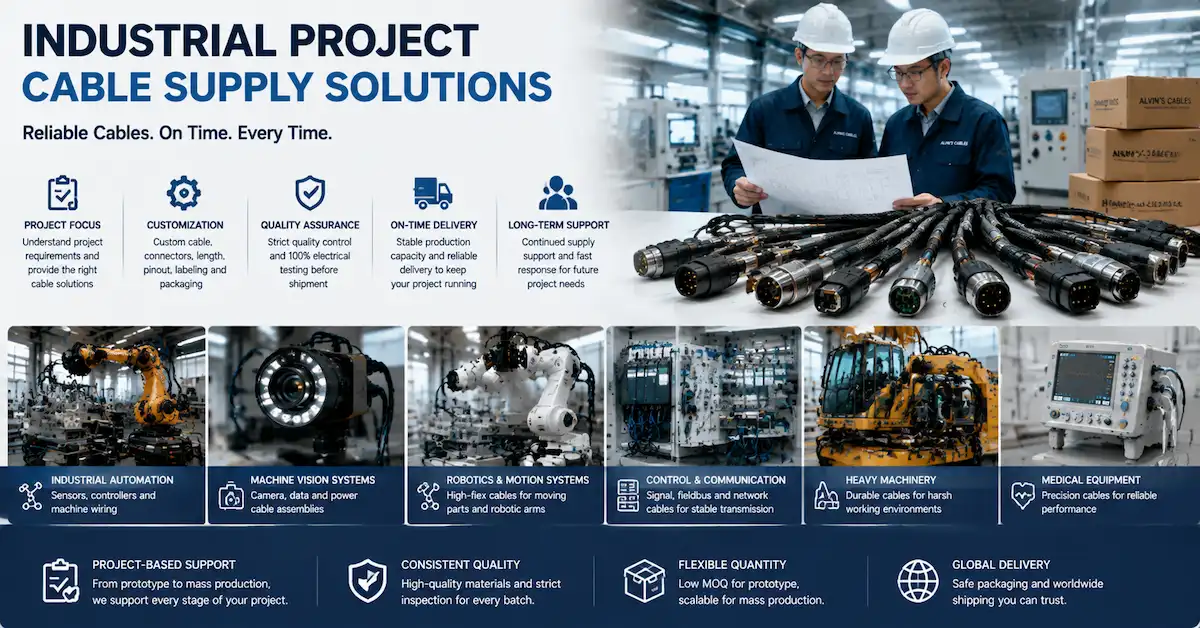
Alvin’s Cables supports custom cable assemblies and connector solutions for industrial automation, professional video equipment, robotics, medical devices, test instruments, and OEM electronics.
For high reliability cable harness projects, Alvin’s Cables can support:
- Custom cable harness design
- Multi-wire and multi-connector assemblies
- Signal and power harness solutions
- Shielded cable integration
- M8, M12, Hirose, RJ45, BNC, D-TAP, and custom connectors
- Custom routing and branch design
- Strain relief and protection solutions
- Prototype development
- Low-to-mid volume production
- Electrical and functional testing
- OEM labeling and packaging
Buyers can explore related products through Alvin’s Cables Products, learn more about company capability from About Alvin’s Cables, or review service advantages through Why Choose Alvin’s Cables.
FAQ
1. What is a high reliability cable harness?
A high reliability cable harness is a customized wiring assembly designed for stable power, signal, and data connection in demanding equipment.
2. Where are cable harnesses used?
They are used in industrial automation, robotics, medical devices, test equipment, machine vision, OEM machinery, and electronic systems.
3. What makes a cable harness reliable?
Reliability depends on wire quality, connector selection, shielding, routing design, strain relief, testing, and manufacturing consistency.
4. Can cable harnesses be customized?
Yes. They can be customized by wire length, connector type, pinout, shielding, branch structure, labeling, and protection materials.
5. Why is testing important for cable harnesses?
Testing helps identify wiring errors, connection problems, and electrical issues before the harness is installed into equipment.
6. Can Alvin’s Cables make cable harness samples?
Yes. Alvin’s Cables supports prototype and sample development before bulk production.
7. What industries need high reliability harnesses?
Industries include automation, robotics, medical equipment, industrial electronics, testing systems, and OEM machinery.
8. What should I send for quotation?
Provide wiring diagrams, connector details, application environment, quantity, and any drawings or samples.
Conclusion
A high reliability cable harness provides stable wiring solutions for critical industrial and electronic systems. For automation, robotics, medical equipment, machine vision, test instruments, and OEM products, a properly designed harness can improve reliability, reduce downtime, and simplify installation.
Buyers should evaluate wiring accuracy, connector quality, shielding, mechanical protection, testing, and supplier capability before placing orders.
If you need a custom high reliability cable harness solution, contact Alvin’s Cables with your wiring requirements, connector details, application environment, and order quantity.