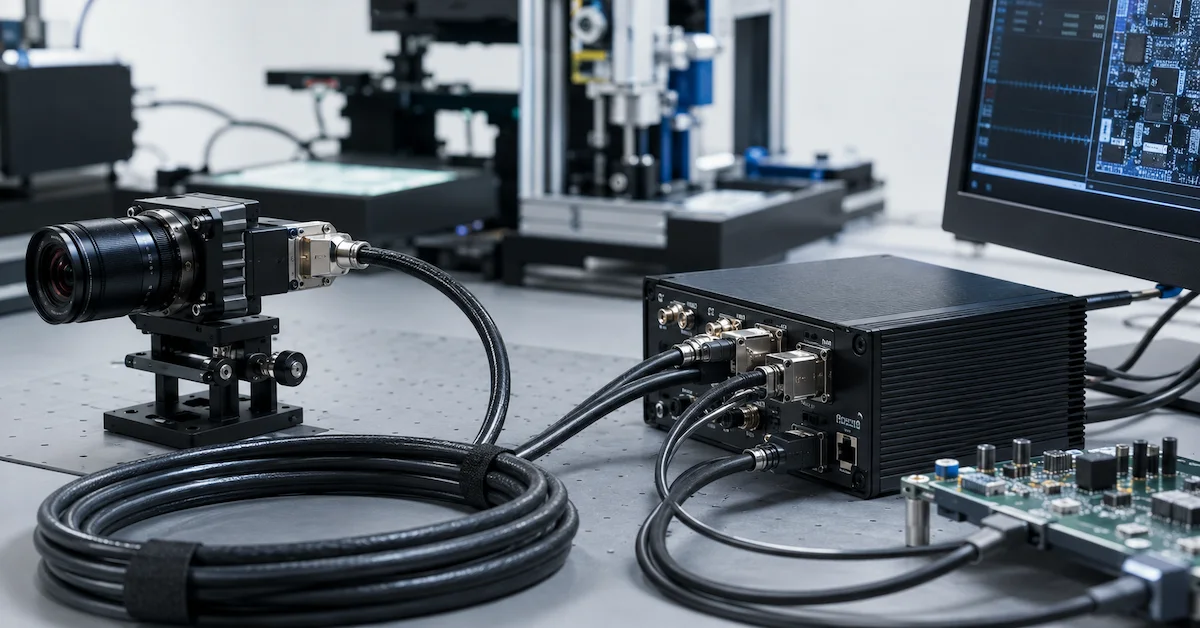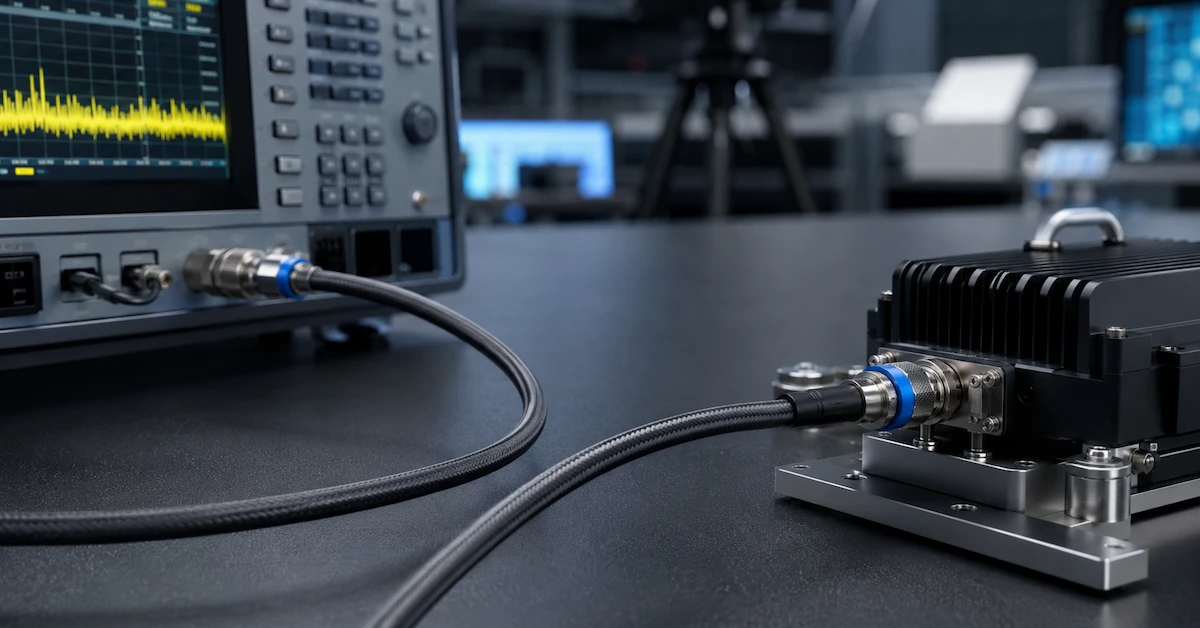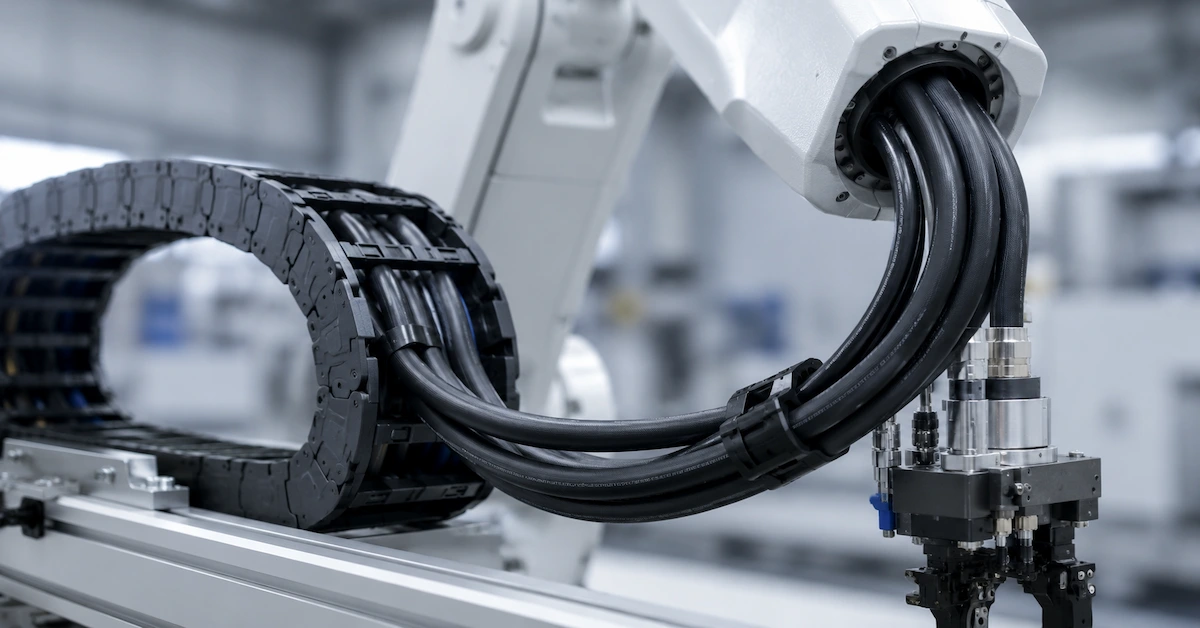
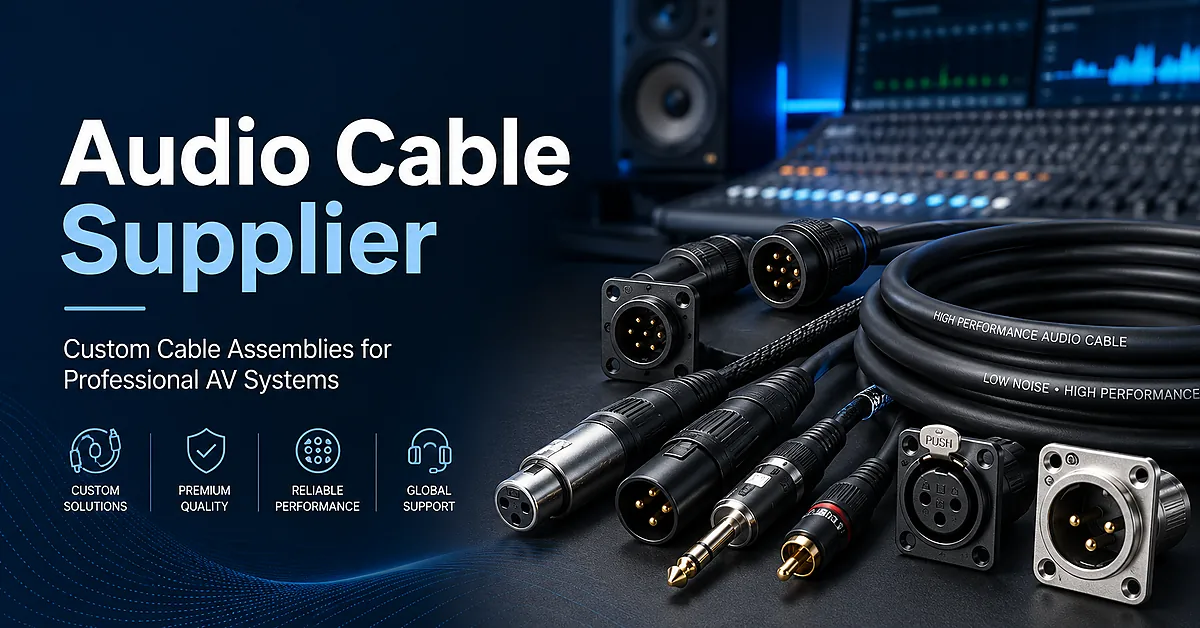
A reliable audio cable supplier is not only responsible for providing cables with the correct connectors. For professional AV systems, broadcast equipment, camera rigs, monitoring devices, intercom systems, and custom electronics, cable quality directly affects signal stability, noise control, installation efficiency, and long-term equipment reliability.
For B2B buyers, the right supplier should understand more than basic cable length and connector type. A professional supplier should be able to support custom cable assemblies, shielding design, connector integration, sample development, batch consistency, and functional testing.
Alvin’s Cables provides cable assemblies and connector solutions for industrial equipment, automation systems, professional video and camera setups, medical devices, and other high-reliability electronic applications. Buyers can explore related cable and connector categories through Alvin’s Cables products.
Why Audio Cable Quality Matters in Professional AV Systems
In consumer use, a simple audio cable may only need to connect two devices. In professional systems, the requirements are much higher.
Audio cables may be used in:
- Broadcast camera systems
- Professional monitors
- Audio interface equipment
- Intercom and communication systems
- Film production rigs
- Studio or field recording devices
- Industrial audio/video control systems
- Custom electronic equipment
In these environments, cable problems can cause signal noise, loose connection, unstable transmission, poor contact, or equipment downtime. For equipment manufacturers and AV solution providers, these issues may lead to customer complaints, project delays, or higher maintenance costs.
A qualified audio cable supplier should help buyers reduce these risks through suitable materials, reliable connectors, proper shielding, and consistent production control.
What Should Buyers Check When Choosing an Audio Cable Supplier?
1. Cable Assembly Experience
A supplier with cable assembly experience can better understand how cables work inside real equipment. This is especially important when the cable must fit limited installation space, special routing direction, or customized connector combinations.
Buyers should ask:
- Can the supplier make custom cable assemblies?
- Can they work from drawings, samples, or specifications?
- Can they support prototype and bulk production?
- Can they adjust cable length, pinout, and connector direction?
- Can they provide consistent quality across repeated orders?
If the project is for OEM equipment or professional AV systems, choosing only by price may create risks later.
2. Connector Options and Compatibility
Audio and AV systems may use different connector types depending on the equipment design. Some projects use standard audio connectors, while others require circular connectors, camera connectors, power connectors, or open-end wiring.
Common connector considerations include:
| Connector Requirement | Why It Matters |
|---|---|
| Correct pinout | Prevents wiring mismatch and equipment failure |
| Secure mating | Reduces disconnection during movement or field use |
| Contact quality | Supports stable signal transmission |
| Compact size | Helps fit cameras, monitors, or portable devices |
| Mechanical strength | Improves durability in repeated use |
Alvin’s Cables product categories include various cable and connector options such as Hirose, BNC, RJ45, D-TAP, M8, M12, and other custom connection solutions. For AV-related projects, the correct connector choice should be based on the actual device interface and application environment.
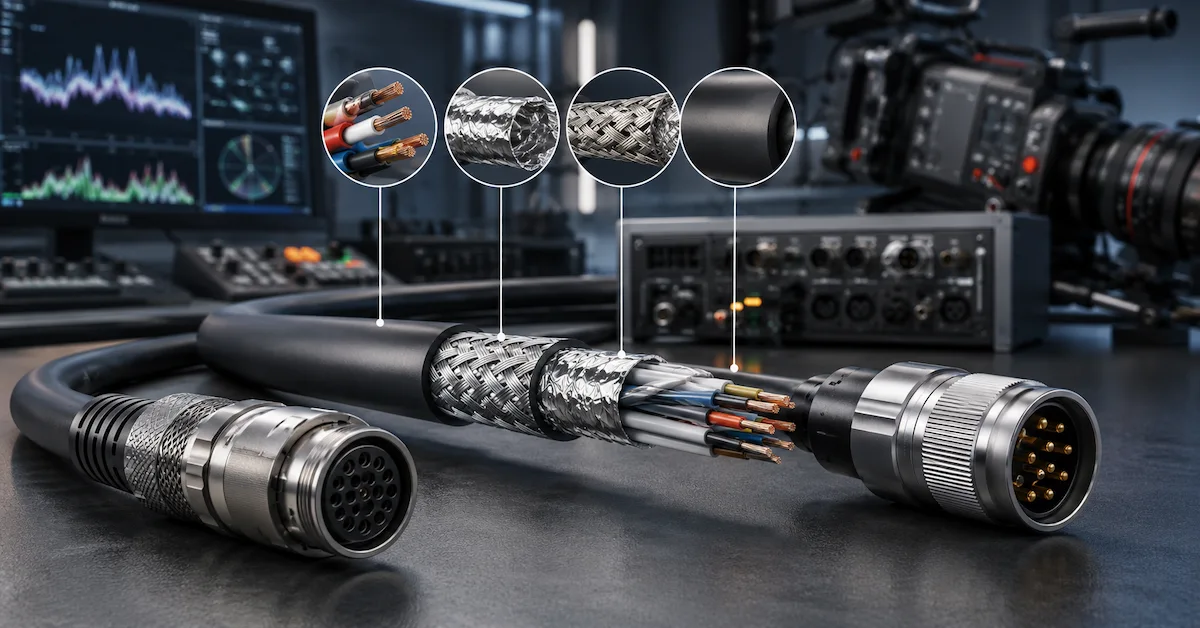
3. Shielding and Noise Control
For audio signal cables, shielding is one of the most important quality factors. Poor shielding may lead to hum, noise, interference, or unstable signal performance.
Professional AV buyers should consider:
- Foil shielding
- Braided shielding
- Twisted pair structure
- Grounding design
- Jacket material
- Connector shielding continuity
This is especially important when audio cables are used near power cables, camera systems, motors, lighting equipment, or other electronic devices.
A good audio cable supplier should not only provide a cable that “connects.” The supplier should understand how shielding, grounding, and structure affect real-world signal performance.
Custom Audio Cable Assembly Options
Many professional buyers need custom cable assemblies instead of standard off-the-shelf cables. Customization is useful when the equipment requires special length, connector combinations, cable routing, or brand-specific integration.
Common custom options include:
| Custom Option | Purpose |
| Custom cable length | Reduces clutter and improves installation |
| Custom connector combination | Matches specific devices or modules |
| Custom pinout | Supports OEM or non-standard equipment |
| Right-angle connector | Saves space in compact systems |
| Overmolded strain relief | Improves durability and cable protection |
| Shielded cable structure | Reduces signal interference |
| Labeling | Helps installation and maintenance |
| Packaging | Supports OEM, retail, or project delivery |
For buyers developing new AV equipment, a custom cable can improve not only performance but also product appearance and assembly efficiency.
Standard Cable vs Custom Audio Cable Assembly
| Option | Advantages | Limitations | Best For |
| Standard audio cable | Easy to buy, low initial cost | May not match equipment layout or pinout | Simple replacement or general use |
| Modified cable | Faster than full custom production | Limited design flexibility | Small adjustments |
| Custom audio cable assembly | Better fit, better integration, stable batch quality | Requires specifications or sample confirmation | OEM equipment and professional AV systems |
| Overmolded custom cable | Stronger strain relief and cleaner appearance | Higher setup requirement | Bulk production and rugged applications |
For long-term projects, custom cable assemblies often provide better value because they reduce installation problems, improve user experience, and support stable repeat orders.
Quality Control Points for Audio Cable Buyers
Before selecting an audio cable supplier, buyers should ask how the supplier controls quality.
Important inspection points include:
- Continuity testing
- Short-circuit testing
- Pinout verification
- Visual inspection
- Connector fit check
- Pull or strain relief inspection
- Functional testing when required
- Batch consistency control
For professional AV products, a cable may look correct from the outside but still fail due to weak soldering, poor contact, incorrect wiring, or low-quality shielding. Reliable testing helps reduce these risks before shipment.
You can learn more about Alvin’s Cables’ manufacturing and quality background from About Alvin’s Cables.
Applications for Professional Audio and AV Cable Assemblies
A professional audio cable supplier can support many application scenarios, including:
Broadcast and Film Production
Cables used in camera rigs, monitors, audio devices, and field production equipment need flexibility, stable connection, and strong strain relief. Field use often involves frequent plugging, movement, and transportation.
Professional Camera and Monitoring Systems
Some audio-related cable assemblies are integrated with professional video or camera equipment. These cables may combine power, control, signal, or audio-related wiring in one system.
Studio and AV Equipment
Studio equipment often requires stable signal transmission and clean cable management. Custom cable length and labeling can help improve installation efficiency.
OEM Electronic Devices
For equipment manufacturers, custom cable assemblies can be designed according to internal space, board layout, connector position, and final product structure.
Industrial AV Control Systems
Some industrial systems use audio/video signal transmission for communication, monitoring, or control. In these cases, cable durability and shielding are especially important.
How to Request a Quote from an Audio Cable Supplier
To get an accurate quotation, buyers should prepare the following information:
- Cable application
- Connector type and model
- Pinout or wiring diagram
- Cable length
- Signal type
- Shielding requirement
- Jacket material preference
- Quantity
- Sample, drawing, or specification file
- Packaging or labeling requirements
If you are not sure about the exact cable structure, you can provide equipment photos, connector details, and application requirements. The supplier can help evaluate the suitable cable assembly direction.
For custom projects, you can contact Alvin’s Cables through the Contact Us page and share your drawing, specification, or sample information.
Why Choose Alvin’s Cables as Your Audio Cable Supplier?
Alvin’s Cables is suitable for buyers who need more than a simple cable seller. The company supports cable assemblies, connector solutions, custom integration, prototype development, and production for high-reliability applications.
Key advantages include:
- Custom cable assembly support
- Multiple connector solution options
- Experience in professional video, camera, industrial, and electronic applications
- Support for drawings, samples, and specifications
- Prototype to bulk production support
- In-house cable assembly capability
- Multi-stage inspection and functional testing
- Suitable for overseas B2B buyers and OEM projects
If your project requires a professional audio or AV cable assembly with stable signal transmission, suitable shielding, custom connector integration, and reliable production control, Alvin’s Cables can help develop a practical solution.
FAQ: Audio Cable Supplier
1. What makes a good audio cable supplier?
A good audio cable supplier should provide stable cable quality, reliable connectors, shielding options, custom cable assembly support, sample development, testing, and consistent bulk production.
2. Can audio cables be customized?
Yes. Audio cables can be customized by connector type, cable length, pinout, shielding, jacket material, strain relief, labeling, and packaging.
3. Why is shielding important for audio cables?
Shielding helps reduce electromagnetic interference and noise. It is especially important in professional AV systems, broadcast equipment, camera setups, and industrial environments.
4. Can Alvin’s Cables support OEM audio cable projects?
Yes. Alvin’s Cables supports custom cable assemblies for OEM and professional equipment projects based on drawings, samples, or specifications.
5. What information is needed for a quote?
Buyers should provide connector type, cable length, pinout, application, quantity, shielding requirement, and any available drawing, photo, or sample.
6. Are custom audio cable assemblies better than standard cables?
For professional systems, custom assemblies are often better because they match the exact equipment layout, connector requirement, and installation environment.
Conclusion
Choosing the right audio cable supplier is important for professional AV systems, broadcast equipment, camera setups, OEM electronics, and industrial audio/video applications. Buyers should evaluate not only price, but also cable structure, shielding, connector compatibility, customization support, testing, and production consistency.
A reliable supplier can help reduce signal problems, improve installation efficiency, and support long-term project supply.
If you need a custom audio cable assembly for professional AV equipment or OEM electronic systems, contact Alvin’s Cables and share your connector type, pinout, cable length, application environment, and order quantity.