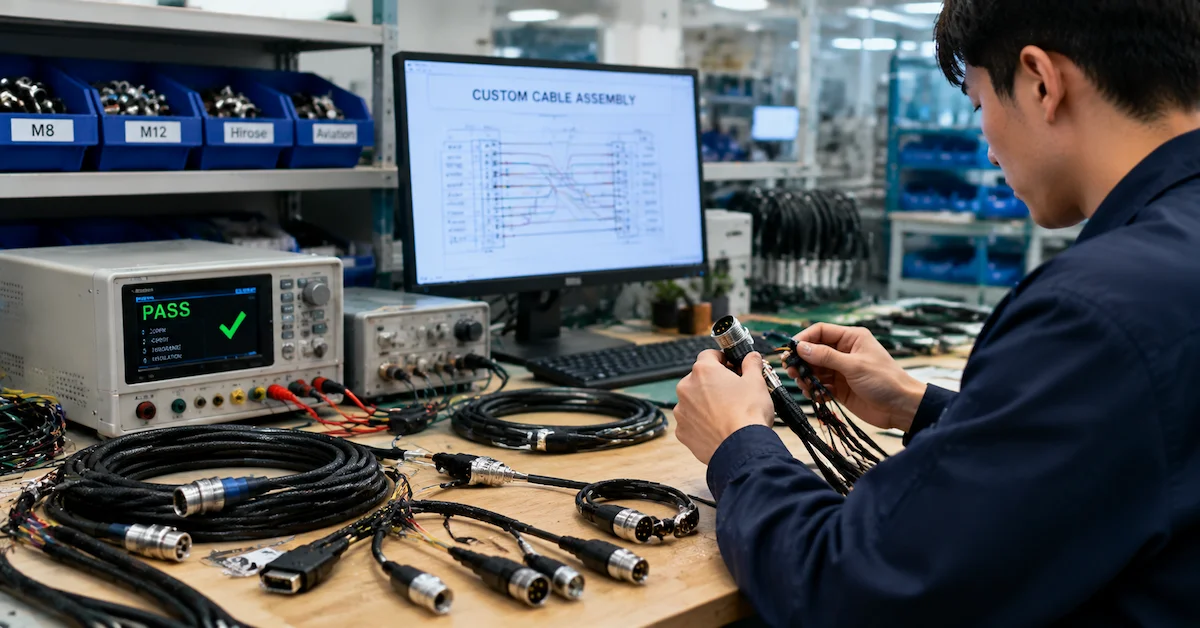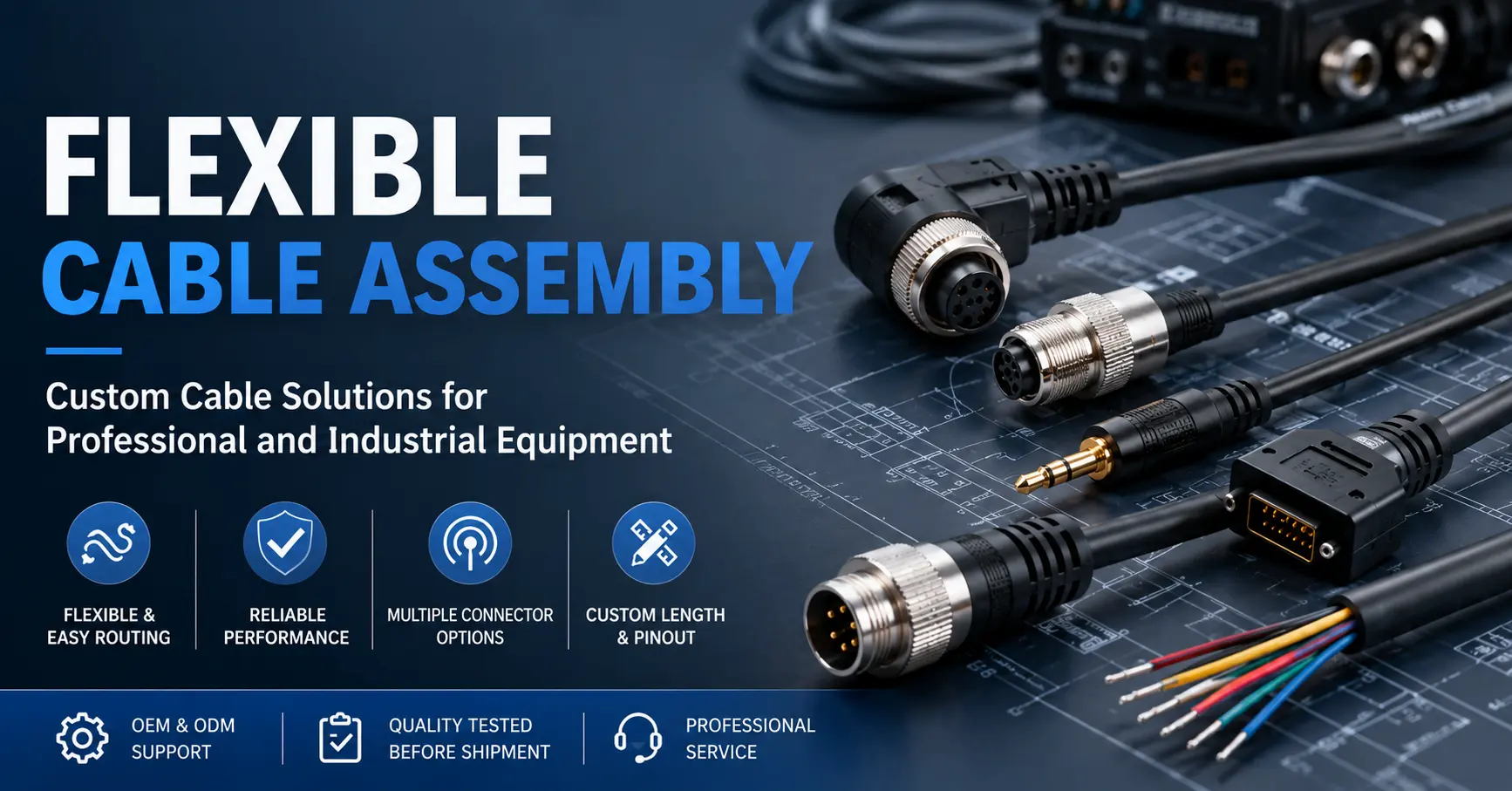
In industrial environments, cable assemblies are exposed to continuous operation, mechanical stress, and electrical interference. Standard cable solutions often fail under these conditions, leading to signal instability, frequent replacements, and costly downtime.
An optimized industrial cable assembly is designed specifically to handle these challenges. Instead of relying on general-purpose cables, industrial systems require assemblies that can maintain performance under demanding conditions, ensuring long-term reliability.
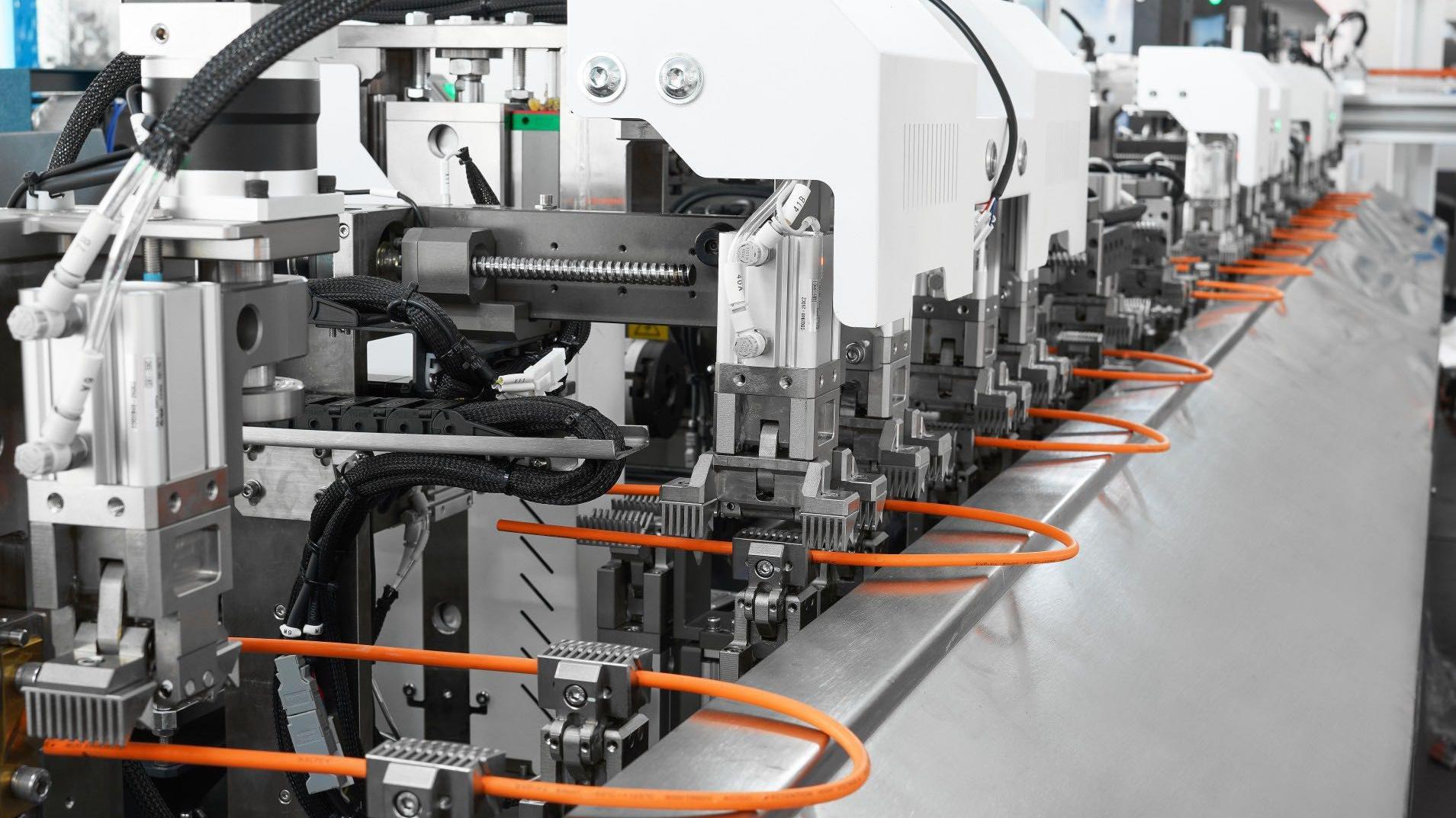
Materials and Structural Design for Industrial Durability
Industrial cable assemblies must be built with materials that can withstand harsh operating environments. High-quality copper conductors ensure stable signal transmission, while industrial-grade insulation protects against heat, vibration, and abrasion.
Shielding structures are essential to prevent electromagnetic interference (EMI), especially in environments with multiple machines and electronic systems. Protective outer jackets are selected to provide both flexibility and durability.
A professional approach to industrial cable assembly includes:
- High-purity conductors for consistent performance
- Multi-layer shielding for interference protection
- Reinforced outer jackets for durability
- Secure connectors for stable long-term use
These factors determine how well the cable performs over time.
Engineering Capability Behind Reliable Cable Assemblies
In industrial applications, cables are not standalone components—they are part of a larger system. Poor design can affect the entire operation.
An experienced supplier providing industrial cable assembly solutions typically offers:
- Application-specific design and optimization
- Connector compatibility and secure interface design
- Signal integrity and power performance evaluation
- Rapid prototyping for validation
This engineering-driven process ensures that the cable assembly integrates seamlessly into the system.
Adapting Cable Assemblies to Industrial Environments
Industrial environments vary widely, from automated production lines to outdoor installations. Each environment presents different challenges, such as vibration, temperature fluctuations, and exposure to dust or moisture.
A well-designed industrial cable assembly considers:
- Continuous mechanical stress and movement
- Exposure to heat and environmental conditions
- Signal transmission requirements
- Installation constraints within equipment
By tailoring the design to these conditions, cable assemblies can maintain performance even in harsh environments.
Integrated Solutions for Complex Industrial Systems
Modern industrial systems often involve multiple machines and interconnected components. Cable assemblies must support these complex connections without increasing failure points.
A professional industrial cable assembly solution includes:
- Multi-connector integration for complex systems
- Reduced connection points to improve reliability
- Optimized routing for efficient installation
- Compatibility across various equipment
These solutions help simplify system design and improve overall efficiency.
Example: Improving Reliability in an Automation Production Line
An automation manufacturer faced frequent downtime caused by cable failures in their production line. Standard cables could not withstand continuous movement and interference from nearby equipment.
After implementing a custom solution:
- Reinforced cable structures improved durability
- Enhanced shielding reduced interference
- Optimized routing simplified maintenance
The result was improved system stability and reduced operational interruptions, demonstrating the value of a reliable industrial cable assembly solution.
Performance Comparison: Standard vs Industrial Cable Assembly
| Parameter | Standard Cable | Industrial Cable Assembly |
|---|---|---|
| Durability | Moderate | High |
| Signal Stability | Variable | Consistent |
| Interference Resistance | Limited | Strong |
| Lifespan | 1–2 Years | 3–5 Years |
| Maintenance Cost | Higher | Lower |
Scalable Solutions for B2B and OEM Applications
For B2B customers, cable assemblies must support both performance and scalability. Industrial systems require consistent supply and stable quality across production batches.
Typical TO B solutions for industrial cable assembly include:
- OEM/ODM cable development for equipment manufacturers
- Flexible production from prototype to large-scale manufacturing
- Consistent batch quality for long-term projects
- Engineering collaboration for system optimization
These capabilities ensure that businesses can scale operations without compromising performance.
Frequently Asked Questions
Q: What makes industrial cable assembly different from standard cables?
A: Industrial assemblies are designed for durability, reliability, and performance under demanding conditions.
Q: Can industrial cable assemblies be customized?
A: Yes, they can be tailored in terms of materials, connectors, and structure to fit specific applications.
Q: How do industrial cable assemblies reduce downtime?
A: By improving durability and stability, they reduce the frequency of failures and maintenance needs.
Reliable Industrial Systems Start with the Right Cable Design
In industrial environments, cable assemblies are essential to system performance and stability. Choosing the right industrial cable assembly solution ensures that equipment operates efficiently and reliably over time.
To explore our industrial cable assembly capabilities, visit our homepage:
https://www.alvinscables.com/
For technical consultation or project inquiries, contact our team:
https://www.alvinscables.com/contact-us
Reliable systems depend on reliable connections—and the right cable assembly partner.