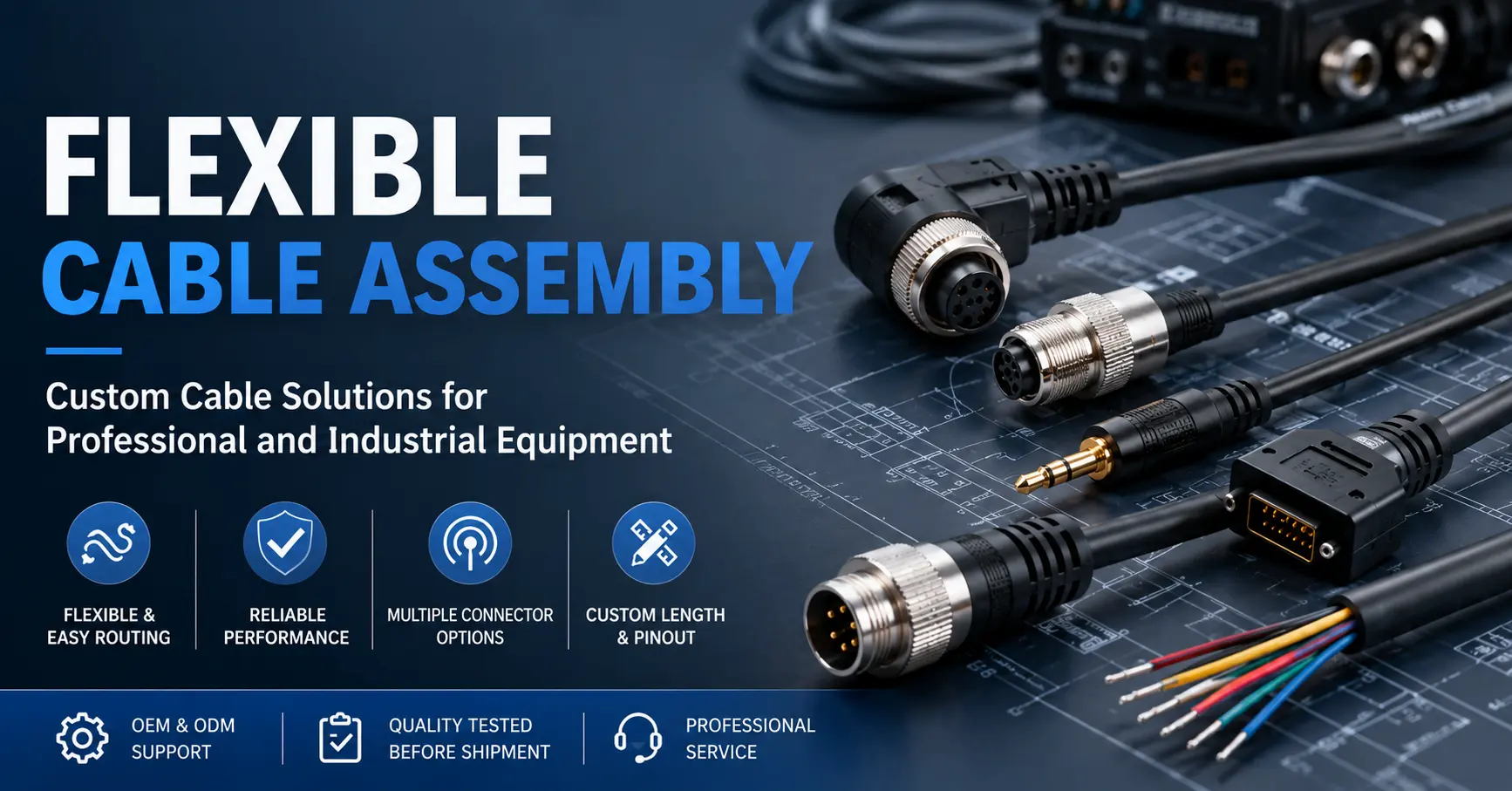
Choosing a reliable cable manufacturer is essential for companies that depend on consistent cable performance, stable delivery, and long-term production support.
For OEM manufacturers, industrial equipment companies, automation suppliers, robotics developers, and electronic product brands, cables are not simply accessories. They are important components that directly affect equipment reliability and customer experience.
A cable manufacturer may offer competitive pricing, but reliability requires much more than cost advantages. Buyers need a partner that can maintain product consistency, control materials, provide technical support, solve production challenges, and deliver the same approved cable design over multiple orders.
A dependable manufacturer helps reduce supply risks and supports continuous business growth.
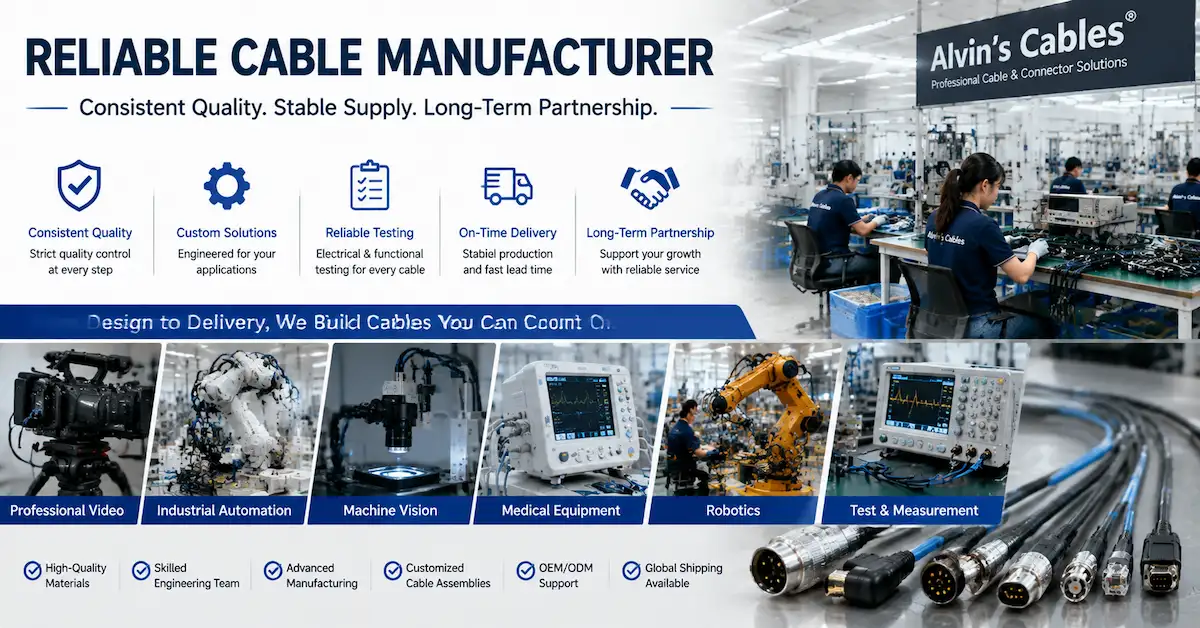
What Makes a Reliable Cable Manufacturer?
A reliable cable manufacturer should have the ability to manage the complete cable production process, from engineering review to final testing.
Key capabilities include:
- Application understanding
- Custom cable development
- Stable material sourcing
- Controlled manufacturing processes
- Accurate assembly
- Quality inspection
- Electrical testing
- Production planning
- Delivery management
- OEM support
Reliability is built through repeatable systems rather than a single successful order.
Why Reliability Matters in Cable Manufacturing
1. Consistent Product Quality
Cable products often need to be repeated across hundreds or thousands of units.
A reliable manufacturer maintains consistency in:
- Cable structure
- Connector models
- Pinout configuration
- Cable length
- Shielding design
- Appearance
- Testing standards
Without production consistency, different batches may create compatibility issues during equipment assembly.
2. Stable Supply Chain Support
Cable production depends on many components:
- Connectors
- Conductors
- Jackets
- Shielding materials
- Terminals
- Packaging materials
A reliable supplier manages these resources through:
- Material planning
- Approved suppliers
- Inventory control
- Alternative sourcing strategies
- Production scheduling
This reduces unexpected delays.
3. Technical Problem-Solving Ability
Many cable projects involve complex requirements.
A reliable manufacturer should help with:
- Connector selection
- Cable structure design
- Pinout verification
- Signal protection
- Power requirements
- Installation challenges
Engineering support helps prevent problems before production begins.
Industries That Need Reliable Cable Manufacturers
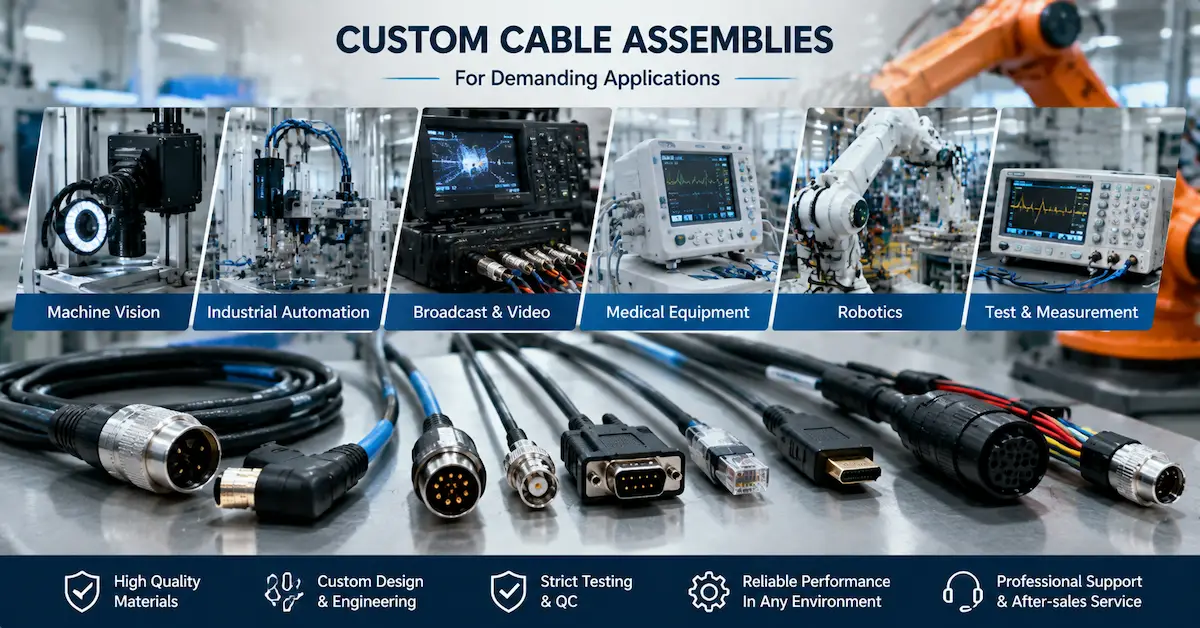
| Industry | Cable Requirement | Main Concern |
|---|---|---|
| Industrial automation | Sensor and control cables | Continuous operation |
| Robotics | Flexible moving cables | Long service life |
| Machine vision | Camera and data cables | Signal stability |
| Professional video | Video and power cables | Transmission quality |
| Medical equipment | Precision cable assemblies | Consistency |
| Test instruments | Signal cables | Accuracy |
| OEM machinery | Custom wiring systems | Repeat production |
| Electronics | Internal cable assemblies | Compact integration |
Key Factors to Evaluate a Reliable Cable Manufacturer
1. Manufacturing Capability
A dependable manufacturer should have:
- Professional assembly equipment
- Skilled production teams
- Cable processing capability
- Connector assembly experience
- Testing equipment
- Production capacity planning
Manufacturing capability determines whether the supplier can support both prototypes and large production orders.
2. Custom Cable Development Capability
Many industries require customized solutions instead of standard cables.
A reliable manufacturer should support:
- Custom cable length
- Connector customization
- Special pinouts
- Cable harness development
- Shielding requirements
- Overmolding
- Strain relief
- OEM packaging
Customization capability is especially important for equipment manufacturers.
3. Quality Control System
Reliable manufacturers control quality throughout production.
Incoming Material Inspection
Checking:
- Cable specifications
- Connector quality
- Component consistency
- Material performance
Production Control
Monitoring:
- Wire preparation
- Crimping
- Soldering
- Assembly
- Connector installation
Final Testing
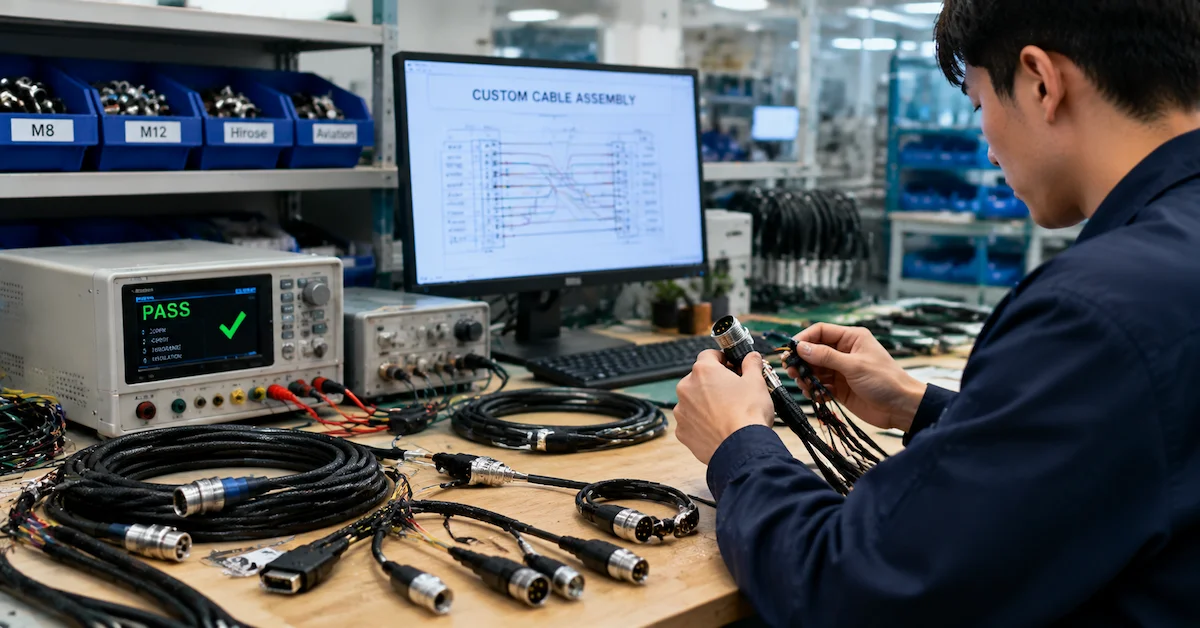
Common tests include:
- Continuity testing
- Short circuit testing
- Pinout verification
- Polarity testing
- Functional testing
A documented quality process helps maintain stable production.
4. Engineering Support
A reliable manufacturer should not only produce cables but also support technical development.
Engineering services may include:
- Drawing review
- Cable recommendation
- Connector evaluation
- Wiring confirmation
- Prototype improvement
- Production optimization
This is especially important for custom OEM projects.
5. Delivery Reliability
A dependable supplier should provide predictable delivery.
Important factors include:
- Sample lead time
- Production schedule
- Material availability
- Repeat order management
- Communication speed
Reliable delivery helps customers maintain their own production schedules.
Reliable Cable Manufacturer vs Low-Cost Supplier
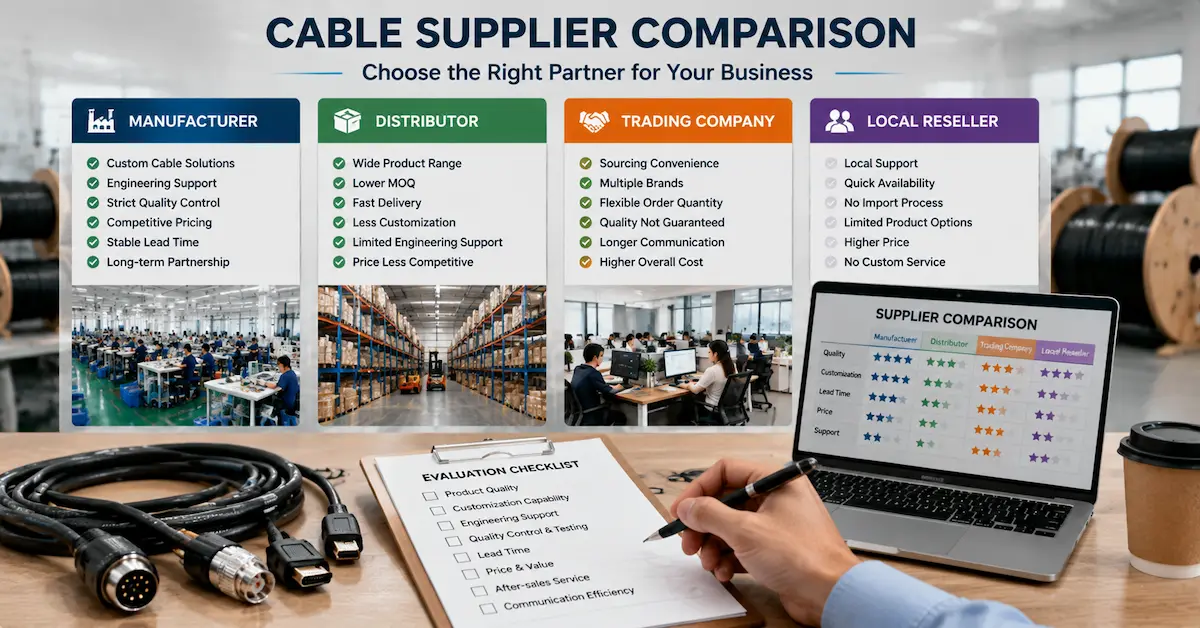
| Supplier Type | Advantage | Risk | Suitable For |
| Low-cost supplier | Lower initial price | Quality inconsistency | Simple applications |
| Distributor | Easy sourcing | Limited customization | Standard cables |
| Trading company | Convenient communication | Less production control | General purchasing |
| Reliable cable manufacturer | Quality, engineering, and stable production | Requires supplier evaluation | OEM and industrial projects |
The best supplier is the one that provides the right balance of quality, cost, and long-term support.
How Reliable Cable Manufacturers Ensure Repeat Production
Repeat production requires more than manufacturing ability.
Important systems include:
Drawing Control
Managing:
- Product drawings
- Revision numbers
- Wiring specifications
- Approved samples
Material Control
Maintaining:
- Approved components
- Connector records
- Cable specifications
Production Records
Tracking:
- Assembly procedures
- Testing results
- Quality inspections
Change Management
Controlling:
- Material substitutions
- Design changes
- Customer approvals
These systems help ensure every batch matches customer expectations.
Common Mistakes When Choosing Cable Manufacturers
Choosing Only Based on Price
A low quotation may reduce cost initially but create:
- Quality issues
- Replacement costs
- Production delays
Ignoring Manufacturing Experience
A supplier may produce basic cables but lack experience with complex applications.
Skipping Sample Approval
Samples help verify:
- Cable fit
- Wiring accuracy
- Performance
- Installation requirements
Not Evaluating Future Capacity
A supplier should support future growth, not only the first order.
What Information Should Buyers Provide?
For selecting a reliable cable manufacturer, prepare:
- Product application
- Cable type
- Connector information
- Wiring diagram
- Cable length
- Electrical requirements
- Working environment
- Quantity
- Delivery requirements
- Drawings or samples
Why Choose Alvin’s Cables as Your Reliable Cable Manufacturer?
Alvin’s Cables provides custom cable assemblies and connector solutions for industrial automation, professional video equipment, machine vision, robotics, medical devices, test instruments, and OEM electronics.
Capabilities include:
- Custom cable development
- Industrial cable assemblies
- Signal and power cables
- Video transmission cables
- Cable harness solutions
- M8, M12, Hirose, RJ45, BNC, SDI, HDMI, D-TAP, XLR, and custom connectors
- Shielded and flexible cable designs
- Prototype production
- Electrical and functional testing
- OEM labeling and packaging
Buyers can explore available products through Alvin’s Cables Products, learn about manufacturing capabilities through About Alvin’s Cables, and review service advantages through Why Choose Alvin’s Cables.
FAQ
1. What makes a cable manufacturer reliable?
A reliable cable manufacturer provides consistent quality, stable production, technical support, accurate testing, and dependable delivery.
2. Why is production consistency important?
Consistent production ensures that every cable batch matches approved specifications and performs correctly in customer equipment.
3. Can reliable cable manufacturers provide custom solutions?
Yes. Professional manufacturers can customize cable length, connectors, wiring, shielding, materials, and packaging.
4. How can buyers verify cable quality?
Buyers should review testing procedures, production controls, samples, inspection records, and quality management systems.
5. What industries need reliable cable manufacturers?
Industries include automation, robotics, medical equipment, machine vision, professional video, and OEM electronics.
6. Why are cable samples important?
Samples confirm design accuracy, equipment compatibility, performance, and installation requirements before production.
7. Can a reliable manufacturer support repeat orders?
Yes. Stable manufacturers maintain drawings, materials, production records, and testing standards for repeat production.
8. What information is needed for a cable quotation?
Provide application details, cable specifications, connectors, quantity, drawings, samples, and testing requirements.
Conclusion
Choosing a reliable cable manufacturer helps businesses build a stable supply chain with consistent quality, professional support, and predictable production.
The right partner should provide more than cable manufacturing. It should offer engineering capability, quality control, customization support, and long-term cooperation.
For OEM and industrial cable requirements, contact Alvin’s Cables with your specifications, drawings, samples, and project details.