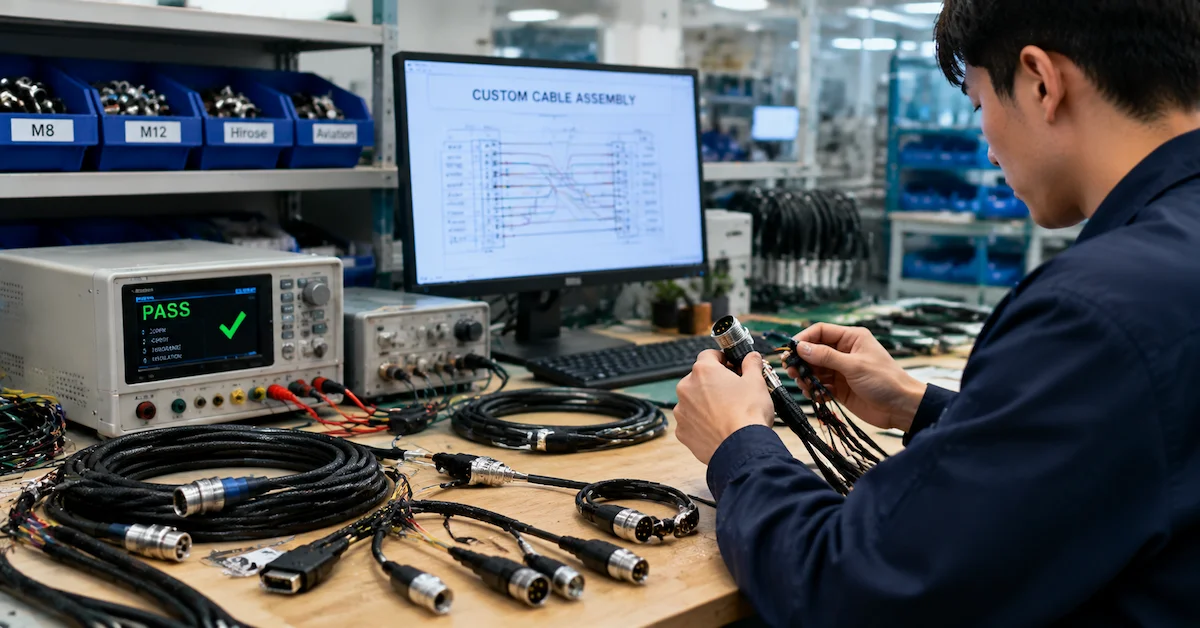
In industrial environments, equipment reliability depends heavily on stable signal and power transmission. Standard cables often fail under continuous operation, harsh conditions, and complex routing requirements, leading to system downtime and increased maintenance costs. A properly engineered industrial equipment cable is designed to withstand these challenges, ensuring consistent performance and long-term operational stability.
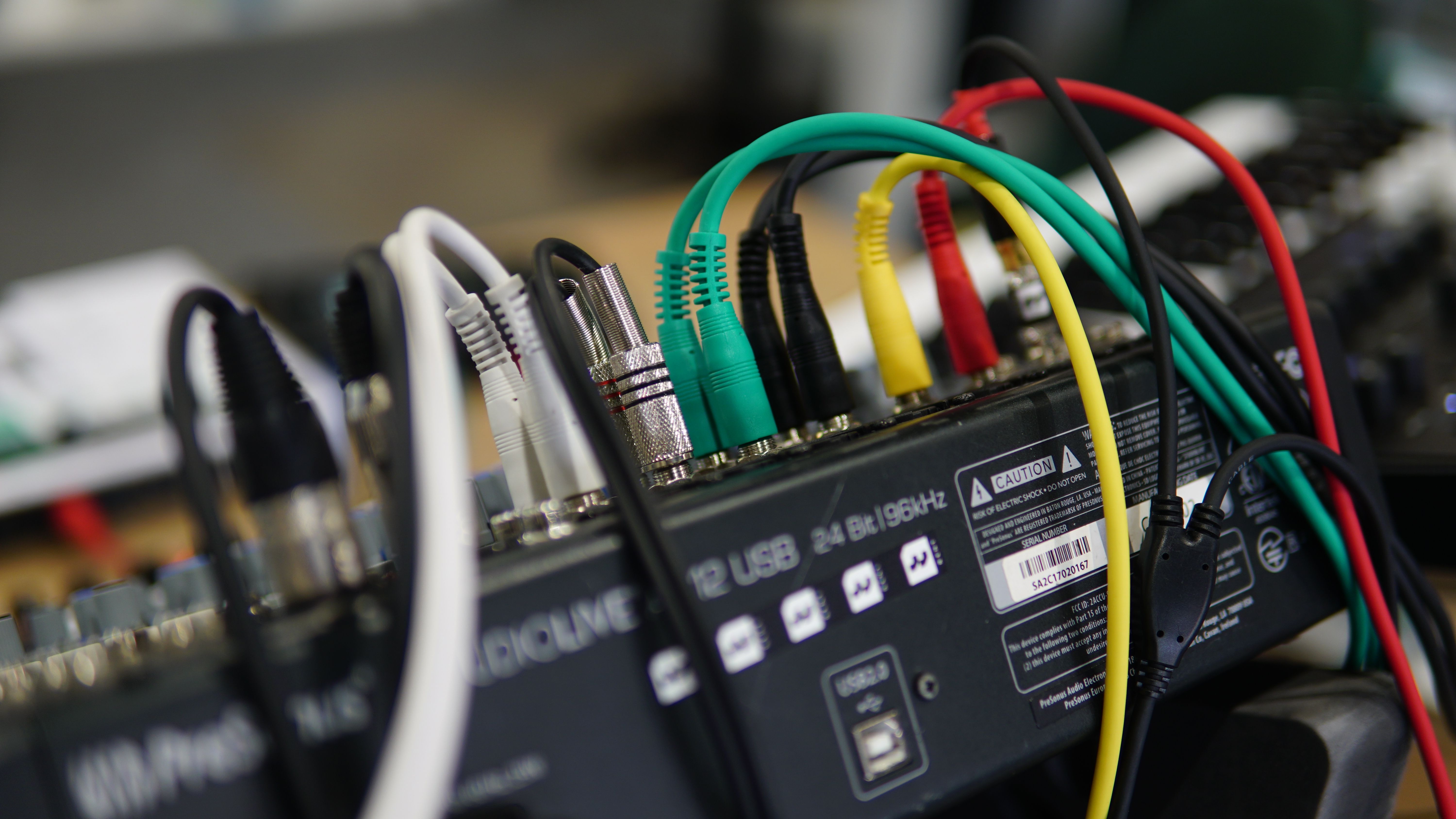
Understanding the Core Requirements of Industrial Equipment Cable
Industrial systems place unique demands on cable performance, requiring a combination of durability, flexibility, and electrical stability.
Mechanical Strength and Durability
Cables in industrial environments are exposed to vibration, bending, and heavy usage. Strong outer jackets and reinforced structures are essential.
Environmental Resistance
Temperature extremes, moisture, oil, and chemicals can degrade standard cables. Industrial-grade insulation materials ensure long-term reliability.
Signal and Power Stability
Stable transmission is critical for both control signals and power delivery in complex systems.
A high-quality industrial equipment cable integrates these features to maintain performance in demanding conditions.
Standard Cable vs Industrial Equipment Cable
| Parameter | Standard Cable | Industrial Equipment Cable |
|---|---|---|
| Durability | Moderate | High |
| Environmental Resistance | Limited | Strong |
| Signal Stability | Variable | Consistent |
| Load Capacity | Fixed | Optimized |
| Application Suitability | Basic | Industrial |
A specialized industrial equipment cable is designed specifically for high-demand environments where standard solutions are not sufficient.
Engineering Solutions for Industrial Systems
Industrial equipment requires cables that are engineered as part of the overall system design. A professional industrial equipment cable solution includes:
- Customized conductor sizing for power requirements
- High-performance insulation materials
- Shielding for interference protection
- Connector compatibility for equipment integration
To learn more about our engineering and manufacturing capabilities, visit
https://www.alvinscables.com/about-us
For available cable types and configurations, explore
https://www.alvinscables.com/products
Advantages of Industrial Equipment Cable Solutions
Using a tailored cable solution provides clear operational benefits:
- Improved system stability under continuous operation
- Reduced failure rates in harsh environments
- Longer service life and lower maintenance costs
- Better compatibility with industrial equipment
A properly designed industrial equipment cable enhances both performance and efficiency.
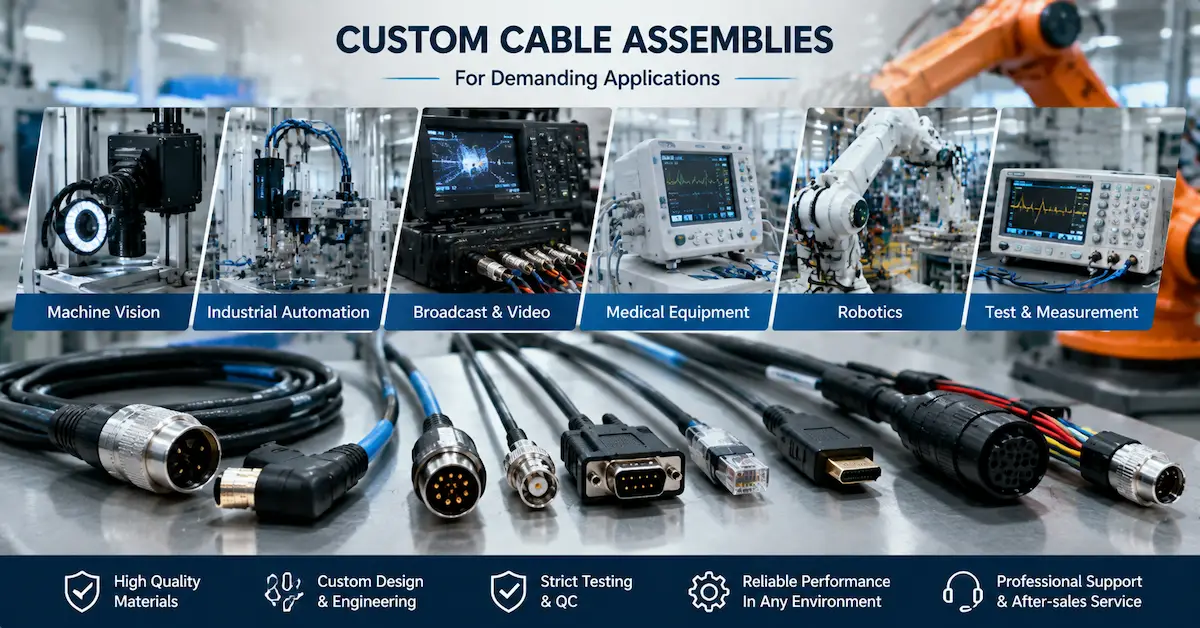
Typical Application Scenarios
Industrial equipment cables are widely used across multiple industries:
Automation Systems
- Robotics and production lines
- Control panels and signal systems
Heavy Machinery
- Manufacturing equipment
- Construction machinery
Energy and Power Systems
- Power distribution units
- Industrial electrical systems
In these environments, a reliable industrial equipment cable ensures stable operation and consistent performance.
How to Choose the Right Industrial Equipment Cable
Selecting the correct cable involves evaluating:
- Load and electrical requirements
- Environmental conditions
- Mechanical stress factors
- Installation constraints
Working with an experienced supplier ensures the solution meets real operational needs.
For more technical support, refer to
https://www.alvinscables.com/faqs
Frequently Asked Questions
Q: What makes industrial equipment cables different from standard cables?
A: They are designed for durability, environmental resistance, and stable performance in demanding conditions.
Q: Can industrial cables handle continuous operation?
A: Yes, they are engineered for long-term use under high load and harsh environments.
Q: How does cable quality impact system performance?
A: Poor-quality cables can lead to signal loss, overheating, and system failures.
Reliable Systems Depend on the Right Cable Design
Industrial systems require consistent performance and long-term reliability. A well-designed industrial equipment cable ensures stable signal and power transmission while reducing operational risks.
To explore our full range of cable solutions, visit our homepage:
https://www.alvinscables.com/
For project consultation or custom requirements, contact us here:
https://www.alvinscables.com/contact-us
Choosing the right cable is a key factor in building efficient and reliable industrial systems.