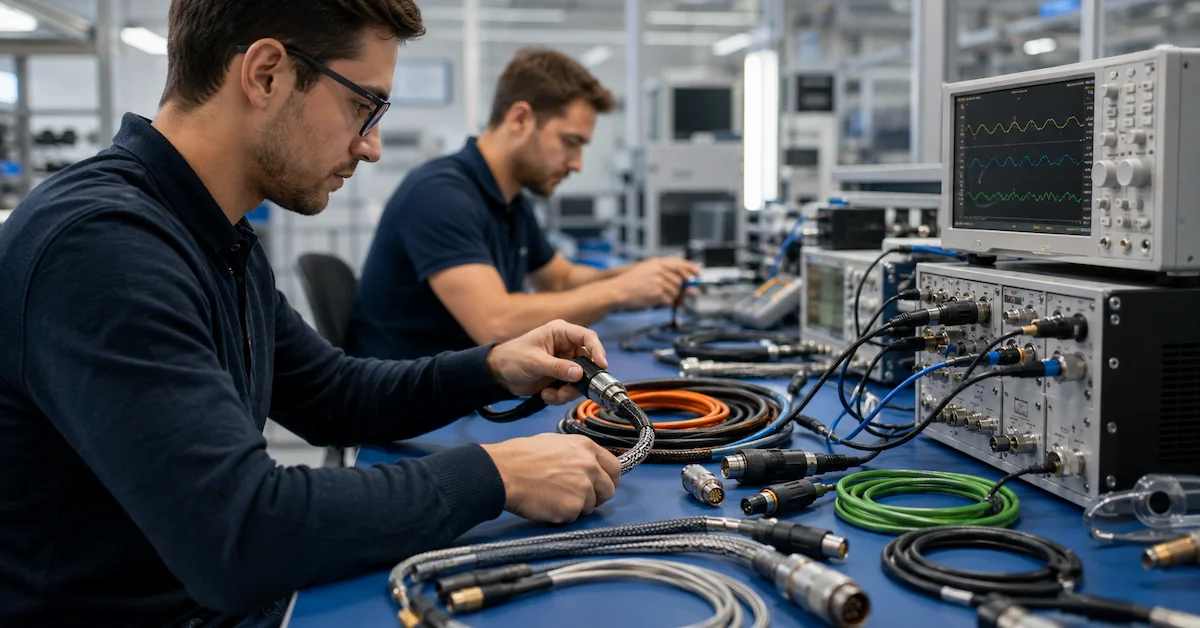
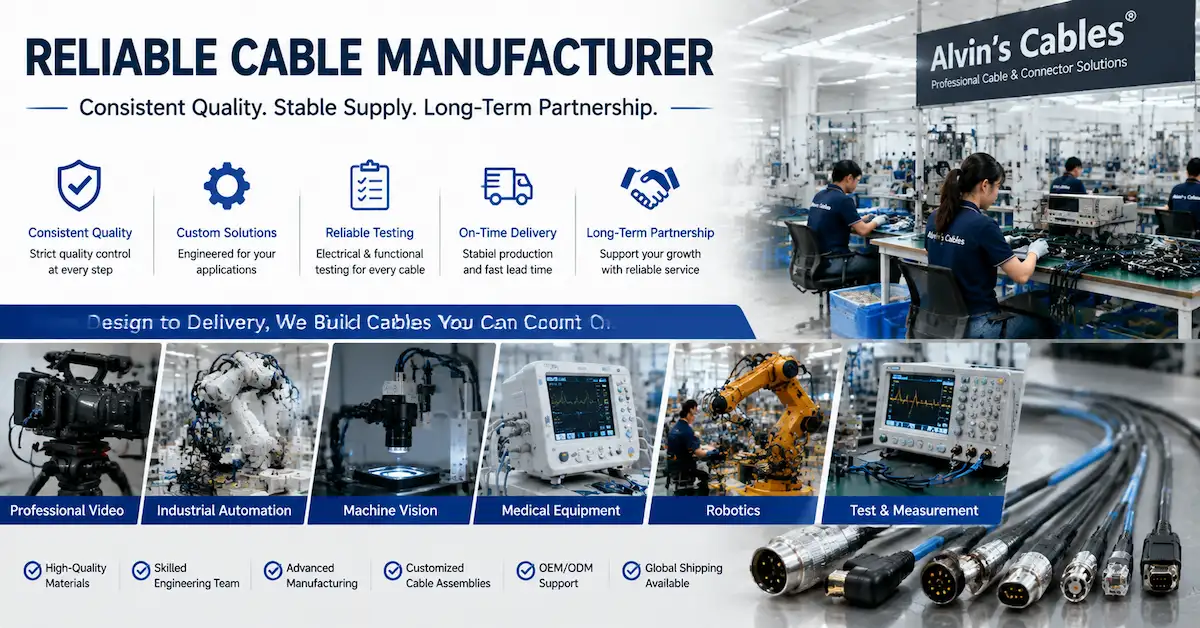
In live broadcasting and professional video production, signal stability is critical. Even a brief interruption can disrupt live feeds, reduce output quality, and impact audience experience. Standard cables often fail to meet the high bandwidth, long-distance transmission, and multi-device integration requirements of broadcast systems. A reliable broadcast cable supplier ensures stable signal transmission, strong compatibility, and long-term durability across complex production environments.
Why Signal Integrity Is Critical in Broadcast Systems
Broadcast systems operate under strict technical requirements where signal quality cannot be compromised.
High Bandwidth Transmission
Modern broadcasting involves HD, 4K, and even higher resolutions, requiring cables capable of maintaining high data rates without degradation.
Connector Accuracy and Stability
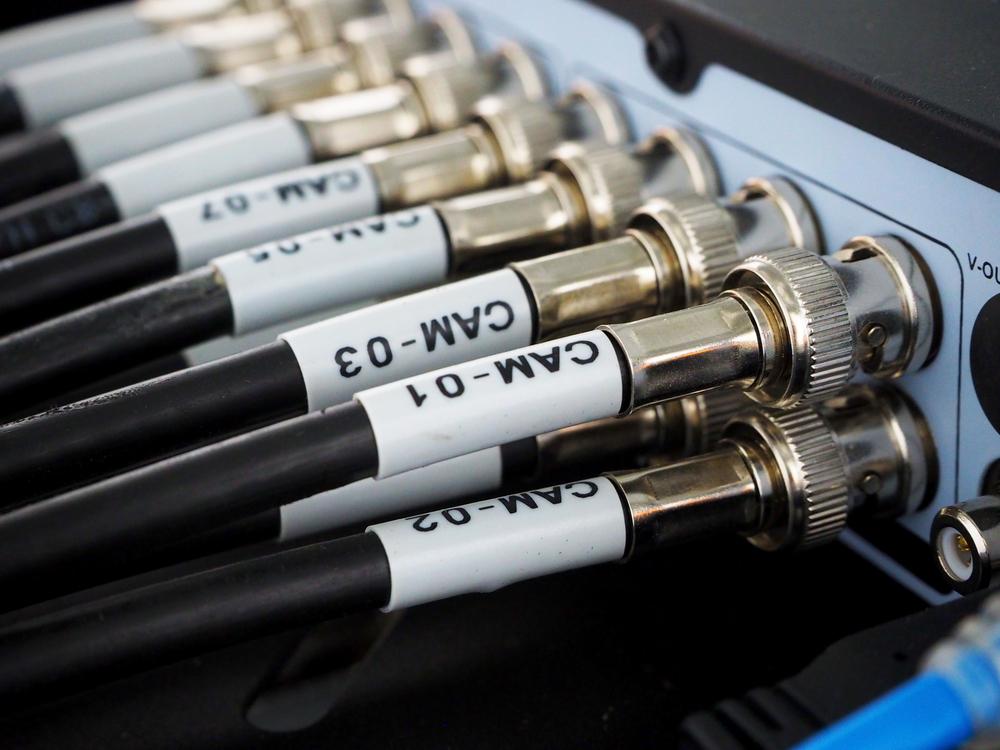
Broadcast equipment uses connectors such as BNC, LEMO, and other specialized interfaces. Poor connections can lead to signal drops and instability.
Environmental and Operational Stress
Cables are often used in studios, outdoor events, and mobile production setups, where frequent handling and movement are unavoidable.
A professional broadcast cable supplier addresses these challenges through engineered cable design and quality control.
Standard Cable vs Broadcast Cable Solutions
| Parameter | Standard Cable | Broadcast Cable |
|---|---|---|
| Signal Stability | Variable | High |
| Compatibility | Limited | Precise |
| Durability | Moderate | Strong |
| Flexibility | Basic | Optimized |
| System Integration | Limited | Advanced |
A tailored solution from a broadcast cable supplier ensures cables are optimized for professional production environments.
Engineering Solutions for Broadcast Systems
Broadcast systems require cables that integrate seamlessly across multiple devices and signal paths.
A professional broadcast cable supplier provides:
- High-performance shielding for interference reduction
- Signal-optimized cable structures
- Precision connector integration
- Flexible routing for complex setups
To learn more about our engineering and production approach, visit
https://www.alvinscables.com/about-us
For available cable types and configurations, explore
https://www.alvinscables.com/products
Advantages of Working with a Broadcast Cable Supplier
Choosing a specialized supplier offers several key advantages:
- Stable signal transmission in live environments
- Reduced interference in multi-device setups
- Improved durability under continuous use
- Better compatibility with broadcast equipment
A reliable broadcast cable supplier ensures consistent performance across different production scenarios.
Application Scenarios in Real Broadcast Environments
Broadcast cables are widely used in:
Studio Production
- Multi-camera setups
- Control room systems
- Signal routing equipment
Live Event Broadcasting
- Concerts and sports events
- Outdoor production setups
- Mobile broadcast units
Professional Video Systems
- Streaming systems
- Recording setups
- Hybrid production environments
In all these scenarios, a trusted broadcast cable supplier ensures uninterrupted signal flow and system stability.
How to Choose the Right Broadcast Cable Supplier
Selecting the right supplier requires evaluating:
- Signal requirements (resolution and bandwidth)
- Connector compatibility
- Cable flexibility and durability
- Environmental conditions
Working with an experienced supplier ensures the solution matches real-world application demands.
For more technical support, refer to
https://www.alvinscables.com/faqs
Frequently Asked Questions
Q: What makes broadcast cables different from standard cables?
A: Broadcast cables are designed for high signal stability, precision connectors, and professional use environments.
Q: Can broadcast cables handle long-distance transmission?
A: Yes, they are engineered to maintain signal quality over longer distances.
Q: How important is cable quality in live broadcasting?
A: Extremely important, as poor cables can cause signal loss and disrupt live feeds.
Reliable Broadcasting Starts with the Right Cable Partner
In broadcast environments, signal stability and reliability are essential. A professional broadcast cable supplier provides the technical expertise and product quality needed to support high-performance production systems.
To explore our full range of cable solutions, visit our homepage:
https://www.alvinscables.com/
For project consultation or custom requirements, contact us here:
https://www.alvinscables.com/contact-us
Choosing the right cable partner ensures consistent performance in every broadcast scenario.