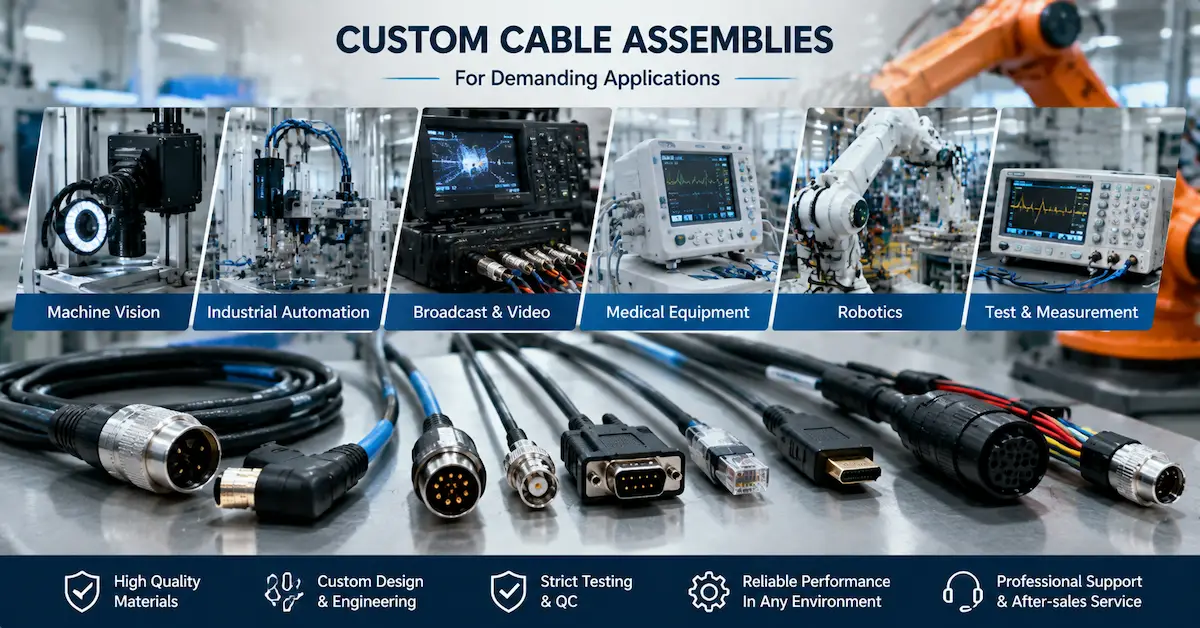
In industrial environments, cable performance directly affects system stability, safety, and long-term operating costs. Standard cables often fail under high temperatures, mechanical stress, or complex routing conditions, leading to signal loss and frequent maintenance. This is why custom industrial cable solutions are increasingly adopted in automation, heavy equipment, and integrated systems, where reliability is not optional but essential.
Understanding the Core Design Principles Behind Industrial Cable Performance
Industrial cable performance is not defined by a single factor—it is the result of coordinated material selection, structural design, and engineering validation.
Material Selection for Stability and Durability
High-purity conductors ensure stable signal transmission, while specialized insulation materials provide resistance against heat, abrasion, and chemicals.
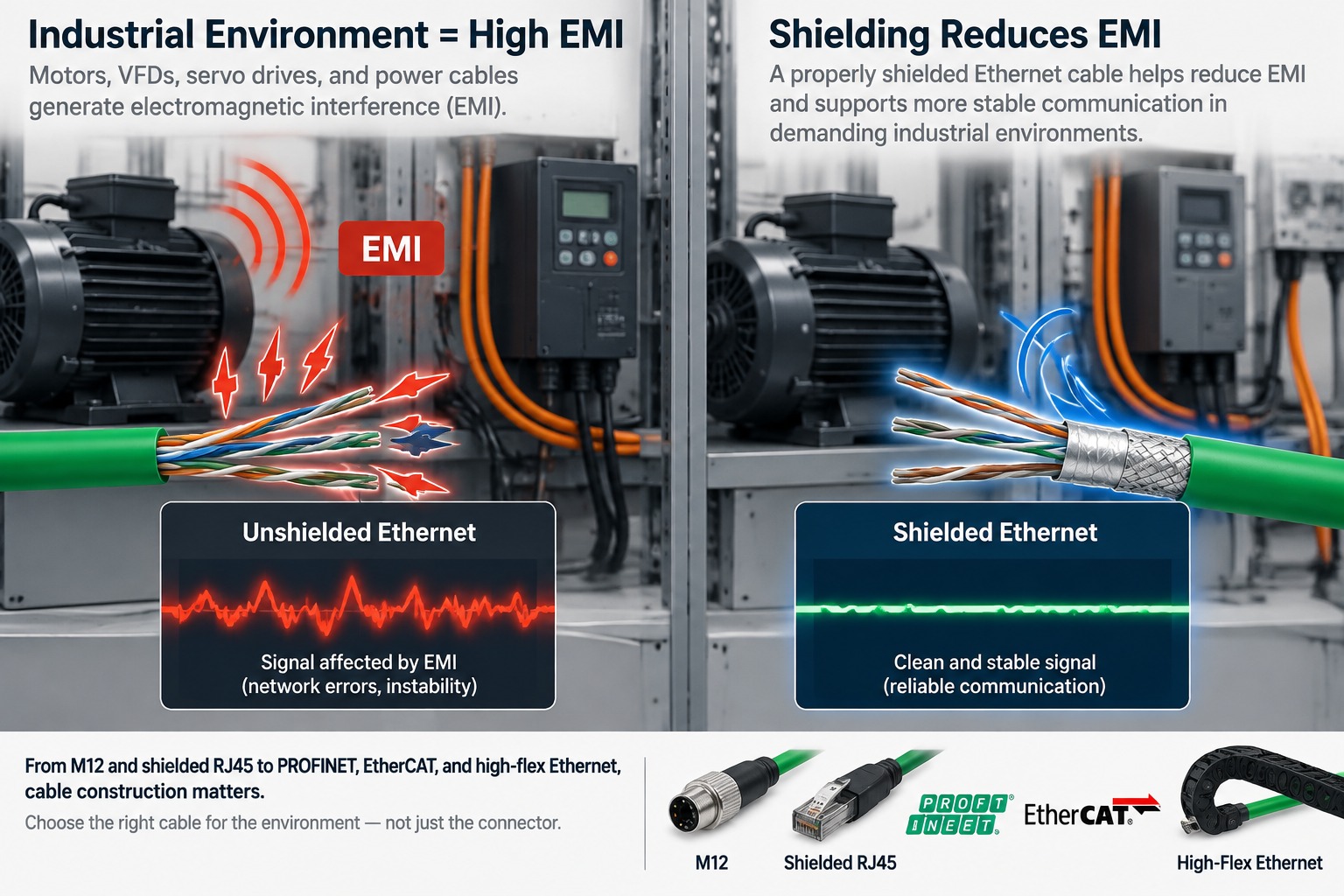
Shielding and Signal Protection
In environments with multiple machines, electromagnetic interference can disrupt signals. Advanced shielding structures help maintain consistent performance.
Mechanical Design and Flexibility
Industrial cables must withstand bending, vibration, and continuous movement without degrading performance.
A well-designed custom industrial cable integrates all these elements to meet real-world operational demands.
Standard Cable vs Custom Industrial Cable: What Really Changes
| Parameter | Standard Cable | Custom Industrial Cable |
|---|---|---|
| Durability | Moderate | High |
| Signal Stability | Variable | Consistent |
| Environmental Resistance | Limited | Strong |
| Installation Flexibility | Low | High |
| Lifecycle Cost | Higher | Lower |
Unlike generic products, a custom industrial cable is engineered to match specific application requirements, reducing long-term risks and maintenance costs.
Engineering-Driven Solutions for Industrial Cable Applications
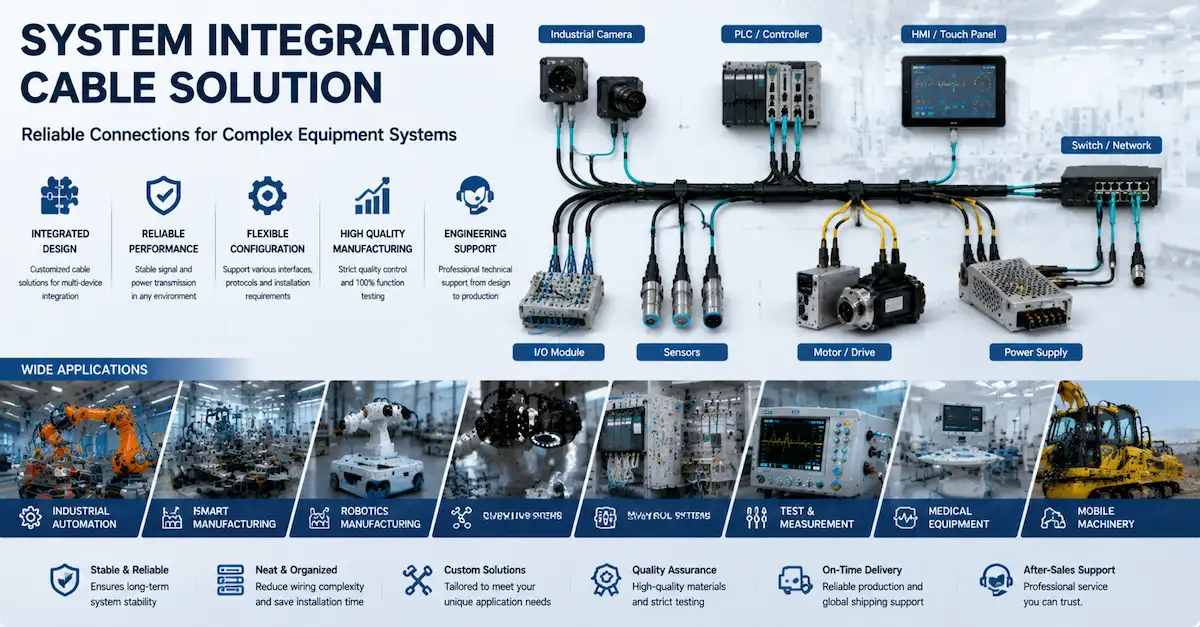
In complex systems, cables must be treated as part of the overall engineering solution rather than standalone components.
A professional custom industrial cable solution typically includes:
- Application-specific design and configuration
- Connector compatibility and integration
- Signal and power optimization
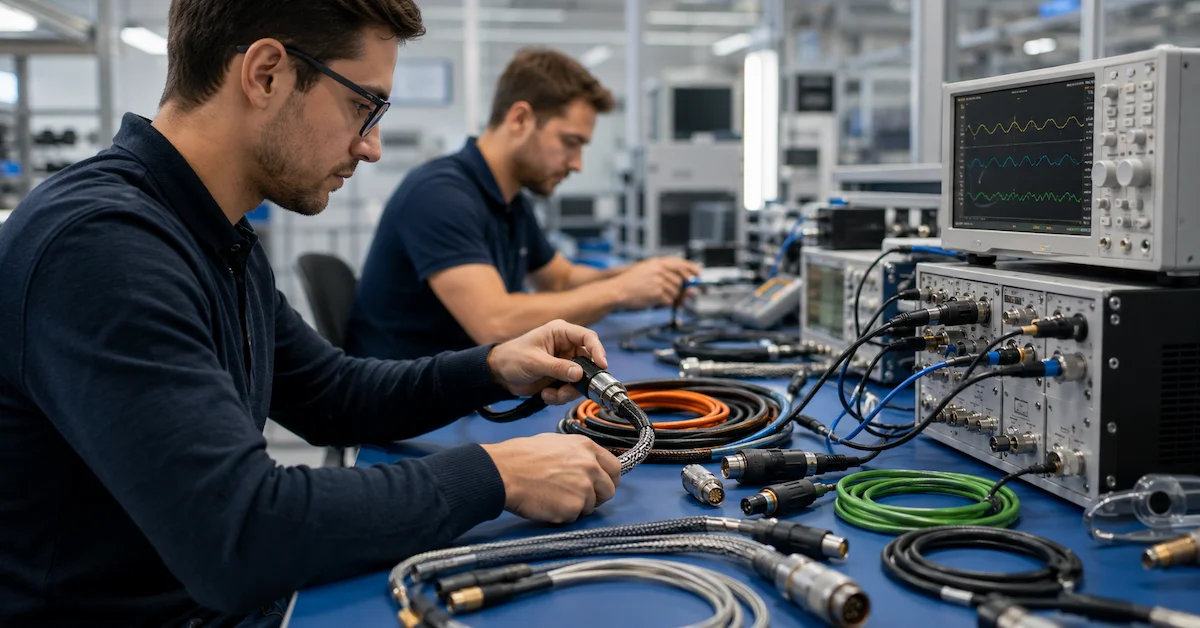
- Prototype validation before production
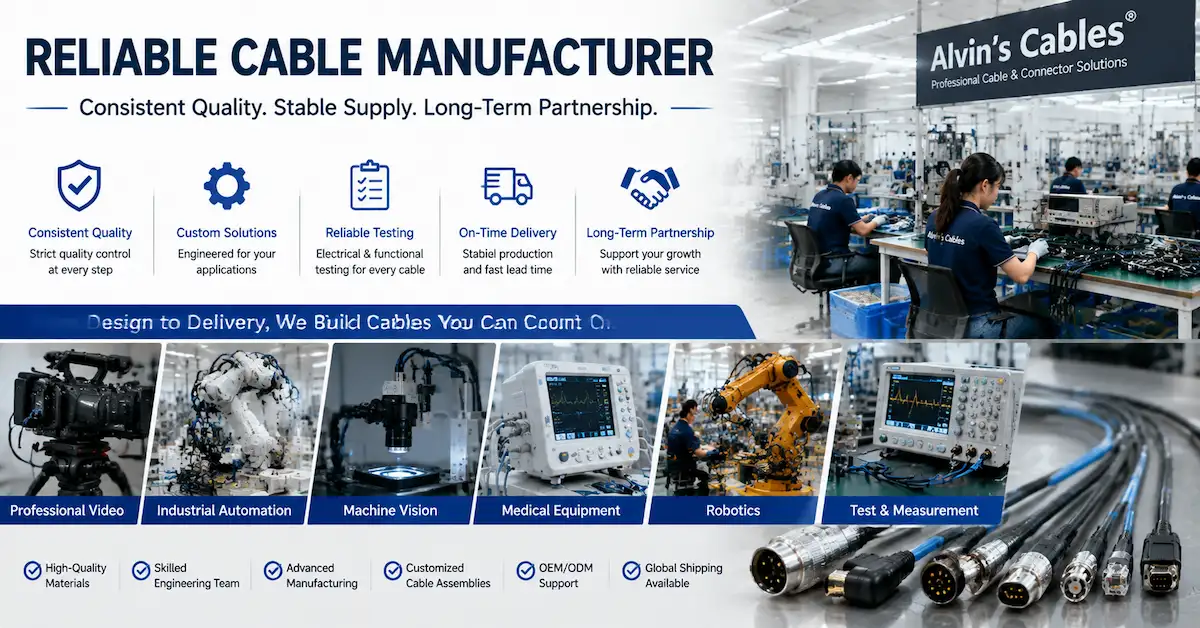
To better understand how we approach engineering and manufacturing, you can explore our
https://www.alvinscables.com/about-us
For available product configurations and customization options, visit
https://www.alvinscables.com/products
Advantages of Custom Industrial Cable in Real Operations
Choosing a tailored cable solution provides several key advantages:
- Reduced failure rates in harsh environments
- Improved system stability and performance
- Simplified installation and maintenance
- Better compatibility with existing equipment
A well-designed custom industrial cable not only improves performance but also enhances overall system efficiency.
Typical Application Scenarios Across Industries
Custom industrial cables are widely used in:
Automation Systems
- Robotics and production lines
- Control cabinets and signal transmission
Heavy Equipment
- Construction machinery
- Industrial vehicles
Specialized Systems
- Testing equipment
- Outdoor and high-temperature environments
In these scenarios, a reliable custom industrial cable ensures consistent operation under demanding conditions.
How to Choose the Right Custom Industrial Cable
Selecting the right cable requires evaluating multiple factors:
- Operating environment (temperature, humidity, exposure)
- Mechanical stress (movement, vibration)
- Signal and power requirements
- Installation constraints
A professional supplier can help match these requirements with the appropriate design solution.
If you have specific technical questions, you can refer to our
https://www.alvinscables.com/faqs
Frequently Asked Questions
Q: When should I use custom industrial cable instead of standard cable?
A: When your application involves harsh environments, complex routing, or high reliability requirements.
Q: Can custom industrial cables be produced in small batches?
A: Yes, many manufacturers support prototyping and low-volume production before scaling.
Q: How does customization improve performance?
A: It ensures compatibility, reduces interference, and improves durability based on actual operating conditions.
Building Reliable Systems Starts with the Right Cable Design
Industrial systems require precision, durability, and long-term reliability. A well-engineered custom industrial cable ensures that your equipment operates efficiently under real-world conditions while reducing maintenance risks.
To explore our full range of cable solutions, visit our homepage:
https://www.alvinscables.com/
For project discussions or custom requirements, contact us here:
https://www.alvinscables.com/contact-us
Choosing the right cable is not just a technical decision—it is a strategic investment in system performance.